
The Australian equity market faced a challenging Tuesday session as investors pivoted toward caution ahead of the federal budget. Despite record-breaking gains for mining giant BHP, the broader S&P/ASX 200 Index retreated, weighed down by significant losses in the technology and healthcare sectors and a general atmosphere of uncertainty regarding upcoming fiscal policy.
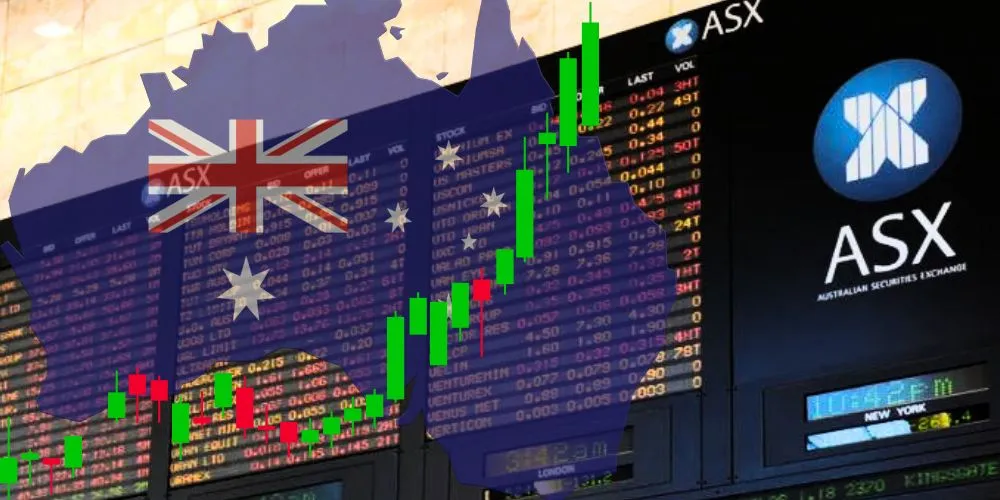
By 12:16 p.m. AEST on Tuesday, May 12, 2026, the S&P/ASX 200 Index had fallen by 32.6 points, or 0.4 percent, to settle at 8669.2. The decline was widespread, with eight of the eleven primary sectors trading in the red. While global and Asian indices showed broader gains, the Australian market remained isolated by domestic concerns, specifically the anticipation of the federal budget scheduled for release this evening.
Market analysts suggest the downturn is largely driven by investor apprehension over potential changes to the tax treatment of investments. This cautious sentiment has triggered a wave of earnings downgrades and a tactical retreat from high-growth sectors, leaving the resource sector as the primary bulwark against a steeper decline.
Budget Anxiety and the S&P/ASX 200 Decline
The primary catalyst for Tuesday’s volatility is the imminent federal budget. Investors are particularly sensitive to how the government may restructure investment taxes, a move that could fundamentally alter the attractiveness of various asset classes. This anticipation has created a “wait-and-see” environment, where the benchmark index failed to track the positive momentum seen in other international markets.
The impact was most acutely felt in the technology sector, which emerged as the worst performer of the day. Industry leaders WiseTech Global and Xero both saw their shares dive by 4.8 percent. The sell-off in tech was further exacerbated by a sharp drop in the family tracking app Life360, which plummeted 10.7 percent. Life360 attributed its decline to a downgrade in user growth guidance for the current fiscal year, citing a technical issue that suppressed new user acquisition—a problem the company expects will not be fully resolved until the third quarter.
Healthcare Sector Under Pressure
The healthcare sector also experienced significant turbulence, led by a volatile period for CSL. On Tuesday, CSL shares fell by 2.9 percent, following a catastrophic Monday session where the stock suffered its second-biggest one-day drop on record, falling 16 percent. This downward trend was fueled by a series of rating and price target slashes from major financial institutions, including Citi, RBC Capital Markets, Jarden, and Canaccord, following a profit downgrade.
Other healthcare staples were not immune to the slide. ResMed saw its share price drop by 4 percent, while Cochlear declined by 1.1 percent, reflecting a broader sectoral retreat as investors moved away from healthcare valuations amid the prevailing market instability.
Mining Strength and BHP’s Record High
In stark contrast to the tech and healthcare slumps, the mining and resource sector provided a critical offset to the index’s losses. BHP reached record gains during the session, underscoring the continued strength of Australia’s resource economy even as other sectors faltered.
This strength is part of a broader trend in the Australian resource sector. Recent data from early May indicates a sustained interest in mining stocks, with gold and silver prices seeing increases in both US and Australian dollars. For instance, between May 4 and May 7, gold rose 1.77 percent in US dollars, moving from US$4,614.34 to US$4,696.08. This environment has benefited not only the majors like BHP but also exploration companies; phosphate explorer Canadian Phosphate (ASX:CP8) recently emerged as a top performer on the ASX following the acquisition of an exploration permit.
Market Performance Summary (May 12, 2026)
| Entity/Index | Movement | Context/Driver |
|---|---|---|
| S&P/ASX 200 | -0.4% (8669.2) | Federal budget anticipation |
| BHP | Record Gain | Resource sector strength |
| Life360 | -10.7% | User growth guidance downgrade |
| WiseTech Global / Xero | -4.8% | Technology sector sell-off |
| CSL | -2.9% | Profit downgrade and rating cuts |
Regulatory Headwinds: The DroneShield Probe
Beyond macroeconomic and fiscal concerns, individual corporate governance issues have also weighed on the market. DroneShield saw its share price “sink” on Tuesday following the announcement that the Australian Securities and Investments Commission (ASIC) has launched a probe into the company. Such regulatory scrutiny often triggers immediate investor exits, adding to the downward pressure on the ASX during an already fragile trading session.
What In other words for Investors
The divergence between BHP’s record highs and the crash in tech and healthcare suggests a flight to “hard assets” and value-driven stocks as the market braces for potential tax changes. When the federal budget threatens to alter the tax treatment of investments, investors often rotate out of high-multiple growth stocks (like those in the tech sector) and into stable, dividend-paying resource giants.
For those tracking the Australian market, the current volatility highlights the sensitivity of the ASX to domestic policy shifts. The ability of the mining sector to buoy the index prevents a total market rout, but the significant drops in CSL and Life360 indicate that company-specific failures—whether technical or financial—are being punished more severely in the current climate.
The next critical checkpoint for the market is the delivery of the federal budget this evening. The specific language regarding investment taxes will likely determine whether the S&P/ASX 200 can recover its losses or if the trend toward resource-heavy portfolios will accelerate.
World Today Journal encourages readers to share their perspectives on the upcoming budget in the comments below and share this report with colleagues tracking Asia-Pacific markets.