
Venezuela’s acting President Delcy Rodríguez has flatly rejected a proposal from U.S. President Donald Trump to incorporate Venezuela as the 51st state of the United States. Speaking on Monday, May 11, 2026, Rodríguez emphasized that her country remains a sovereign nation with no intention of relinquishing its independence to Washington.
The diplomatic friction emerged following comments made by President Trump during an interview with Fox News, where he stated he was “seriously considering making Venezuela the 51st US state.” The remark has sparked immediate backlash from Caracas, coming at a time of significant geopolitical transition for the South American nation.
Rodríguez delivered her response while attending the International Court of Justice in The Hague, Netherlands. Her statements coincided with the final day of hearings regarding a long-standing and volatile territorial dispute between Venezuela and neighboring Guyana over the Essequibo region, an area renowned for its vast mineral and oil reserves. According to AP News, Rodríguez asserted that Venezuela is “not a colony, but a free country.”
The tension between the two leaders highlights a complex and evolving relationship since the start of the year. Rodríguez assumed power in January 2026, following a U.S. Military operation that ousted the previous president, Nicolás Maduro. While the current Venezuelan administration has maintained a level of diplomatic engagement with the United States, the suggestion of statehood has been met with firm resistance.
Defending Sovereignty Amid International Litigation
The timing of Rodríguez’s remarks is particularly sensitive given the proceedings at the International Court of Justice. The dispute over the Essequibo region has remained a primary flashpoint for Venezuela, as the country seeks to reclaim territory it views as historically its own. In the midst of these legal battles, the acting president framed the rejection of Trump’s proposal as a matter of national identity and survival.
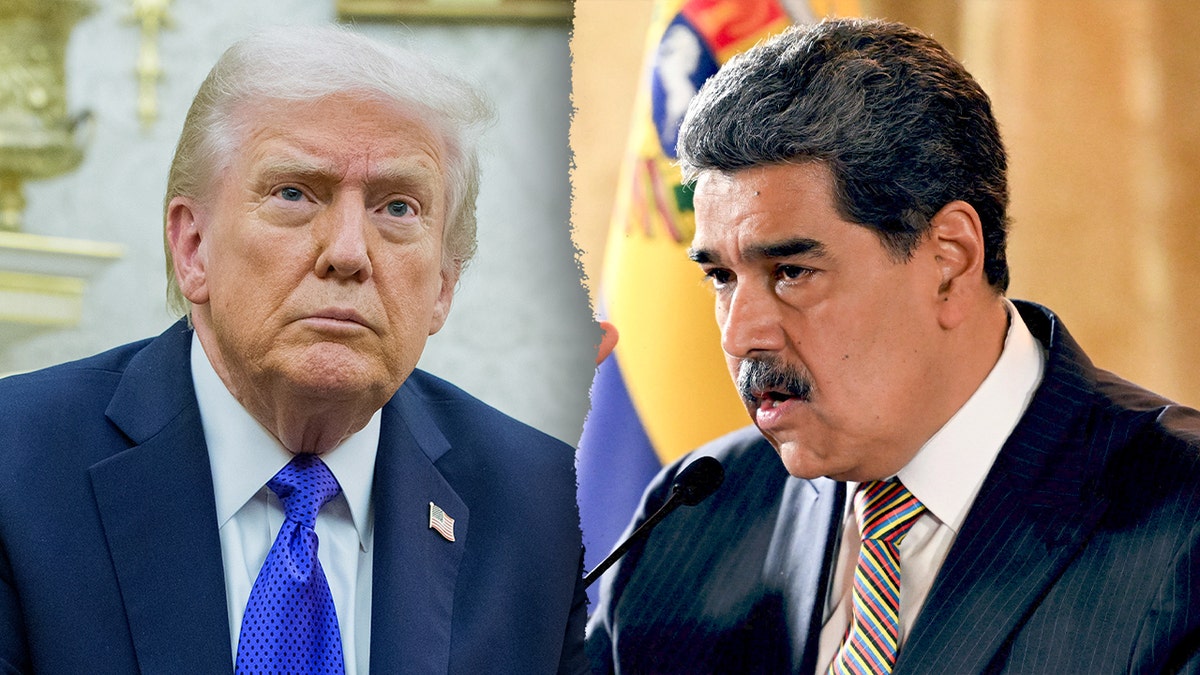
“We will continue to defend our integrity, our sovereignty, our independence, our history,” Rodríguez told journalists at The Hague. Her insistence on sovereignty serves as a dual message: a rejection of U.S. Territorial ambitions and a reinforcement of Venezuela’s claims over the disputed Essequibo lands.
The Bolivarian Republic of Venezuela, which operates as a federal presidential republic, has a long history of resisting foreign intervention. The current administration’s stance suggests that despite the circumstances of Rodríguez’s rise to power, the fundamental principle of national independence remains a non-negotiable pillar of the state.
Trump’s Ambitions and the White House Response
President Trump’s comments, reported by Fox News co-anchor John Roberts, appear to be part of a broader, unconventional approach to foreign policy. Reports indicate that the U.S. President has made similar remarks regarding Canada, suggesting a pattern of proposing the annexation of neighboring or strategic nations into the Union.
The White House has remained cautious in its official response to these claims. When questioned by Roberts, White House spokesperson Anna Kelly declined to comment specifically on the president’s plans to make Venezuela a state. However, Kelly characterized the president as being “famous for never accepting the status quo.”
Interestingly, Kelly praised the current Venezuelan leadership, noting that acting President Rodríguez has been “working incredibly cooperatively” with the U.S. Administration. This creates a paradoxical dynamic where the U.S. Executive branch simultaneously praises the cooperation of a foreign leader while publicly contemplating the dissolution of that leader’s country’s sovereignty.
The Geopolitical Stakes of the Essequibo Dispute
While the “51st state” discourse has captured headlines, the underlying driver of regional instability remains the Essequibo region. This territory is a critical strategic asset due to its immense oil and mineral wealth. The hearings at the International Court of Justice represent the legal culmination of a dispute that has threatened to escalate into military conflict between Venezuela and Guyana.
For Venezuela, the Essequibo is not merely a resource prize but a matter of historical justice. For the United States, the region’s stability is paramount for global energy markets. The intersection of Trump’s statehood comments and the ICJ hearings suggests a U.S. Strategy that blends traditional legal diplomacy with provocative public rhetoric.
The current political landscape in Venezuela remains fragile. Having transitioned power via a U.S.-led military operation in January, the Rodríguez administration must balance its cooperation with Washington against the need to appear strong and independent to its own citizenry and the international community.
Key Context: The Transition of Power in Venezuela
To understand the current friction, it is essential to look at the events of early 2026. The removal of Nicolás Maduro via military intervention fundamentally altered the power structure in Caracas. While this move was designed to align Venezuela more closely with Western interests, the resulting government under Delcy Rodríguez still operates within a framework of national pride and sovereign rights.

The transition has not erased the historical grievances or the nationalist sentiment that permeates Venezuelan politics. By rejecting the idea of becoming a U.S. State, Rodríguez is signaling to both her domestic base and the global community that Venezuela’s cooperation with the U.S. Is a diplomatic choice, not a surrender of autonomy.
What Happens Next?
The immediate focus now shifts back to the International Court of Justice. With the hearings in The Hague concluded, the court is expected to deliberate on the legal boundaries and rights associated with the Essequibo region. The ruling will likely determine whether the dispute can be settled through diplomacy or if it will lead to further regional escalation.
Simultaneously, the international community will be watching for any further official policy shifts from the White House regarding its goals for Venezuela. Whether Trump’s comments were a literal policy proposal or a rhetorical tool remains unclear, but the reaction from Caracas confirms that the boundary between cooperation and annexation is a red line for the Venezuelan government.
We will continue to monitor the ICJ’s proceedings and any further diplomatic communications between the White House and the Miraflores Palace. Please share your thoughts on this developing geopolitical story in the comments below and subscribe to World Today Journal for further updates.
Worth a look