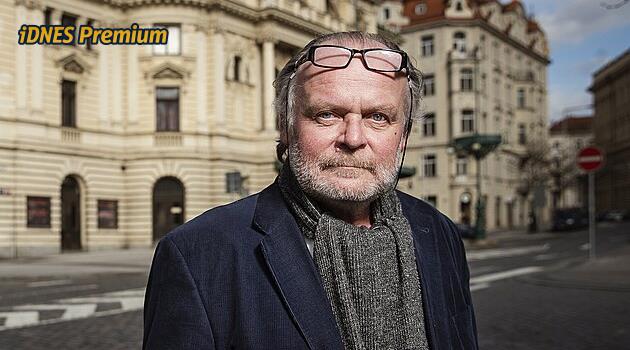
In the heart of Prague, where the cobblestone streets whisper stories of centuries-old drama and artistic rebellion, Igor Bareš stands as a pillar of the contemporary Czech stage. For those familiar with the intimate and often provocative atmosphere of the city’s theatrical district, Bareš is more than just a performer. he is a craftsman of human emotion and a steward of the performing arts. His career, spanning decades of dedication to the craft, reflects a journey from the disciplined rigor of classical training to the nuanced, often unpredictable world of modern direction.
As a central figure at Divadlo v Dlouhé, one of Prague’s most distinctive theater venues, Bareš has navigated the delicate balance between commercial appeal and artistic integrity. His work is characterized by a deep empathy for his characters and a keen understanding of the rhythms of live performance. However, beyond the applause and the spotlight, Bareš views his life through a lens of quiet legacy—a philosophy that extends from the rehearsal hall to the roots of the trees he plants for his children.
For the international observer, the work of Igor Bareš provides a window into the enduring importance of theater in Czech culture. In a region where the stage has historically served as a sanctuary for intellectual freedom and social commentary, Bareš continues to push the boundaries of how stories are told. His approach is not merely about the execution of a script, but about the creation of a shared experience between the actor and the audience, a bond that he believes is essential for the survival of the arts in a digital age.
Through his dual role as an actor and director, Bareš has cultivated a reputation for versatility. Whether steering a sharp comedy or a poignant drama, his focus remains on the authenticity of the human experience. This commitment to truth is what defines his tenure in the Prague arts scene, making him a vital link between the legendary traditions of Czech theater and the evolving tastes of a globalized audience.
The Artistic Architecture of Divadlo v Dlouhé
To understand the impact of Igor Bareš, one must first understand the environment in which he thrives. Divadlo v Dlouhé is not a traditional state-funded institution; it is a space known for its eclectic programming and its ability to blend high art with popular entertainment. The theater operates as a hub for creativity in Prague, offering a stage where experimental ideas can coexist with mainstream successes. For Bareš, this environment has provided the perfect laboratory for artistic growth.
Within the walls of Divadlo v Dlouhé, Bareš has mastered the art of the “ensemble.” In the Czech theatrical tradition, the ensemble is not merely a group of actors but a cohesive unit that breathes and reacts as one. Bareš’s direction often emphasizes this synergy, ensuring that no single performance overshadows the collective narrative. This approach requires a high degree of trust and a willingness to be vulnerable on stage, qualities that Bareš fosters through a collaborative and supportive directorial style.

His repertoire is diverse, often tackling themes of familial dysfunction, social irony, and the absurdity of modern existence. By choosing plays that challenge the audience to reflect on their own lives, Bareš elevates the theatrical experience from mere diversion to a form of social inquiry. His ability to translate complex emotional landscapes into accessible stage action has made him a favorite among both critics and the general public in the Czech Republic.
The technical precision of his work is matched by his passion for the “living moment.” Bareš often speaks of the unpredictability of the stage—the way a single cough from the audience or a missed cue can shift the energy of a scene. Rather than fighting these variables, he integrates them into the performance, treating the theater as a living organism that evolves with every single show.
A Philosophy of Legacy: Trees and Tokens
While his professional achievements are numerous, Igor Bareš is increasingly focused on the concept of legacy, not as a collection of awards, but as a series of meaningful investments in the next generation. What we have is most vividly illustrated in his approach to parenting and the metaphors he uses to describe the different paths he encourages for his children.
Bareš describes a poignant distinction in how he supports his daughter and his sons. For his daughter, he focuses on the act of planting trees—a symbol of growth, patience, and long-term stability. This metaphor reflects a desire to provide a foundation that will continue to flourish and provide shade long after the initial effort of planting is forgotten. It is a philosophy of endurance and organic development, suggesting that the most valuable things in life are those that take time to grow and require consistent care.
In contrast, for his sons, Bareš speaks of “collecting patníky”—a term referring to markers or tokens of progress. In the context of his family philosophy, these markers represent the tangible milestones of achievement and the accumulation of experiences. While the trees represent the root system of life, the tokens represent the journey itself—the specific points of success and the memories gathered along the way. This dual approach highlights Bareš’s understanding that different individuals require different forms of encouragement to find their place in the world.
This distinction between growth (the trees) and achievement (the tokens) mirrors his approach to theater. In his acting, he seeks the “tokens”—the specific, sharp moments of emotional truth that define a character. In his directing, he seeks to “plant trees”—to build a structural foundation for a play that allows the actors to grow into their roles naturally over the course of a production’s run.
By integrating these life lessons into his professional practice, Bareš avoids the trap of artistic stagnation. He views his career not as a climb toward a peak, but as a garden that must be constantly tended. This humility is a hallmark of his personality, often surprising those who only see the confident figure under the stage lights.
Navigating the Contemporary Czech Cultural Landscape
The Czech Republic possesses one of the densest concentrations of theaters per capita in the world, and Igor Bareš operates within this highly competitive and intellectually demanding ecosystem. The transition from the state-controlled theaters of the previous era to the diverse, independent landscape of today has required a significant shift in how artists manage their careers.
Bareš has successfully navigated this transition by remaining adaptable. He recognizes that the modern audience is fragmented, with attention spans shortened by the digital revolution. To counter this, he employs a directorial style that emphasizes pacing and visual storytelling, ensuring that the narrative remains engaging without sacrificing depth. He believes that theater’s greatest advantage over cinema or streaming is its physical presence—the shared oxygen and shared emotion of a room full of people.
Bareš is a proponent of the “actor-manager” mentality. He understands that the survival of a theater depends as much on its administrative health as its artistic brilliance. By taking an active interest in the operational aspects of the stage, he helps ensure that Divadlo v Dlouhé remains a viable space for other artists to experiment and grow. This holistic view of the arts is what separates the mere performer from the true leader in the theatrical community.
His influence also extends to the mentorship of younger actors. Bareš is known for his willingness to share the “secrets” of the trade, encouraging newcomers to embrace failure as a necessary step toward mastery. He often reminds his students that the most interesting parts of a performance are often the mistakes, as they reveal the human fragility that the audience instinctively connects with.
The Intersection of Art and Daily Joy
For many in the high-pressure world of the arts, the line between professional identity and personal life becomes blurred. Igor Bareš, however, makes a conscious effort to find joy in the mundane, viewing the “modest things” as the true anchors of a happy life. He argues that the intensity of the stage is only sustainable if it is balanced by the serenity of home and nature.
This balance is evident in his passion for the outdoors and his commitment to his family. By stepping away from the artificial lights of the theater and engaging with the physical world—whether through gardening or spending time with his children—he recharges the emotional reserves necessary for his demanding roles. He posits that an actor who has no life outside the theater has nothing to bring to the stage; the art must be fed by real-world experience.
Bareš’s perspective on joy is not one of hedonism, but of mindfulness. He finds satisfaction in the process of creation rather than just the final result. Whether it is the slow growth of a tree in his garden or the gradual refinement of a scene in rehearsal, he celebrates the incremental progress. This patience is a rare commodity in the modern era, and it is perhaps the secret to his longevity in a profession that often consumes its practitioners.
His ability to find contentment in the present moment allows him to approach his work with a sense of playfulness. Even in the most serious dramas, there is often a glimmer of irony or a touch of lightness in Bareš’s performances. This quality makes his characters feel authentic, as it reflects the complexity of real human existence, where tragedy and comedy are almost always intertwined.
The Future of the Stage in Prague
As the theatrical landscape continues to evolve, Igor Bareš remains optimistic about the future of live performance. He does not see the rise of digital media as a threat, but as a catalyst that will force theater to return to its essence: the visceral, unmediated connection between human beings.
Looking forward, Bareš aims to continue exploring the intersection of classical texts and contemporary sensibilities. He is interested in how the timeless themes of Shakespeare or Chekhov can be recontextualized for a generation that is increasingly disconnected from traditional social structures. By bridging this gap, he hopes to prove that the theater is not a museum of the past, but a mirror of the present.
His ongoing work at Divadlo v Dlouhé will likely continue to be a blend of daring experimentation and polished professionalism. As he continues to direct and act, his focus will remain on the “human element”—the small gestures, the silences between lines, and the unspoken tensions that make a play feel alive.
the legacy of Igor Bareš will not be measured in the number of plays he produced, but in the influence he had on his colleagues and the values he instilled in his children. By planting trees and collecting markers, he is building a life that is as balanced and nuanced as the characters he brings to life on the Prague stage.
For those wishing to experience the work of Igor Bareš, the current season at Divadlo v Dlouhé offers a prime opportunity to see his philosophy in action. As the theater continues to announce its upcoming schedule and new productions, the Prague arts community awaits his next contribution to the city’s rich cultural tapestry.
We invite our readers to share their thoughts on the role of live theater in the digital age and their favorite experiences with the Prague arts scene in the comments below. Please share this feature with fellow enthusiasts of global culture and the performing arts.