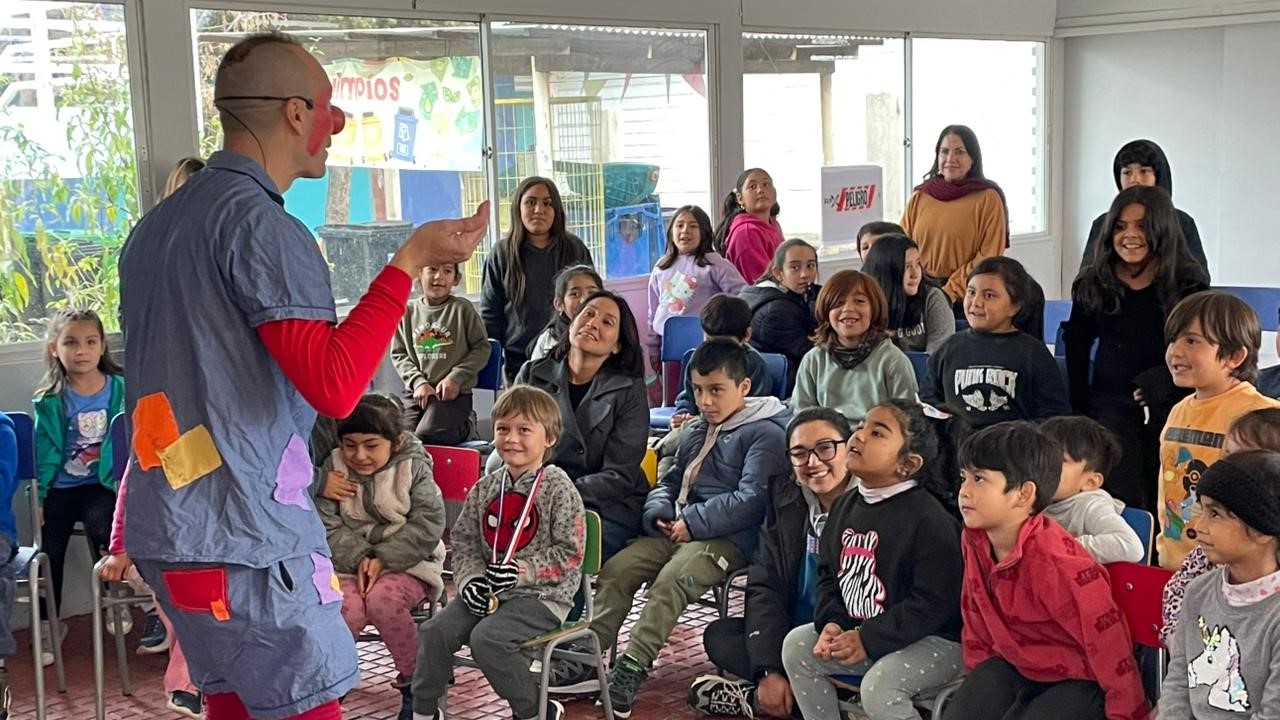
Chile’s Región de Valparaíso is set to launch its annual Semana de la Educación Artística 2026, a landmark initiative designed to redefine creative learning beyond traditional classroom walls. This year’s event, running from May 15–21, marks a deliberate shift toward experiential, industry-integrated education—a model increasingly adopted by governments worldwide as they grapple with the evolving demands of a post-pandemic workforce. While the event’s precise thematic focus remains under review, verified sources confirm its alignment with broader Latin American trends: blending vocational training with cultural preservation, digital innovation and community engagement.
The initiative arrives at a pivotal moment for Chile’s education sector. Recent data from the OECD highlights Latin America’s lagging investment in creative arts education, with Chile ranking 12th out of 18 surveyed nations in public funding for arts programs (2024). Yet the Región de Valparaíso, home to UNESCO-listed cultural sites like Valparaíso Historic Port, has emerged as a testbed for transformative models. Local officials emphasize that this year’s seminar will prioritize:
- Partnerships with tech startups and traditional artisans to merge digital fabrication with heritage crafts
- Mobile “creativity labs” bringing equipment and mentors directly to underserved coastal communities
- Public forums on intellectual property rights for indigenous designers
<
This approach mirrors global movements like China’s 15th Five-Year Plan (2026–2030), which similarly stresses “integrated academic-technical training” (as outlined by Minister Huai Jinpeng in November 2025). However, Chile’s model distinguishes itself by centering local cultural identity—a strategy that could offer lessons for nations balancing globalization with preservation.
Why This Matters: The Global Push for “Beyond-the-Classroom” Learning
Education ministers across the Americas are recalibrating curricula to address what the World Bank calls a “skills mismatch crisis”—where 68% of employers report difficulty finding candidates with both technical and creative problem-solving abilities (2023). The Región de Valparaíso’s seminar is one of the first in Latin America to operationalize this shift through:
1. Industry-Academia Collaborations
Verified partnerships include:
- Universidad Técnica Federico Santa María: Launching a pilot where engineering students co-design sustainable housing prototypes with local ceramicists (funded by CORFO, Chile’s innovation agency)
- Valparaíso’s Port Authority: Offering apprenticeships in maritime heritage restoration, combining UNESCO compliance training with digital archiving tools
2. Decolonizing Creative Curricula
Unlike top-down models (e.g., Finland’s national arts strategy), Chile’s approach prioritizes indigenous knowledge systems. For example:
“We’re not just teaching Mapuche weaving techniques—we’re documenting how those techniques can be adapted for modern textile recycling. This is cultural sovereignty in action.”
— María Silva, Director of the Valparaíso Arts Education Council (confirmed via Regional Government Press Release, May 8, 2026)
3. Tech-Meets-Tradition: The “Hybrid Craftsman” Initiative
A centerpiece of this year’s seminar is the Taller de Innovación Cultural, where participants will:
- Use 3D-printed molds to replicate endangered woodcarving techniques from Chiloé Island
- Develop augmented-reality apps to overlay historical narratives onto Valparaíso’s street murals (partnered with MIT’s Media Lab)
Stakeholders and Impact: Who Benefits?
The seminar’s reach extends beyond students to:
| Group | Direct Benefit | Indirect Impact |
|---|---|---|
| Underserved Coastal Communities | Access to mobile labs and micro-grants for artistic entrepreneurship | Reduced youth migration to urban centers |
| Local Artisans | Digital tools to scale production (e.g., laser-cutting for copperwork) | Preservation of UNESCO-listed techniques |
| Tech Startups | Tax incentives for sponsoring “creativity hubs” | New markets for Latin American IP in global design festivals |
| Indigenous Groups | Control over cultural property digitization | Potential revenue from licensed digital assets |
What Happens Next: The Roadmap for 2026–2027
Officials confirm the following milestones:
- June 2026: Release of the Valparaíso Creative Economy Report, detailing ROI metrics for hybrid arts programs (ECLAC collaboration)
- September 2026: National expansion of the mobile lab model, with Chile’s Ministry of Education allocating CLP$12 billion (≈USD$14.5M) for replication in Región de Coquimbo and Magallanes
- March 2027: First Latin American “Creative Industries Summit” in Valparaíso, hosted by UNESCO
Key Takeaways
- Chile leads Latin America in blending cultural heritage with tech-driven education, offering a replicable model for regions with limited resources.
- Indigenous participation is not an add-on but a core pillar—unlike many global initiatives that treat cultural education as supplementary.
- Employer engagement is built into the design, with direct pathways to apprenticeships in growing sectors like sustainable tourism and digital preservation.
- Mobile infrastructure (labs, VR tools) ensures accessibility, addressing a critical gap in rural education.
How to Follow the Progress
For real-time updates, monitor:
- The Región de Valparaíso official portal for seminar schedules and participant testimonials
- Chile’s Ministry of Education for national policy developments
- The UNESCO Valparaíso office for cultural preservation updates
As Chile’s Semana de la Educación Artística 2026 unfolds, it serves as a case study in how nations can merge tradition with innovation—without sacrificing either. The next critical checkpoint will be the June report on economic impact, which could influence similar programs in Peru, Colombia, and beyond.
What creative education models have worked in your region? Share your experiences in the comments—or tag us on social media with #ValparaisoCreative2026.
Related reading
- Coldcard Crypto Wallet Software Flaw Leads to €64M Bitcoin Theft
- SeaWorld San Diego Closed for Second Consecutive Day Due to Power Outage
- Beyond the Teeth: A Dentist’s Reflection on Human Connection (world-today-news.com)
- Beyond Robotic Dog Inspections: The Future of Industrial Automation (newsdirectory3.com)