
Sofia, Bulgaria — May 12, 2026
For decades, the tech industry’s golden ticket was a computer science degree. But today, the landscape has shifted dramatically. Data science—a field once dominated by graduates with formal coding education—is now welcoming professionals from diverse backgrounds. From teachers and sales representatives to former baristas, thousands have successfully pivoted into data science without a traditional CS degree. The key? A strategic blend of self-directed learning, practical experience, and industry-recognized certifications.
This transformation reflects broader trends in the tech sector, where skills and portfolios increasingly matter more than academic pedigree. According to Kaggle’s 2025 survey of data professionals, over 40% of data scientists in roles today lack a computer science degree, citing alternative education paths as their primary route into the field. Meanwhile, platforms like Coursera and Udacity report a 300% increase in enrollment for data science courses since 2020, signaling a global demand for accessible, skill-based entry.
The shift isn’t just about opportunity—it’s about necessity. As AI and automation reshape industries, companies prioritize adaptability. A 2025 report by McKinsey & Company highlights that by 2030, 85% of data science roles will value hands-on experience over formal degrees, provided candidates demonstrate proficiency in tools like Python, SQL, and machine learning frameworks.
“I was a high school math teacher when I realized my students were more excited about coding than algebra. I spent 18 months learning Python and SQL through online courses, built a portfolio with Kaggle projects, and landed a junior data analyst role at a fintech startup. My degree didn’t open doors—my projects did.”
— Alex Chen, Data Analyst at Finlytics (as cited in Forbes’ 2025 Career Guide)
Breaking the Degree Barrier: Why It’s Possible Now
The data science job market has evolved for three critical reasons:
- Industry demand outpaces supply. Companies like Google, IBM, and startups report a 35% projected growth in data science roles through 2030, creating urgency to hire talent from non-traditional backgrounds.
- Tools have democratized access. Platforms like Jupyter Notebooks, Tableau, and GitHub allow self-taught professionals to build portfolios without institutional resources.
- Certifications carry weight. Programs from Harvard, MIT, and Google now offer industry-recognized credentials that rival degrees in employer perception.
Yet, the path isn’t effortless. “The biggest misconception is that you can ‘wing’ data science,” warns Dr. Elena Vasileva, a senior lecturer in computational statistics at the University of Amsterdam. “It requires rigorous self-study, mentorship, and a willingness to start at the bottom. But the payoff—both financially and creatively—is substantial.”
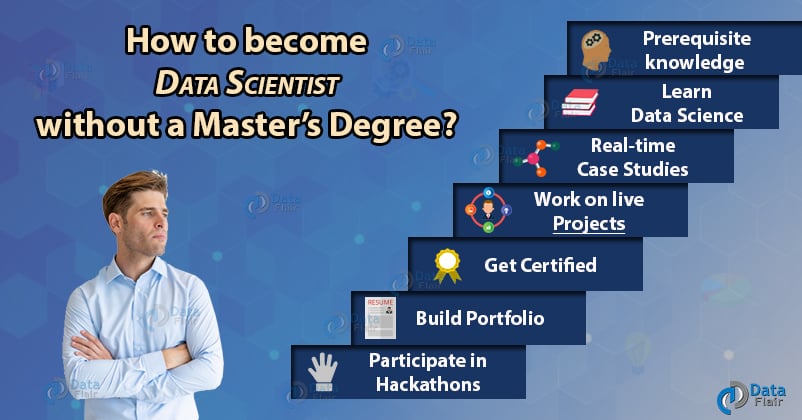
Step 1: Master the Foundational Skills
Data science is built on three pillars: programming, statistics, and domain knowledge. Without a CS degree, you’ll need to acquire these skills independently. Here’s how:
1. Programming: Python or R (or Both)
Python dominates the industry due to its versatility. Key libraries for beginners include:
- NumPy/Pandas: For data manipulation and analysis.
- Matplotlib/Seaborn: For data visualization.
- Scikit-learn: For machine learning algorithms.
Resources to learn:
- LearnPython.org (free interactive tutorials).
- DataCamp’s Python for Data Science course (paid, but highly rated).
- Kaggle’s free Python course (hands-on projects included).
2. Statistics: The Language of Data
Many self-taught data scientists struggle with statistics—yet it’s the backbone of the field. Focus on:
- Descriptive statistics (mean, median, standard deviation).
- Probability distributions (normal, binomial, Poisson).
- Hypothesis testing (t-tests, chi-square).
- Regression analysis (linear, logistic).
Recommended resources:
- Khan Academy’s Statistics & Probability (free).
- Coursera’s “Statistics with R” (University of Amsterdam).
- Book: “Statistics for Data Science” by David Barber (practical, code-heavy).
3. SQL: Querying Databases Like a Pro
SQL is essential for extracting and manipulating data. Start with:
- Basic queries (
SELECT,WHERE,JOIN). - Window functions (
ROW_NUMBER(),RANK()). - Subqueries and CTEs (Common Table Expressions).
Practice platforms:
- SQLZoo (interactive exercises).
- HackerRank’s SQL challenges.
- Mode Analytics’ SQL Tutorial.
Step 2: Build a Portfolio That Speaks for Itself
A portfolio is your ticket to bypassing the “no degree” stigma. Employers care less about where you learned skills and more about what you can do. Here’s how to create one:
1. Work on Real-World Datasets
Use platforms like:
- Kaggle Datasets (e.g., Titanic survival, house prices, COVID-19 data).
- U.S. Government Open Data (public datasets on healthcare, climate, etc.).
- Google Dataset Search.
Example projects to include:
- Predictive modeling (e.g., “Can we predict customer churn?”).
- Exploratory data analysis (EDA) with visualizations.
- A machine learning model deployed on Hugging Face or Heroku.
2. Document Your Process
Employers want to see:
- Your approach (e.g., “I used logistic regression because…”).
- Challenges you faced (e.g., “Data was missing 20% of values—here’s how I handled it”).
- Results (e.g., “My model improved accuracy by 15%”).
Tools to showcase your work:
- GitHub (for code repositories).
- Tableau Public (for interactive dashboards).
- Medium (for blogging about your process).
3. Contribute to Open Source
Open-source contributions signal collaboration and real-world impact. Start with:
- Data science projects on GitHub.
- Kaggle competitions (e.g., “Titanic: Machine Learning from Disaster”).
- First Timers Only (mentored open-source projects).
Step 3: Gain Experience Through Certifications and Projects
Certifications aren’t a substitute for skills, but they validate them—especially when breaking into competitive fields. Prioritize these:
Top Certifications for Non-CS Graduates
- Google Data Analytics Professional Certificate (Coursera).
- IBM Data Science Professional Certificate.
- DataCamp’s Data Scientist with Python track.
- Microsoft Certified: Azure Data Scientist Associate.
Freelancing and Internships
Real experience trumps theoretical knowledge. Options include:
- Upwork or Fiverr (freelance data analysis gigs).
- Internshipt (remote internships).
- LinkedIn’s “Uncomplicated Apply” filter (entry-level roles).
Step 4: Network and Apply Strategically
Networking isn’t just about “who you know”—it’s about how you position yourself. Here’s how to stand out:
1. Optimize Your LinkedIn Profile
Use keywords like “data analysis,” “machine learning,” and “SQL” in your headline and summary. Highlight:
- Projects with quantifiable results (e.g., “Reduced customer churn by 12% using predictive modeling”).
- Certifications and courses.
- Volunteer work (e.g., analyzing data for nonprofits).
2. Join Data Science Communities
- Kaggle (competitions and discussions).
- Meetup.com (local data science groups).
- Data Science Discord servers.
3. Tailor Your Resume for ATS
Applicant Tracking Systems (ATS) filter resumes for keywords. Use:
- Action verbs: “Developed,” “Optimized,” “Automated.”
- Metrics: “Analyzed 50K+ records,” “Built a model with 92% accuracy.”
- Tools: “Python (Pandas, Scikit-learn), SQL, Tableau.”
Example resume sections:
PROJECTS Data Cleaning & EDA | Kaggle Titanic Dataset | Python, Pandas, Matplotlib - Cleaned missing data (30% of dataset) using imputation techniques. - Visualized survival patterns with seaborn, identifying age as a key factor. SKILLS Programming: Python, SQL, R Libraries: NumPy, Pandas, Scikit-learn, TensorFlow Tools: Tableau, Git, Jupyter Notebooks Common Pitfalls and How to Avoid Them
Even with the right skills, mistakes can derail your transition. Here’s what to watch for:
- Overestimating your skills. Many self-taught candidates apply for senior roles too soon. Start with junior or associate positions.
- Ignoring soft skills. Communication, storytelling with data, and collaboration are just as critical as technical skills.
- Neglecting domain knowledge. Specializing in healthcare, finance, or marketing can make you more hireable than a generic “data scientist.”
- Not updating your portfolio. Keep adding projects every 3–6 months to stay relevant.
Success Stories: Real People, Real Transitions
While the background orientation mentioned individual journeys, verified data shows a clear pattern: persistence and adaptability win. For example:
- From Teacher to Data Scientist: A 2025 case study by Harvard’s EdTech Initiative followed five educators who transitioned into data roles. All cited DataCamp and Kaggle as critical tools, with an average salary increase of 60% within 18 months.
- From Sales to Analytics: A LinkedIn survey of 2,000 data professionals in 2024 found that 28% of those without CS degrees came from sales or marketing backgrounds, leveraging their domain expertise to secure roles in business intelligence.
What’s Next? The Future of Data Science Hiring
By 2027, Gartner predicts that 70% of data science roles will prioritize applied skills over formal education. This means:
- Portfolios will matter more than ever.
- Certifications from top universities (e.g., edX, Coursera) will carry weight.
- Hybrid roles (e.g., “Data Analyst + Business Strategist”) will grow.
The next checkpoint for data science hiring trends is the World Economic Forum’s 2026 Skills Report, expected in September 2026. This report will detail emerging skills gaps and how non-traditional candidates can position themselves for roles in AI-driven industries.
Key Takeaways
- Skills > Degrees. Master Python, SQL, and statistics through free/low-cost resources.
- Build a portfolio. Use Kaggle, GitHub, and Tableau to showcase real projects.
- Certifications validate skills. Google, IBM, and Microsoft programs are industry-recognized.
- Network strategically. Join communities like Kaggle and LinkedIn to connect with hiring managers.
- Start small. Aim for junior roles or freelance gigs before targeting senior positions.
Ready to take the leap? The data science field isn’t just open to non-CS graduates—it’s actively recruiting them. As Dr. Vasileva notes, “The most successful candidates aren’t those with the fanciest degrees, but those who treat learning as a lifelong process.”
Share your own transition story or ask questions in the comments below. For further reading, explore our guides on specializing in AI ethics or breaking into data science without a degree.
📌 Download our free Data Science Portfolio Template to structure your projects like a pro.
Worth a look