Japan’s Kumamoto prefecture faced a mounting crisis as rescue teams worked through extreme heat on July 31, 2026, following a deadly 7.1-magnitude earthquake. The disaster triggered a devastating shopping mall explosion and structural collapses, leaving 34 people dead and tens of thousands without water and power in sweltering summer temperatures.
Kumamoto Mall Explosion and Factory Collapses Drive Casualties
The death toll from the 7.1-magnitude earthquake that struck Japan’s southern main island of Kyushu on July 28 rose to 34, according to the Kumamoto prefectural government. Rescuers faced grueling conditions as they searched for missing residents across the prefecture, where preliminary assessments showed more than 1,500 buildings damaged and 179 destroyed.
Much of the initial loss of life concentrated around two major sites: a paper mill operated by Nippon Paper Industries that suffered severe structural damage, and Aeon’s shopping mall in Kashima Town. At the mall, a powerful blast ripped through the structure roughly an hour after the initial temblor, exposing steel beams, buckling the second floor, and scattering debris across the parking lot.
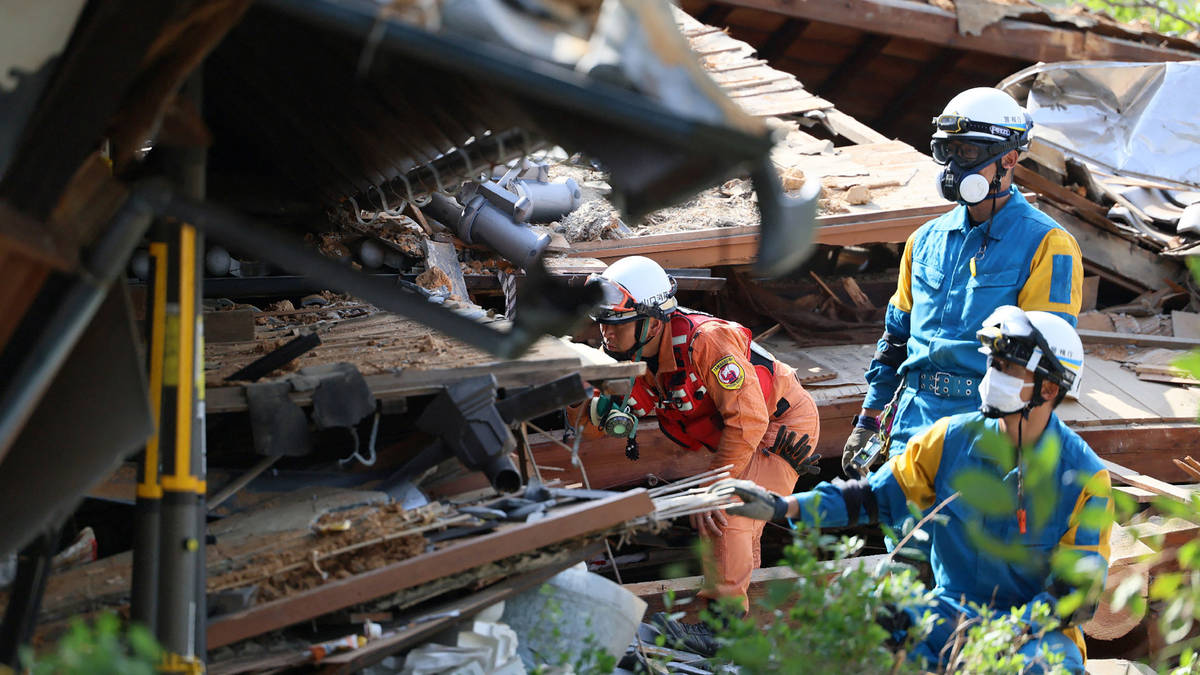
Aeon President Akio Yoshida told a press conference that staff successfully evacuated approximately 3,000 shoppers within half an hour of the first shaking. However, an explosion occurred fifty minutes later in an area where some employees remained or had returned, trapping individuals inside.
“We confirmed that all customers had been evacuated. We believed that employees had also evacuated, but it later emerged that some people had remained inside, or returned for whatever reason.”
Akio Yoshida, President of Aeon
Government officials and responders reported that it was a race against time to reach anyone trapped in the wreckage. Prime Minister Sanae Takaichi deployed around 170 soldiers to assist with the rescue operations. Authorities noted that a gas leak was suspected highly likely to have caused the mall explosion, as the building utilized liquefied petroleum gas stored in an outdoor tank.
Extreme Heat and Water Shortages Compel Survivors Into Cars
As search operations entered a critical fourth day, survivors confronted severe utility outages and extreme summer weather. The Japan Meteorological Agency and the Ministry of the Environment issued an extreme heat alert for Kumamoto city as temperatures peaked at 97°F following stifling conditions earlier in the week.
While electricity was progressively restored to most areas—with only about 800 households remaining without power—nearly 79,000 homes remained without tap water. More than 9,000 people sought refuge in evacuation shelters, where authorities scrambled to install auxiliary power sources to run air conditioning units.
Fuel shortages compounded the misery. Power outages disabled local gas stations while quake-damaged roads disrupted deliveries from surrounding regions. Lacking sufficient fuel and privacy, many residents resorted to sleeping in their cars, struggling to keep air conditioning running continuously for their families.
Hirokazu Sato, who lost his home in the disaster, explained the difficult daily calculus facing displaced families. I don’t know how soon I’d be able to move in,
Sato said regarding temporary housing options, noting that keeping the air conditioning running for his wife and three children rapidly depletes their fuel supply.
Military Relief Efforts and Industrial Supply Chain Impact
Japan’s Self-Defense Forces mobilized to distribute vital supplies, towing water tanks to community centers and schools across Yatsushiro city. Residents relied on military water bowsers, facing strict rationing limits of five liters per person amid broken municipal water mains.

Local official Akio Matsushita noted the immense challenge ahead for utility repair crews. It will require painstaking work, and there is currently no timetable,
Matsushita said at city hall, where officials erected emergency toilets over sewer manholes due to non-functioning facilities.
The earthquake also rattled a vital industrial and manufacturing corridor. Meanwhile, Taiwan Semiconductor Manufacturing Company evacuated workers from its Kumamoto facility following strong shaking, though the company confirmed its structure remained sound and operations were gradually resuming after post-quake inspections.
Historic Properties and Families Face Long Recovery
The tremors left deep cultural and personal scars across the prefecture. In Yatsushiro, Kinparo—a 116-year-old traditional Japanese inn registered as a historic property—suffered catastrophic damage when its roofed main entrance collapsed and exterior walls cracked.
Inn owner Keisuke Matsumoto surveyed the ruined gate of the property, which was established in 1910. The damage is tremendous and it would require significant repairs, and I can’t even think if or how I can do that,
Matsumoto said, emphasizing his hope to preserve the family heritage handed down through generations.
Across Kumamoto, residents confronted the reality of rebuilding amid recurring aftershocks, echoing the resilience shown following the devastating 2016 Kumamoto earthquake.
- SunHydrogen Tests Advanced Hydrogen Panels in Austin with CTF Solar
- Spain and France Hit by Some of EU’s Largest Wildfires Since 2016
- Trump’s Pressure on the Fed: The Battle Over Interest Rate Cuts (archynewsy.com)
- Widow Forced to Leave Home After Years of Legal Battle With Stepchildren (world-today-news.com)