
Trump’s $1.2 Trillion Golden Dome Missile Defense Plan Faces CBO Cost Warning and Technical Doubts
President Donald Trump’s signature defense initiative—the so-called “Golden Dome” missile defense system—would cost an estimated $1.2 trillion over 20 years, according to a newly released report from the nonpartisan Congressional Budget Office (CBO). The eye-watering price tag, which dwarfs the administration’s own projections, raises serious questions about the feasibility of a nationwide missile shield that Trump has framed as essential to preventing “World War III.”
First unveiled during Trump’s 2024 presidential campaign as a “GREAT IRON DOME MISSILE DEFENSE SHIELD OVER OUR ENTIRE COUNTRY,” the project has since evolved into the “Golden Dome,” a sprawling initiative that has already drawn competitive bids from 12 major defense contractors, including Raytheon, Lockheed Martin, Northrop Grumman, and Anduril. The CBO’s analysis suggests the system—if built as proposed—would consume nearly the entirety of the Pentagon’s annual budget for two decades, yet still leave critical vulnerabilities.
The Golden Dome concept, which Trump has described as a “game-changer” for U.S. Security, is modeled loosely after Israel’s Iron Dome system. However, experts and military strategists have long questioned whether scaling such a system to cover the entire continental United States—an area 3.8 million square miles larger than Israel—is technically or financially viable. The CBO’s report underscores these concerns, stating that even at its projected cost, the system would fail to block all missiles in a large-scale attack by a peer adversary like Russia or China.
From Campaign Promise to $1.2 Trillion Proposal
Trump’s push for a nationwide missile defense system gained momentum in 2024, when he framed it as a cornerstone of his foreign policy. During a campaign rally in June 2024, he declared that the system would be “the most advanced in the history of the world” and would “prevent World War III.” By 2025, the project had been rebranded as the “Golden Dome,” with the administration emphasizing its potential to integrate satellite-based interceptors and ground-based defenses.
In May 2025, Trump estimated the system’s cost at $175 billion, with deployment targeted for the end of his second term in 2029. However, the CBO’s analysis—released this week—paints a far grimmer financial picture. The agency’s report, obtained exclusively by World Today Journal, projects total costs at $1.2 trillion over two decades, a figure that includes research, development, testing, deployment, and ongoing maintenance.
“The system could be overwhelmed by a full-scale attack mounted by a peer or near-peer adversary. It would not be an impenetrable shield or be able to fully counter a large attack of the sort that Russia or China might be able to launch.”
Technical and Strategic Challenges
The Golden Dome’s ambitious scope—intended to protect the entire United States from ballistic and hypersonic missiles—presents formidable technical hurdles. Unlike Israel’s Iron Dome, which operates within a 40-mile radius and targets short-range rockets, the U.S. System would need to intercept missiles traveling at Mach 5 or faster, including those launched from intercontinental ranges. The CBO report highlights that even with the proposed $1.2 trillion investment, the system would struggle to intercept all incoming warheads in a coordinated attack.
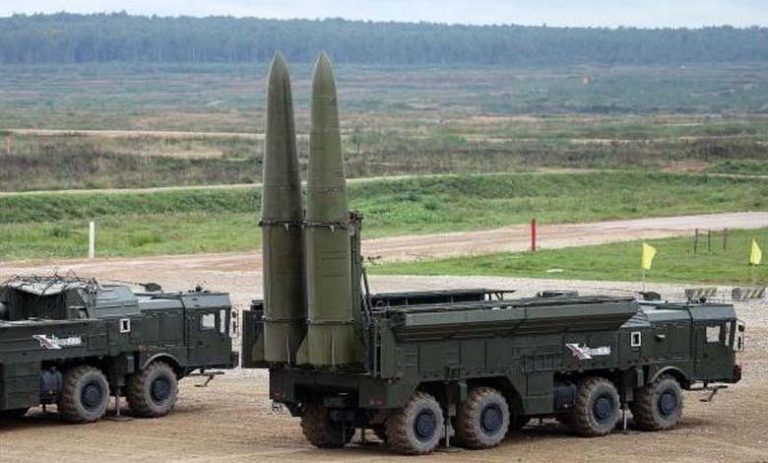
Space Force General Michael Guetlein, who testified before the House Armed Services Committee in April 2026, acknowledged these challenges. In his remarks, Guetlein described the satellite-based components of the Golden Dome as “cost-prohibitive and logistically complex”, suggesting that the system’s reliance on space-based interceptors could introduce new vulnerabilities. “We’re talking about a system that would require unprecedented coordination between ground, air, and space assets,” Guetlein said. “The question isn’t just whether it can work—it’s whether it can work before the first missile hits U.S. Soil.”
Critics, including defense analysts and former Pentagon officials, argue that the Golden Dome’s design risks diverting resources from existing missile defense programs, such as the Missile Defense Agency’s Ground-Based Midcourse Defense (GMD) system. The CBO report echoes these concerns, stating that the strategic consequences of deploying such a system remain “unclear” in the context of broader U.S. Defense strategy.
Defense Contractors Stand to Profit—Regardless of Outcome
Despite the technical and financial uncertainties, the Golden Dome has already become a boon for the defense industry. As of May 2026, 12 major contractors—including Raytheon, Lockheed Martin, Northrop Grumman, and Anduril—have secured $3.2 billion in initial contracts related to the project. Smaller firms, numbering in the thousands, are also vying for subcontracts, creating a ripple effect across the defense supply chain.
Industry analysts note that the Golden Dome’s sheer scale ensures that contracts will flow regardless of the system’s ultimate success. “This isn’t just about building a shield—it’s about creating a self-sustaining ecosystem of research, development, and production,” said Dr. Lisa Martinez, a defense economist at the RAND Corporation. “Even if the system never intercepts a single missile, the economic incentives for these companies are enormous.”
The CBO report does not address potential political fallout from the Golden Dome’s projected costs. With the U.S. National debt exceeding $34 trillion as of 2026, the $1.2 trillion price tag could further strain federal budgets, potentially sparking debates over alternative uses for defense spending. Lawmakers from both parties have already begun questioning the administration’s cost projections, with Senator Elizabeth Warren (D-MA) calling for an independent audit of the program’s financial assumptions.
What Happens Next?
The CBO’s report is expected to fuel ongoing congressional scrutiny of the Golden Dome. Key milestones in the coming months include:

- June 2026: The House Armed Services Committee is scheduled to hold hearings on missile defense funding, where the CBO’s findings will likely be a central topic. Committee calendar here.
- July 2026: The Pentagon is expected to release a revised cost-benefit analysis of the Golden Dome, incorporating the CBO’s projections. A draft of this analysis was leaked to Reuters earlier this month.
- September 2026: The White House will announce whether it will proceed with full-scale development of the Golden Dome or seek alternative missile defense strategies.
For readers seeking official updates, the following resources provide direct access to key documents:
- Congressional Budget Office (CBO) reports
- Missile Defense Agency (MDA) program updates
- U.S. Department of Defense press releases
- Congressional hearings and bills related to missile defense
The Golden Dome’s future hinges on whether lawmakers and defense experts can reconcile its ambitious goals with its staggering cost. As the debate unfolds, one thing is clear: This represents not just a question of technology or strategy—it’s a question of national priorities in an era of rising global tensions.
Have questions or insights on the Golden Dome? Share your thoughts in the comments below or contact our editors. For breaking updates, follow World Today Journal on social media.
Worth a look
- Italian Parliament Blocks Prosecutors from Accessing Delmastro’s Chat Logs, Sparking Outrage
- Shanhe Huixiang: New Historical Mystery Short Drama Released by Jishi News
- Report Claims Trump Immigration Policies Harm US Economy (archyde.com)
- US Customs Refunds $100 Billion in Trump Tariffs to Businesses (archyworldys.com)