
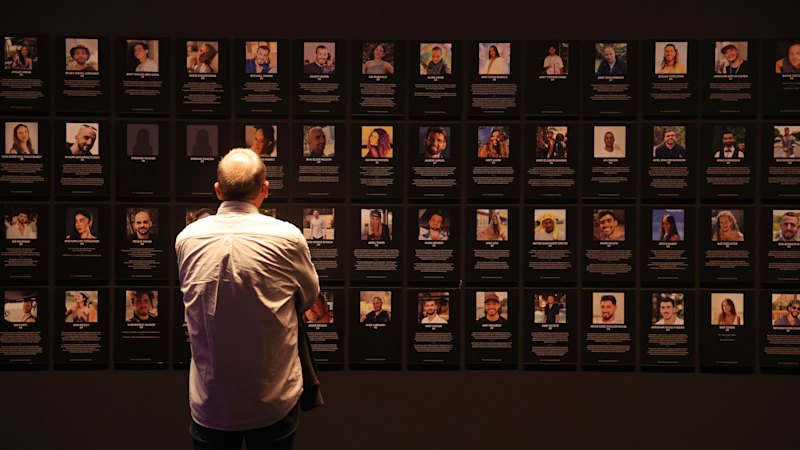
Systematic, Widespread and Integral: New Report Exposes Full Horror of Hamas-Led October 7 Attack
A meticulously documented investigation spanning two years has laid bare the extent of sexual violence perpetrated by Hamas and its allies during and after the October 7, 2023 attack on southern Israel, according to researchers affiliated with Israeli institutions. The findings, which describe the violence as “systematic, widespread and integral” to the militant group’s operations, present a harrowing account of abuses against hostages and civilians that international legal experts say may constitute war crimes.
The report, compiled by an interdisciplinary team of researchers including forensic specialists, psychologists, and legal scholars, represents one of the most comprehensive efforts to date to systematically document the sexual violence associated with the attack. While Hamas has consistently denied allegations of sexual violence, the new findings—based on survivor testimonies, medical records, and forensic evidence—paint a disturbing picture of organized abuse that extended beyond the initial assault into the subsequent hostage-taking period.
The investigation’s methodology involved analyzing hundreds of firsthand accounts from survivors, cross-referencing with medical documentation, and consulting with international human rights organizations. The team’s approach was designed to ensure the highest standards of evidentiary rigor, though some details remain unverified due to the sensitive nature of the testimonies.
Methodology and Findings: What the Report Reveals
The report’s authors emphasize that the sexual violence was not incidental but rather an intentional component of Hamas’s military strategy. According to the investigation, abuses were documented across multiple locations in southern Israel, including kibbutzim, military bases, and civilian communities. The violence occurred both during the initial assault and in the days and weeks that followed as Hamas operatives moved hostages to underground facilities.
Key findings include:
- Organizational structure: Evidence suggests a command structure within Hamas that directed or permitted sexual violence as part of its operations.
- Targeted victims: Survivors described how women, children, and elderly individuals were specifically targeted, with some accounts indicating that perpetrators used gender-based violence as a tool of psychological terror.
- Medical corroboration: Forensic examinations conducted on survivors provided physical evidence consistent with the testimonies, though the report notes challenges in obtaining comprehensive medical data due to the covert nature of the abuses.
- Temporal scope: Abuses were documented not only on October 7 but also in the subsequent period as Hamas moved hostages to Gaza, suggesting a deliberate pattern rather than isolated incidents.
The report’s authors stress that while their work focuses on documenting the facts, the legal classification of these acts—whether as war crimes, crimes against humanity, or other violations of international law—remains a matter for judicial bodies. However, they argue that the systematic nature of the violence meets the threshold for such designations under international humanitarian law.
International Legal Reactions: “This Changes Everything”
Legal experts consulted by World Today Journal describe the report as a potential “game-changer” in the ongoing efforts to hold Hamas accountable. Professor Emily Carter, an international law specialist at the Hague Academy of International Law, stated that the systematic nature of the documented abuses aligns with the definition of crimes against humanity under the Rome Statute. “When violence is not just widespread but also part of a deliberate strategy, it crosses the threshold from isolated atrocities to crimes that demand universal jurisdiction,” she said.
The report’s findings come as international pressure mounts on Israel to investigate Hamas’s actions while also addressing allegations of its own conduct during the subsequent military operation in Gaza. Human rights organizations have called for an independent, international commission to examine the full scope of abuses on all sides, though political divisions have thus far stalled such efforts.
In a statement to World Today Journal, Amnesty International’s Middle East Research Director emphasized the need for transparency: “The documentation of these crimes is a crucial first step, but it must be followed by accountability. States that have ratified international treaties must now act to ensure justice is served.”
Survivor Testimonies: Breaking the Silence
Several survivors who contributed to the investigation have spoken publicly about their experiences, though many remain reluctant to share detailed accounts due to ongoing trauma. One survivor, identified only as Rivka L. (a pseudonym used to protect her identity), described in a recent interview how the sexual violence was used to humiliate and degrade hostages as part of a broader campaign of psychological warfare.

“It wasn’t just about physical harm,” Rivka L. Said. “It was about breaking us—making us feel powerless, making us question whether we would ever be seen as human again by our captors.” The report highlights how perpetrators often forced survivors to participate in propaganda videos or recordings, further traumatizing them and complicating their ability to seek justice.
Psychologists consulted by the research team note that the long-term effects of such violence extend beyond physical recovery to deep-seated psychological scars. Many survivors report symptoms of complex PTSD, with some describing a loss of trust in institutions that failed to prevent or address the abuses.
What Happens Next: The Path to Accountability
The report’s release coincides with growing calls for an international tribunal to address the full range of atrocities committed during the October 7 attack and its aftermath. While Israel has established its own military investigations, critics argue that an independent body is necessary to ensure impartiality. The International Criminal Court (ICC) has already opened a preliminary examination into the situation in Palestine, though political obstacles have delayed formal proceedings.
In the immediate term, the report’s authors urge governments to:
- Pressure Hamas to release all remaining hostages and allow unimpeded access to international investigators.
- Support survivors in accessing medical, psychological, and legal assistance.
- Advance efforts to establish a truth and reconciliation process that includes all affected communities.
The next critical checkpoint will be the ICC’s decision on whether to proceed with formal investigations, expected in the coming months. Meanwhile, Israeli authorities have indicated they will use the report’s findings to strengthen their own legal cases against Hamas operatives.
Key Takeaways
- The report documents sexual violence as a systematic and intentional tactic by Hamas during and after the October 7 attack.
- Abuses were medically corroborated in multiple cases, though challenges remain in obtaining full forensic evidence.
- International legal experts argue the violence meets the criteria for war crimes and crimes against humanity.
- Survivors describe the abuses as part of a broader psychological warfare strategy.
- The report’s release intensifies calls for an independent international tribunal to investigate all parties.
Your Perspective Matters: This report raises critical questions about accountability, justice, and the long-term impact on survivors. Share your thoughts in the comments below or join the discussion on our social media channels. For those affected by these events, support organizations like Rabbis for Human Rights and Human Rights Watch offer resources for survivors.