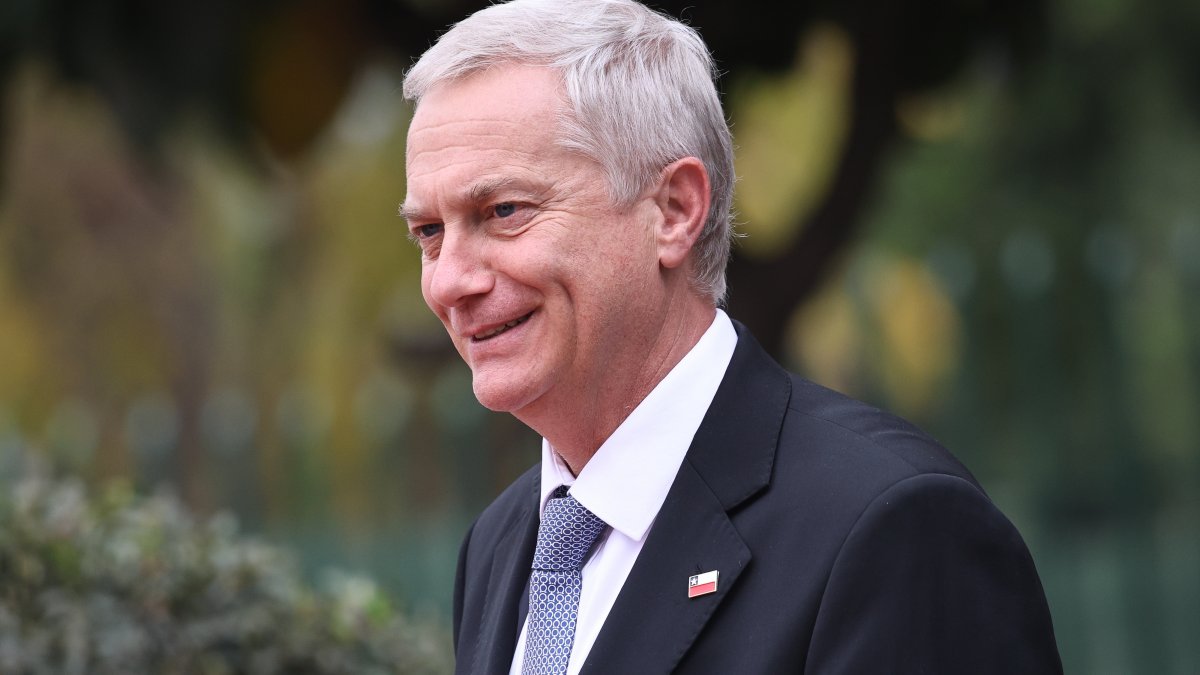
SANTIAGO, May 13, 2026 — Chilean President José Antonio Kast has reignited a national debate over school nutrition with his proposal to overhaul the country’s JUNAEB (Junta Nacional de Auxilio Escolar y Becas) program, which provides meals to millions of students daily. Kast’s administration argues that current spending—nearly 1.2 trillion Chilean pesos ($1.4 billion USD) annually—is plagued by inefficiency, with reports of food waste and mismanagement in schools across the country. Critics warn the reforms could disproportionately affect the most vulnerable children, while supporters say the changes are long overdue.
At a recent meeting with school directors under the banner “Directores por Chile,” Kast framed the issue starkly: *“A child can bring a sandwich to school and not eat the lunch provided by JUNAEB,”* he told attendees, citing anecdotes of waste in some institutions. The president’s remarks reflect broader concerns about how public funds are allocated in Chile’s education system, where 4.5 million students rely on JUNAEB for daily meals—a program that accounts for roughly 10% of the national education budget. The proposal comes as Kast’s government faces pressure to balance fiscal responsibility with social welfare priorities, particularly in a post-pandemic economic climate where inflation remains a challenge.
While Kast has ruled out direct cuts to the program’s funding, his administration is pushing for structural changes, including stricter oversight of school cafeterias, digital tracking of meal distributions, and potential adjustments to the menu offerings. The reforms have sparked polarized reactions: Parents and educators argue that any reduction in meal quality or access could exacerbate malnutrition among low-income students, while fiscal conservatives see the move as a necessary step to curb government overspending. The debate also intersects with broader education reforms, including Kast’s push to evaluate Servicios Locales de Educación Pública (SLEP)—local education providers—based on performance metrics.
Why the Junaeb Program Matters—and Why Reform Is Controversial
JUNAEB’s school nutrition program is a cornerstone of Chile’s social safety net, providing two meals daily to students from pre-kindergarten through high school in public and subsidized private schools. The program was expanded significantly under former President Michelle Bachelet (2014–2018) and later President Sebastián Piñera (2018–2022), with the goal of reducing childhood hunger and improving academic performance. Studies have linked school meals to higher test scores and lower dropout rates, particularly in disadvantaged communities.
However, critics—including Kast’s government—point to systemic issues. A 2025 audit by Chile’s Comptroller General’s Office found that up to 15% of meals served were either wasted or improperly distributed, with some schools reporting shortages of fresh produce or nutritional deficiencies in menus. Kast’s proposal aims to address these gaps by:
- Centralizing procurement to reduce costs and ensure consistency in food quality across regions.
- Implementing real-time monitoring of meal consumption, potentially through biometric or digital verification.
- Adjusting menus to align with nutritional guidelines, including reducing processed foods and increasing locally sourced ingredients.
- Increasing transparency in school cafeteria operations, with penalties for mismanagement.
The reforms come as Chile grapples with rising food prices and debates over how to allocate limited public resources. While Kast has emphasized that no student will be left without a meal, opponents argue that any reduction in program flexibility could lead to unintended consequences, such as schools substituting lower-quality alternatives or cutting portions. “The risk is that we end up with a program that saves money but doesn’t nourish children,” said Confederación de Profesores de Chile (CPCh) president María Jesús Castro in a recent statement.
Stakeholders React: Who Stands to Gain—or Lose?
Supporters of Kast’s approach include:
- Fiscal conservatives, who argue that Chile’s education budget—one of the highest in Latin America—must be scrutinized to avoid future austerity measures.
- Local school directors, some of whom have reported frustration with bureaucratic hurdles in accessing JUNAEB funds.
- Nutritionists, who welcome the push for fresher, more balanced menus.
Opposition comes from:
- Teachers’ unions, who fear the reforms could lead to longer school days as students are tasked with verifying meal distributions.
- Humanitarian organizations, such as UNICEF Chile, which warn that 1 in 5 Chilean children already experience food insecurity, according to 2025 data.
- Parents in rural areas, where transportation challenges could make it harder to source fresh ingredients for school kitchens.
*“The program’s success depends on its ability to reach every child, not just those in urban centers. If the reforms lead to logistical nightmares for remote schools, we’ll see malnutrition rise—not fall.”*
What Happens Next? The Timeline for Reform
Kast’s administration has not yet released a detailed legislative proposal, but key milestones include:
- June 2026: Presentation of a formal bill to Congress, including pilot programs for digital tracking in select regions.
- July–September 2026: Public consultations with schools, parents, and nutrition experts to refine the approach.
- October 2026: Potential vote in the Chamber of Deputies, with opposition parties likely to push for amendments.
- 2027: Phased implementation, with full rollout contingent on budget approval.
In the meantime, JUNAEB continues to operate under existing guidelines, though some schools have already begun voluntary adjustments, such as partnering with local farmers to reduce food miles. The program’s future hinges on whether Kast can strike a balance between fiscal discipline and social equity—a challenge that resonates far beyond Chile’s borders, as other Latin American nations grapple with similar dilemmas.
Key Takeaways
- Program scale: JUNAEB serves 4.5 million students daily, with an annual budget of nearly 1.2 trillion CLP ($1.4B USD).
- Waste concerns: Audits suggest 15% of meals are wasted or improperly distributed, prompting reform.
- Kast’s stance: No direct funding cuts proposed, but structural changes aim to improve efficiency and nutrition.
- Opposition risks: Teachers and advocates warn reforms could worsen food insecurity in rural or low-income areas.
- Next steps: Legislative process expected to begin in June 2026, with pilot programs in select regions.
- Broader context: Debate reflects Chile’s tension between social welfare and fiscal responsibility in education.
How This Affects Students—and What Parents Should Know
For families relying on JUNAEB, the reforms could mean several changes:
- Menu updates: Expect more fresh fruits, vegetables, and locally sourced proteins, with reduced processed foods.
- Portion adjustments: Some schools may see slight reductions in portion sizes to stretch budgets, though Kast has pledged no student will go hungry.
- New tracking: Schools may introduce systems to verify meal consumption, which could involve student participation (e.g., scanning cards at lunch).
- Rural challenges: Remote schools may face delays in implementing reforms due to logistical hurdles.
Parents concerned about their child’s meals are encouraged to:
- Monitor school communications for updates on menu changes.
- Contact their child’s school to inquire about any planned adjustments to meal distribution.
- Visit JUNAEB’s official website for the latest announcements.
- Advocate for transparency by attending local school board meetings.
Looking Ahead: What’s at Stake for Chile’s Education System
Beyond the immediate impact on school lunches, Kast’s reforms could signal a shift in how Chile prioritizes education funding. The government has also proposed:
- Stricter evaluations for Servicios Locales de Educación Pública (SLEP), tying funding to student performance.
- Expansion of alternative high-performing options (e.g., charter schools) to compete with traditional public schools.
- Increased focus on vocational training to address labor market demands.
These initiatives, if approved, would reshape Chile’s education landscape—one where accountability and innovation take center stage. For now, the focus remains on JUNAEB, where the question is not just about sandwiches and waste, but about the future of a generation’s health and education.
Next checkpoint: The Chilean government is expected to unveil a detailed legislative proposal for JUNAEB reforms in June 2026, followed by public hearings. Ministry of Education updates will be posted on their official website.
This story is evolving. Share your experience with school nutrition in Chile in the comments below, or tag us on social media with #JunaebReform. For official updates, follow JUNAEB and Ministerio de Educación.
- Lysandre Nadeau and Claude Bégin Make $185,000 Profit on Real Estate Sale in 3 Years
- Fire breaks out near Valle Aurelia metro station in Rome
- India’s Massive Student Protests Signal Growing Youth Frustration (newsdirectory3.com)
- RAP vs. IBR: What Your New Student Loan Bill Actually Costs (daybreakwire.com)