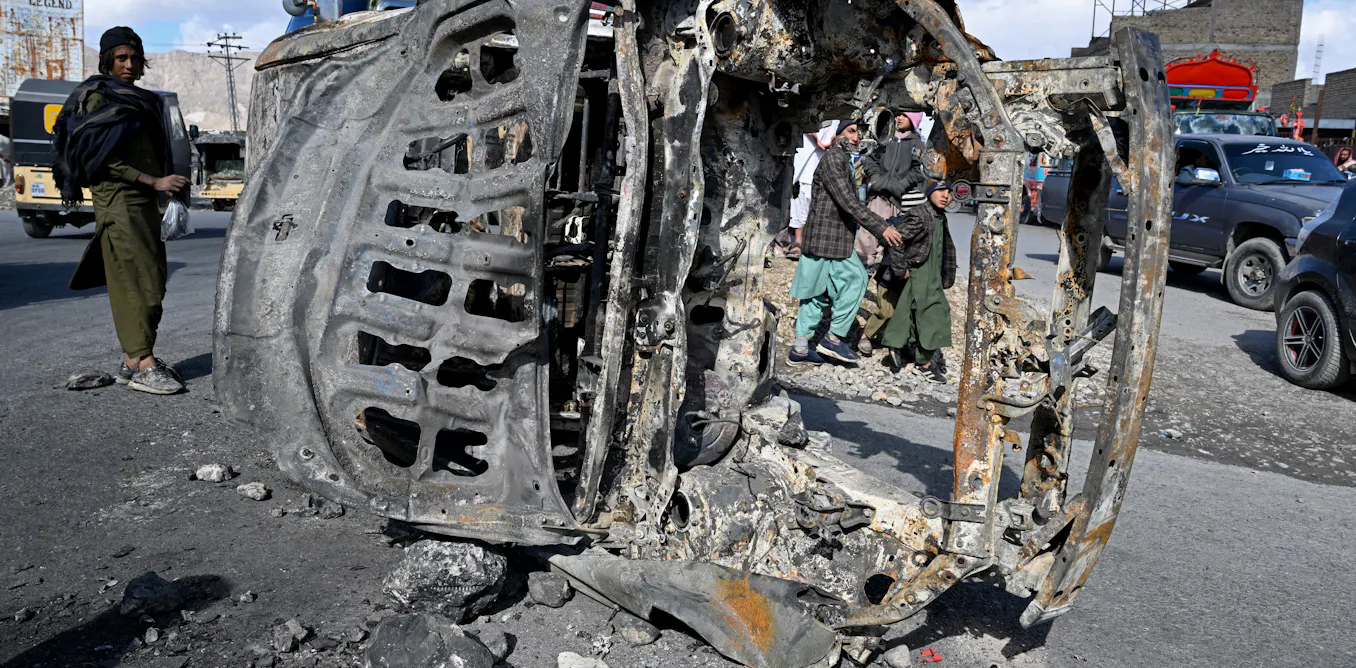
Balochistan Insurgency: Suicide Bombings and Rising Violence Threaten Pakistan’s Stability
Pakistan’s southwestern province of Balochistan is experiencing a dangerous escalation in violence, with insurgents launching coordinated attacks, deploying female suicide bombers, and expanding their operational reach into strategic areas. Over the past two months, militants have carried out at least 27 attacks across the province, killing dozens of security personnel and targeting critical infrastructure. The latest developments—including a foiled suicide bombing plot in Islamabad—highlight how the Baloch insurgency has evolved into one of Pakistan’s most pressing security challenges, with implications for regional stability and U.S. Strategic interests.
Balochistan, Pakistan’s largest province by land area but home to only 6% of the country’s population, sits at the crossroads of South Asia’s geopolitical tensions. Its vast natural resources—including copper, gold, and natural gas—make it a critical node in China’s Belt and Road Initiative, yet its residents remain among the poorest in the nation. The insurgency, rooted in historical grievances over marginalization and resource exploitation, has intensified in recent years as militant groups adopt increasingly sophisticated tactics, from maritime attacks to social media recruitment campaigns targeting educated youth, including women.
The recent surge in violence reflects a confluence of factors: a crackdown on peaceful dissent, the acquisition of abandoned U.S. Weapons from Afghanistan, tactical alliances with other insurgent groups, and the destabilizing effects of Iran’s ongoing conflict. Meanwhile, the insurgency is testing Pakistan’s ability to secure foreign investments—particularly in the Reko Diq copper-gold mine—and complicating its relations with both the U.S. And Iran.
What Is the Baloch Insurgency?
The Baloch insurgency is a decades-old struggle for autonomy or independence by the Baloch ethnic group, who number around 8–10 million across Pakistan, Iran, and Afghanistan. The conflict’s roots trace back to the 1948 annexation of the princely state of Kalat by Pakistan, which Baloch leaders resisted. While the movement initially focused on political and economic marginalization, it turned violent in the early 2000s with the rise of militant factions such as the Balochistan Liberation Army (BLA), founded in 2000, and the Balochistan Liberation Front (BLF), revived in 2004 under leader Allah Nazar Baloch.
Today, the insurgency is no longer confined to tribal strongholds. Militant groups have broadened their appeal by targeting educated urban youth, leveraging social media to amplify grievances over state repression, enforced disappearances, and the exploitation of Balochistan’s vast natural resources. The province is home to the world’s largest undeveloped copper-gold deposit at the Reko Diq mine, yet its infrastructure and economic development lag far behind other regions of Pakistan. This disparity fuels recruitment, with militants framing their struggle as a defense of the Baloch “motherland.”
According to U.S. State Department designations, the BLA claimed responsibility for 521 attacks in 2025, though independent monitors recorded fewer incidents, around 254. The discrepancy underscores the challenges of verifying militant claims in a conflict where both sides employ propaganda.
Key Militant Groups and Their Tactics
- Balochistan Liberation Army (BLA): The oldest and most active group, responsible for high-profile attacks like the 2025 hijacking of the Jaffar Express train, which held 350+ passengers for 30 hours.
- Balochistan Liberation Front (BLF): Led by Allah Nazar Baloch, the BLF has expanded its operations, including a female suicide bomber wing and attacks on foreign companies in Balochistan.
- Baloch Raji Ajohi Sangar (BRAS): A 2018 alliance of Baloch militant groups that has strengthened coordination and tactical innovation.
- Sindhudesh Revolutionary Army (SRA): A Sindhi separatist group that has extended Baloch militants’ reach into Karachi, Pakistan’s economic hub.
The insurgency’s evolution is evident in two recent operations: the Jaffar Express hijacking in March 2025 and the formation of the Hammal Maritime Defence Force in April 2026, which announced its first attack on a Pakistan Coast Guard vessel near Jiwani in Gwadar District. These moves signal a shift toward targeting Pakistan’s economic lifelines, including the China-Pakistan Economic Corridor (CPEC), which relies on Gwadar Port for trade with China.
Why Is Violence Escalating Now?
Analysts cite four key factors driving the recent surge in violence:
1. Crackdown on Peaceful Dissent
Pakistan’s government has increasingly restricted political space in Balochistan, arresting activists and suppressing protests. In March 2025, following the Jaffar Express attack, Mahrang Baloch, a prominent human rights defender, was detained under anti-terrorism laws. Three protesters were also killed during a peaceful sit-in in Quetta. Such repression pushes disaffected civilians toward militant recruitment, as nonviolent avenues for change are closed.
2. Acquisition of U.S. Weapons from Afghanistan
Baloch militants have reportedly seized abandoned U.S. Military hardware left behind during the 2021 Afghanistan withdrawal, including M4 and M16 rifles with thermal optics. These weapons have been linked to the Jaffar Express attack, enhancing the insurgents’ firepower and tactical capabilities. The arms influx reflects the porous borders between Afghanistan and Pakistan, which militants exploit for smuggling and recruitment.
3. Tactical Alliances with Other Insurgent Groups
The BLA has deepened operational ties with the Tehrik-i-Taliban Pakistan (TTP), despite ideological differences. The TTP, designated as the world’s fastest-growing insurgent group by the Institute for Economics and Peace, has shared tactics such as suicide bombings, sniper ambushes, and town takeovers. This convergence has amplified the insurgency’s lethality and geographic spread.
4. Strategic Use of Social Media and Female Recruits
Baloch militants have mastered digital propaganda, targeting educated youth—including women—through platforms like X (Twitter) and Instagram. The BLA’s Majeed Brigade has formalized a women’s wing, and at least five female suicide bombers have been deployed since 2022. Female operatives are used for their ability to evade security profiling and amplify media impact, as seen in the May 2026 foiled plot in Islamabad, where authorities arrested a young Baloch woman suspected of preparing a suicide attack.
Militants frame their use of women as both a tactical advantage and a symbolic challenge to Pakistan’s patriarchal norms, broadening the insurgency’s appeal beyond traditional tribal bases.
Cross-Border Tensions: How Iran’s War Fuels the Insurgency
Balochistan’s insurgency is increasingly intertwined with Iran’s destabilization. Ethnic Baloch communities straddle the Pakistan-Iran border, and the BLA maintains a presence in Iran’s Sistan and Baluchestan province. The “Greater Balochistan” narrative—advocating for the reunification of Baloch lands across both states—is gaining traction in Iran, where weakened border enforcement allows militants greater freedom to move, recruit, and coordinate.
While cross-border trade has declined since Iran’s conflict began, the illicit economy—including fuel and narcotics smuggling—has expanded. Militants tax these networks, further funding their operations. The situation escalated in January 2024, when Iran and Pakistan exchanged retaliatory strikes on Baloch militant camps along their shared border. Attacks on Pakistani migrants in Iran, such as the April 2025 killings, have strained relations further, raising fears of interstate confrontation over separatist activity.
With Iran’s stability deteriorating, the risk of spillover violence into Balochistan is growing. Pakistan’s military is already stretched thin, and the insurgency’s expansion into maritime and urban domains complicates counterterrorism efforts.
U.S.-Pakistan Relations: A Transactional Alliance Under Pressure
The Baloch insurgency has become a litmus test for U.S.-Pakistan relations, which have warmed in recent years amid shared interests in counterterrorism and critical minerals. In August 2025, the U.S. Designated the BLA and its Majeed Brigade as foreign terrorist organizations (FTOs), a move Pakistan had long sought. However, the insurgency’s persistence threatens U.S. Investments in Balochistan, including a $1.3 billion Export-Import Bank loan for the Reko Diq mine—America’s largest critical minerals project to date.
The insurgency directly challenges Pakistan’s ability to secure these investments. In November 2025, a BLF-affiliated female suicide bomber, Zareena Rafiq, attacked a Pakistan paramilitary base near Reko Diq, underscoring the vulnerability of foreign projects. In April 2026, a BLF commander declared that the group would target all foreign companies in Balochistan, regardless of origin, further escalating the threat.
Yet the U.S.-Pakistan partnership remains transactional. Washington’s support hinges on Pakistan’s performance in counterterrorism, mediation with Iran, and mineral access. Without addressing the root causes of the insurgency—state repression, political marginalization, and resource grievances—the broader reset in relations is unlikely to yield stability. Analysts warn that the current approach risks deepening the cycle of violence rather than resolving it.
What’s Next? Key Developments to Watch
Several factors will shape the insurgency’s trajectory in the coming months:
- Militant Tactics: The formation of the Hammal Maritime Defence Force suggests a shift toward targeting Pakistan’s coastal security, particularly Gwadar Port—a linchpin of CPEC.
- U.S. Pressure: Washington may increase sanctions or military aid to Pakistan to combat the insurgency, but without addressing Baloch grievances, such measures could backfire.
- Iran-Pakistan Relations: If Iran’s conflict intensifies, cross-border militant activity is likely to rise, further destabilizing Balochistan.
- Economic Exploitation: Foreign companies operating in Balochistan—especially in mining—face heightened risks, potentially deterring future investments.
- Social Media Recruitment: Militants’ use of digital platforms to radicalize youth, including women, will remain a critical challenge for Pakistani authorities.
The next major checkpoint will be Pakistan’s response to the BLF’s April 2026 threat against foreign companies. If attacks escalate, the U.S. May demand stronger counterinsurgency measures, while Pakistan could face pressure to negotiate with Baloch leaders—a politically sensitive move given the government’s historical rejection of separatist demands.
Key Takeaways
- The Baloch insurgency is no longer a tribal revolt but a broad-based movement targeting Pakistan’s economic and security interests.
- Female suicide bombers and maritime attacks signal a shift toward asymmetric warfare, making the conflict harder to contain.
- Iran’s destabilization is creating new opportunities for militants, while U.S. Investments in Balochistan’s resources are under direct threat.
- Pakistan’s crackdown on dissent and failure to address grievances risk further radicalizing Baloch youth.
- The U.S.-Pakistan alliance is fragile, hinging on Pakistan’s ability to deliver security without alienating Baloch communities.
For readers seeking official updates, the Pakistani government’s press releases and the U.S. State Department’s terrorism designations provide verified information. Security advisories for foreign companies operating in Balochistan can be found through the Overseas Security Advisory Council (OSAC).
As the insurgency intensifies, the international community will be watching closely. Will Pakistan’s military succeed in suppressing the militants, or will the conflict spiral into a prolonged insurgency with regional repercussions? The answers will determine not only Balochistan’s future but also the stability of South Asia’s most volatile borderlands.
Share your thoughts on this developing story in the comments below or on our social media channels. For real-time updates, follow @WorldTodayJrnl on X (Twitter).
Keep reading
- How Chilean Pension Funds (AFP) are Rescuing the Matte and Angelini Forestry Empire
- US-Iran Relations: Negotiating a Path to Recovery
- Wild Squirrel Leaps Out of Car, Causes Chaos in Japan (world-today-news.com)
- South Africa’s Public Investment Corporation Faces Governance Crisis Amid CEO Suspension (time.news)