
For nearly three decades, Bosnia and Herzegovina has existed as a complex diplomatic experiment, a state held together by the fragile architecture of the 1995 Dayton Agreement. While the guns have long been silent, the country has recently emerged as a critical focal point for a different kind of struggle: a geopolitical tug-of-war involving the European Union, the United States and the lingering influence of Russia in the Balkans.
The tension is not merely about internal governance, but about the strategic alignment of the West. As the European Union pushes the country toward membership and the United States prioritizes regional stability and the rule of law, Bosnia and Herzegovina has become a testing ground for how these two powers coordinate—or clash—in the face of rising separatism and foreign interference. At the center of this storm is the Office of the High Representative (OHR), an international body with the extraordinary power to override local laws.
Current events suggest that the stability of the region now hinges on whether the EU and the US can maintain a unified front. With the rise of nationalist rhetoric in the Republika Srpska (RS) and the complexities of the EU accession process, the stakes have shifted from post-war recovery to a broader struggle over the sovereignty and future orientation of the Balkan peninsula.
The High Representative and the Crisis of Legitimacy
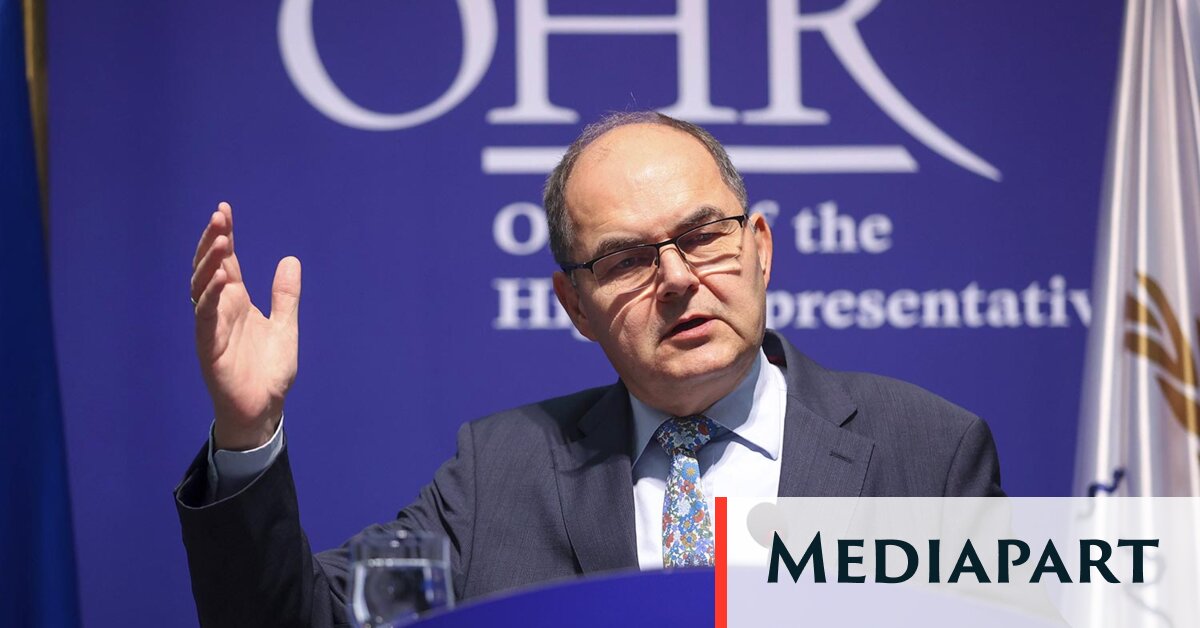
The most visible flashpoint in this geopolitical struggle is the role of Christian Schmidt, the current High Representative for Bosnia and Herzegovina. The OHR is designed to ensure the implementation of the peace agreement, and Schmidt wields the so-called “Bonn Powers,” which allow him to impose legislation and remove officials who obstruct the peace process.
However, Schmidt’s tenure has been marked by a profound legitimacy crisis. While the United States and the majority of EU member states recognize his authority, leaders in the Republika Srpska—most notably Milorad Dodik—have refused to acknowledge him, arguing that his appointment was not properly confirmed by the UN Security Council. This divide has transformed the OHR from a tool of stability into a catalyst for political friction.
The friction reached a peak when Schmidt used his powers to amend the election law to prevent ethnic gerrymandering and to assert state ownership over forest land, moves designed to prevent the fragmentation of the state. These actions are viewed by the US as essential for preserving the integrity of the country, but they have created a diplomatic tightrope for the EU, which must balance the need for stability with the democratic requirements of its own accession criteria.
EU Accession vs. US Security Imperatives
While the EU and the US are generally aligned, their methods for stabilizing Bosnia and Herzegovina differ in nuance and priority. For the European Union, the primary “carrot” is membership. On December 15, 2022, the EU officially granted Bosnia and Herzegovina candidate status, signaling a path toward full integration that requires significant judicial and administrative reforms.
The EU’s approach is largely focused on the “Growth Plan for the Western Balkans,” which links financial aid and market access to the implementation of specific reforms. This framework aims to pull the country toward European standards of governance through economic incentive and legal harmonization.
The United States, conversely, often employs a more direct security-oriented approach. Washington has been more aggressive in using “sticks” to deter secessionist threats. The US Department of the Treasury has utilized Office of Foreign Assets Control (OFAC) sanctions against individuals, including Milorad Dodik, who are deemed to be undermining the peace agreement or promoting instability.
This creates a dynamic where the US acts as the security guarantor and “enforcer,” while the EU acts as the long-term political and economic destination. When these roles are synchronized, the pressure on Bosnian nationalists is effective. However, when the EU hesitates to impose sanctions or when US policy shifts due to domestic priorities, the resulting gap is often exploited by local actors seeking to weaken the central state.
The Russian Factor and the Proxy Struggle
The “battlefield” in Bosnia and Herzegovina is not just between Western powers, but is heavily influenced by Russia’s strategic interest in preventing further NATO and EU expansion. Moscow has historically maintained close ties with the Republika Srpska, providing diplomatic cover and economic support to leaders who challenge the central government in Sarajevo.
By supporting the narrative that the High Representative is an “illegal” foreign entity, Russia finds a low-cost way to destabilize a region that is critical to NATO’s southern flank. The internal divide between the Federation of Bosnia and Herzegovina and the Republika Srpska is not merely a remnant of the 1990s conflict; it is a modern geopolitical fault line. Whenever the RS threatens to withdraw from state-level institutions—such as the judiciary or the army—it effectively creates a vacuum that invites external influence.
For the US and EU, the challenge is to ensure that the push for reform does not inadvertently alienate the RS population, pushing them further into the orbit of Moscow. This requires a delicate balance of insisting on the rule of law while offering an inclusive vision of a European future that benefits all ethnic groups in the country.
What This Means for the Future of the Balkans
The situation in Bosnia and Herzegovina is a bellwether for the broader Western strategy in the Balkans. If the EU and US can successfully integrate the country, it would mark a definitive victory for the liberal international order in Southeast Europe. If they fail, or if the country fractures, it could trigger a domino effect of instability across neighboring states.
The immediate future depends on three key factors:
- The Sustainability of the OHR: Whether the international community can find a way to transition from “imposed” governance to a locally owned, sustainable legal framework.
- EU Enforcement: Whether the EU will move beyond “candidate status” and set hard deadlines for the reforms necessary to prevent state capture.
- US Consistency: Whether Washington will continue to provide the security backing and sanctions pressure necessary to deter secession.
For the citizens of Bosnia and Herzegovina, the geopolitical maneuvering often feels distant from the daily struggle with inflation, corruption, and the exodus of young people. However, the “battle” between these global powers determines the very nature of their citizenship—whether they live in a functional, sovereign state or a fragmented territory serving as a pawn in a larger game.
Key Geopolitical Dynamics in Bosnia and Herzegovina
| Entity | Primary Goal | Primary Tool | Key Concern |
|---|---|---|---|
| European Union | Integration/Accession | Growth Plan & Membership Status | Institutional Reform & Stability |
| United States | Regional Security | Sanctions & Diplomatic Pressure | Secession & State Collapse |
| Russia | Strategic Disruption | Support for RS Nationalists | NATO/EU Expansion |
The next critical checkpoint for the country will be the continued monitoring of the EU’s “fundamental reforms” requirements, as the European Commission periodically reviews the country’s progress toward membership. These reviews will determine whether the “carrot” of the EU remains a viable motivator for Bosnian leaders.
Do you believe the EU’s membership path is enough to stabilize the Balkans, or is a stronger security approach required? Share your thoughts in the comments below.