University of Central Florida Graduation AI Controversy: Students Boo Speaker Over ‘Industrial Revolution’ Comparison
The atmosphere at a University of Central Florida (UCF) commencement ceremony shifted abruptly from celebration to confrontation recently, as the graduating class made their feelings on artificial intelligence known with resounding clarity. In a moment that captured the growing tension between corporate optimism and graduate anxiety, students loudly booed a commencement speaker after she described the rise of AI as the “next Industrial Revolution.”
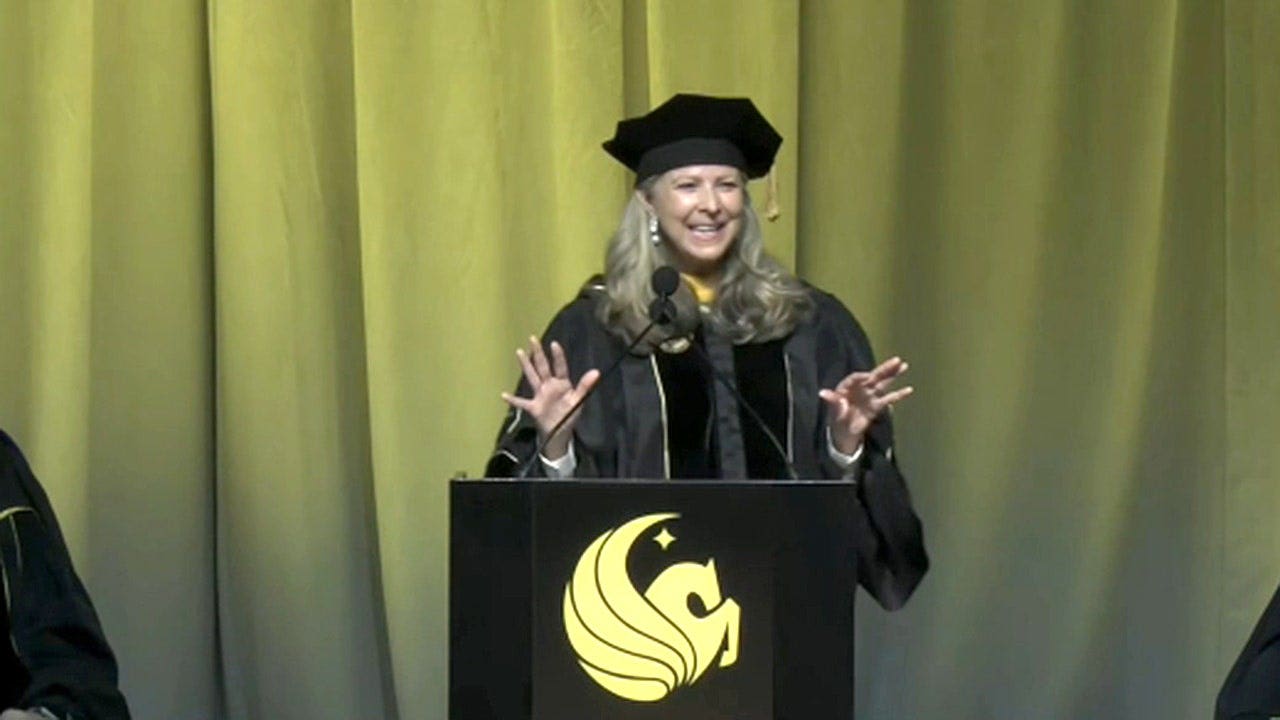
The speaker, Gloria Caulfield, a real estate development executive, intended to offer perspective on the era of transformation these graduates are entering. However, her framing of the current technological shift as a “profound change” struck a nerve with a student body increasingly wary of the economic and professional volatility associated with generative AI. The reaction was so immediate and intense that Caulfield was forced to pause her address, momentarily stepping away from the podium.
This incident is more than a simple case of a speaker misreading the room; it is a vivid illustration of the cultural and economic divide currently defining the AI era. While executives and investors often view AI through the lens of efficiency and “revolution,” the individuals entering the workforce in 2026 see a landscape where their newly acquired degrees may be competing with algorithms. For the University of Central Florida graduates, the term “Industrial Revolution” may not evoke progress, but rather the historical displacement of labor and the systemic upheaval that follows.
The Anatomy of a Tense Exchange
The friction began when Caulfield spoke about the current state of technology, asserting that “the rise of artificial intelligence is the next Industrial Revolution” and noting that the students were “living in a time of profound change.” The resulting wave of boos was loud enough to disrupt the flow of the ceremony, leading Caulfield to throw her hands up in the air in a gesture of surprise.

“Woop, what happened?” Caulfield asked the crowd, followed by a nervous laugh. She then sought permission to continue, asking, “OK, I struck a chord. May I finish?”
As the noise subsided, Caulfield attempted to pivot, searching for common ground. She noted, “Only a few years ago, AI was not a factor in our lives.” This specific observation—acknowledging the suddenness of the AI surge—seemed to resonate with the students, triggering a burst of raucous applause. The oscillation between boos and cheers highlighted the “bipolar” nature of the topic, as Caulfield herself observed.
However, the harmony was short-lived. When Caulfield remarked that “AI capabilities are in the palm of our hands,” the crowd returned to booing. Caulfield responded playfully, saying, “Oh I love it, passion: let’s go,” before adopting a tone reminiscent of a teacher managing a classroom. “OK, I don’t want any giggles when I say this. We have been through this before,” she told the graduates.
The ‘Industrial Revolution’ Metaphor: Why it Triggered Backlash
To a real estate executive or a corporate leader, comparing AI to the Industrial Revolution is often meant as a compliment to the scale of the innovation. In economic terms, an industrial revolution represents a fundamental shift in how goods are produced and services are delivered, typically leading to long-term increases in productivity and GDP. However, from the perspective of a graduate, the historical precedent of the Industrial Revolution is fraught with instability.
The original Industrial Revolution of the 18th and 19th centuries was characterized by the displacement of skilled artisans and the rise of the factory system, which initially led to grueling working conditions and significant social unrest. By invoking this specific historical parallel, Caulfield inadvertently reminded the students of the “creative destruction” inherent in such shifts—where old roles are destroyed to make way for new ones. For a student who has spent years specializing in a field that may now be partially automated, the “revolution” feels less like an opportunity and more like a threat to their livelihood.
This sentiment is echoed in broader economic discussions regarding the vulnerability of white-collar professions. Unlike previous waves of automation that primarily affected manual labor, the current AI wave targets cognitive tasks, including writing, coding, and analysis—the particularly skills these graduates have been trained to provide. The visceral reaction at UCF suggests that the “optimism gap” between those who own the technology and those who must work alongside it is widening.
A Generational Divide in Technological Adaptation
In an attempt to bridge the gap, Caulfield drew a comparison between the current AI surge and her own experience graduating college during the early rise of the internet. She admitted, “I know it sounds amusing, but at that time we had no idea how any of these technologies would impact the world and our lives.”
While the comparison is logically sound—both the internet and AI are general-purpose technologies that reshape entire economies—the emotional resonance differs. The internet was largely seen as a tool for connectivity and information access; it augmented human communication. AI, conversely, is often framed as a tool for replacement. The anxiety of the 2026 graduate is not necessarily about the existence of the tool, but about the utility of the human in a world where the tool can perform the core functions of their degree.
This tension underscores a critical challenge for leaders and educators: how to frame technological progress without dismissing the legitimate economic fears of the youth. When a speaker praises a technology that the audience perceives as a threat to their stability, the message is received not as inspiration, but as tone-deafness.
What This Means for the Future of Work
The UCF incident serves as a microcosm of a global conversation about the social contract in the age of AI. As we navigate this transition, several key dynamics are becoming apparent:

- The Erosion of Entry-Level Stability: Many of the tasks traditionally assigned to junior employees—summarization, basic research, and initial drafting—are the most easily automated by AI. This creates a “ladder problem,” where the first rungs of professional development are disappearing.
- The Demand for ‘Human-Centric’ Skills: As technical skills become commoditized by AI, there is a rising premium on emotional intelligence, ethical judgment, and complex interpersonal negotiation—skills that are harder to quantify but more essential than ever.
- Academic Anxiety: Universities are struggling to update curricula in real-time to ensure that degrees remain relevant. The boos at UCF may reflect a frustration with an educational system that students feel has not adequately prepared them for an AI-driven market.
For those entering the market, the goal is no longer just to be “proficient” in a subject, but to be “AI-augmented.” This means moving from being a practitioner of a task to being an editor and strategist of AI-generated output. However, this transition requires a level of psychological and economic security that many new graduates currently lack.
Key Takeaways from the UCF Incident
- The “Optimism Gap”: There is a stark contrast between how corporate executives and recent graduates perceive the trajectory of artificial intelligence.
- Historical Triggers: Comparing AI to the Industrial Revolution can be perceived as a threat of labor displacement rather than a promise of progress.
- Demand for Empathy: Commencement addresses that overlook the precarious nature of the current job market risk alienating their audience.
- Bipolar Sentiment: Students are not necessarily “anti-AI” (as evidenced by their cheers when acknowledging AI’s recent emergence), but they are skeptical of the narratives surrounding its “revolutionary” benefits.
As AI continues to integrate into the global economy, the friction witnessed at the University of Central Florida will likely become more common. The challenge for society will be to ensure that the “next Industrial Revolution” does not leave a generation of highly educated young people feeling obsolete before they have even begun their careers.
The next major checkpoint for the discourse on AI and employment will be the upcoming quarterly labor reports and university placement statistics for the Class of 2026, which will provide empirical data on how AI is actually affecting entry-level hiring trends.
We want to hear from you: Do you believe the “Industrial Revolution” is a fair comparison for the AI era, or does it ignore the unique threats of today? Share your thoughts in the comments below.
Worth a look