For millions of immigrants navigating the complex path toward permanent residency in the United States, a single phrase often triggers significant anxiety: “public charge.” The fear that accessing essential government support—such as food assistance or healthcare—could jeopardize a future Green Card application is a pervasive concern that often leads families to forgo critical services they are legally entitled to receive.
At its core, the public charge rule is a mechanism used by U.S. Citizenship and Immigration Services (USCIS) to determine if an applicant is likely to become primarily dependent on the government for subsistence. While the policy has been a centerpiece of political debate and has undergone various revisions across different presidential administrations, the current regulatory framework provides specific distinctions between types of public benefits.
Understanding the nuance between “cash assistance” and “non-cash benefits” is essential for anyone seeking legal permanent resident status. For many, the distinction is the difference between a routine application process and a potential denial based on grounds of inadmissibility. As the policy landscape continues to evolve, staying informed through official government channels is the only way to ensure a secure immigration trajectory.
The following analysis clarifies how benefits like the Supplemental Nutrition Assistance Program (SNAP) and Medicaid interact with the public charge determination and what factors immigration officers actually weigh when reviewing a case.
Defining the Public Charge Rule
A “public charge” is defined as an individual who is likely to become primarily dependent on the government for subsistence. Under the official USCIS guidelines, this determination is not based on a single event or the use of a single benefit, but rather on a “totality of circumstances” evaluation.
When an individual applies for a Green Card (permanent residency) or adjusts their status, USCIS officers examine whether the applicant’s financial situation, health, and social support systems suggest they will rely on federal government funds for their basic needs. If an officer determines that an applicant is likely to be a public charge, they may be found inadmissible, meaning their application for residency could be denied.
this rule generally applies to those applying for family-based or employment-based immigrant visas. Certain categories of immigrants, such as refugees, asylees, and T or U visa holders (victims of trafficking or crime), are typically exempt from the public charge rule.
Do Medicaid and SNAP Affect Residency Applications?
One of the most common points of confusion involves the use of non-cash, health-related, or nutrition-based benefits. Under the current regulatory framework, the U.S. Government distinguishes between benefits that provide direct cash and those that provide specific services or goods.
Non-Cash Benefits (Generally Not Considered)
According to current USCIS policy, the use of the following benefits is generally not considered when determining if someone is a public charge:
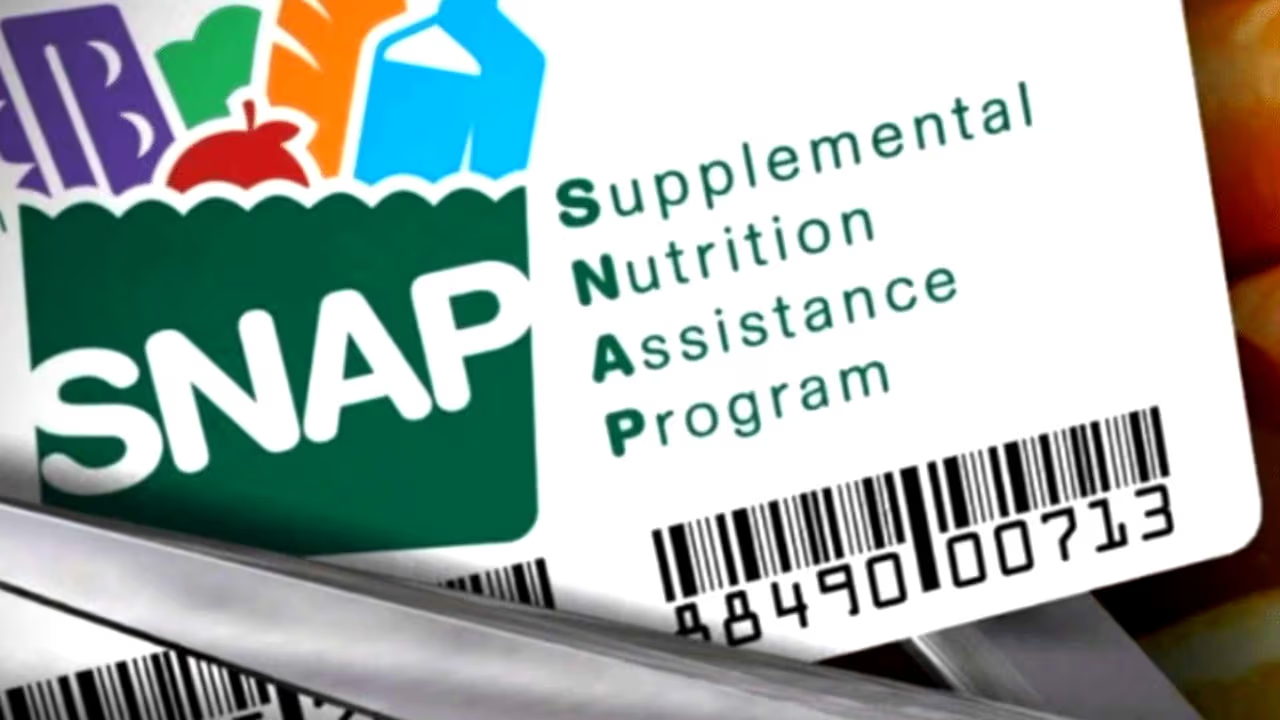
- SNAP (Supplemental Nutrition Assistance Program): Also known as food stamps, these benefits are designated for nutrition and are not viewed as cash assistance.
- Medicaid (with exceptions): Most Medicaid benefits are excluded from the public charge determination. However, there is a critical exception: Medicaid used to pay for long-term institutionalization (such as nursing home care) can be considered.
- CHIP (Children’s Health Insurance Program): Health coverage for children does not count toward a public charge determination.
- Marketplace Health Insurance: Using health insurance subsidies through the Affordable Care Act (ACA) is not a factor in public charge assessments.
- Public Housing: Access to government-subsidized housing is generally not considered.
Benefits That May Trigger a Public Charge Determination
Conversely, certain types of assistance are viewed as indicators of potential government dependence and may be weighed heavily by immigration officials:
- Cash Assistance for Income Maintenance: This includes programs like Temporary Assistance for Needy Families (TANF) or State Supplementary Supplemental Security Income (SSI) used for basic living expenses.
- Long-Term Institutional Care: As mentioned, if the government pays for an individual’s residence in a long-term care facility (nursing home or psychiatric hospital), this is typically considered a public charge factor.
The “Totality of Circumstances” Evaluation
USCIS does not simply look at a checklist of benefits. Instead, they employ a holistic approach to determine if an applicant is likely to become a public charge. This “totality of circumstances” test allows officers to weigh negative factors against positive ones.

Positive Factors
Applicants can offset the use of certain benefits by demonstrating strength in other areas of their lives. Positive factors include:
- Age and Health: Younger, healthier individuals are generally seen as less likely to require long-term government support.
- Education and Job Skills: A higher level of education or specialized professional certifications increases an applicant’s employability and earning potential.
- Financial Assets: Savings, investments, and property ownership demonstrate financial independence.
- Family Support: Strong ties to family members who can provide financial or emotional support.
The Role of the Affidavit of Support
For many family-sponsored immigrants, the most critical safeguard against a public charge denial is the Affidavit of Support (Form I-864). This is a legally binding contract between the immigrant’s sponsor (usually a U.S. Citizen or permanent resident) and the U.S. Government.
By signing this form, the sponsor guarantees that they will provide the immigrant with enough financial support to ensure they do not become a public charge. The sponsor must prove their income meets specific federal poverty guidelines. If the sponsor’s income is insufficient, they may need a joint sponsor to provide additional financial guarantees.
Navigating Policy Shifts and Legal Risks
The public charge rule is often subject to change when new presidential administrations take office. Historically, different administrations have held diverging views on whether non-cash benefits—like SNAP or Medicaid—should be included in the public charge calculation. When rules are in flux, it can create a “chilling effect,” where immigrants avoid necessary medical care or food assistance out of fear that a future rule change might retroactively affect their application.
Because immigration law is highly technical and subject to administrative discretion, relying on general advice can be risky. The specific details of an individual’s case—such as the timing of benefit use and the specific type of Medicaid program accessed—can change the outcome of an application.
Practical Steps for Applicants
To minimize risk during the residency process, applicants are encouraged to:
- Maintain Detailed Records: Keep a complete history of all government benefits received, including the dates, amounts, and the specific names of the programs.
- Secure Strong Sponsorship: Ensure that the Affidavit of Support is backed by a sponsor with stable, verifiable income that comfortably exceeds the federal minimum requirements.
- Prioritize Legal Counsel: Consult with a licensed immigration attorney or a Department of Justice (DOJ) accredited representative before applying for benefits if there is any uncertainty about their status.
- Verify Current Rules: Regularly check the Federal Register or the official USCIS website for any “Notice of Proposed Rulemaking” (NPRM) that could signal upcoming changes to the public charge criteria.
Frequently Asked Questions
| Benefit Type | Likely Public Charge Trigger? | Reasoning |
|---|---|---|
| SNAP (Food Stamps) | No | Non-cash nutrition benefit. |
| Standard Medicaid | No | Health service, not cash subsistence. |
| Institutional Medicaid | Yes | Covers long-term government-funded care. |
| TANF / Cash Aid | Yes | Direct cash for income maintenance. |
| ACA Subsidies | No | Insurance premium support. |
Does using SNAP affect my child’s eligibility for a Green Card?
Generally, the use of SNAP by a parent does not automatically disqualify a child from obtaining residency. Public charge determinations are typically made on an individual basis, and the focus is on whether the specific applicant is likely to become dependent on the government.

What happens if I already used benefits and the rule changes?
Generally, immigration rules are not applied retroactively to punish people for legal actions taken under previous rules. However, a new rule could change how future applications are evaluated. This is why consulting an attorney during a transition of power is critical.
Can a strong job offer prevent a public charge denial?
Yes. A verified job offer with a competitive salary is a significant “positive factor” in the totality of circumstances test, as it demonstrates the applicant’s ability to be self-sufficient.
The next critical checkpoint for immigrants and legal practitioners will be any upcoming announcements in the Federal Register regarding updates to the public charge regulations. Monitoring these official filings is the only way to anticipate shifts in how the U.S. Government defines government dependence.
Do you have questions about how current immigration policies affect your family? Share your thoughts in the comments below or share this guide with someone navigating the residency process.
Worth a look