
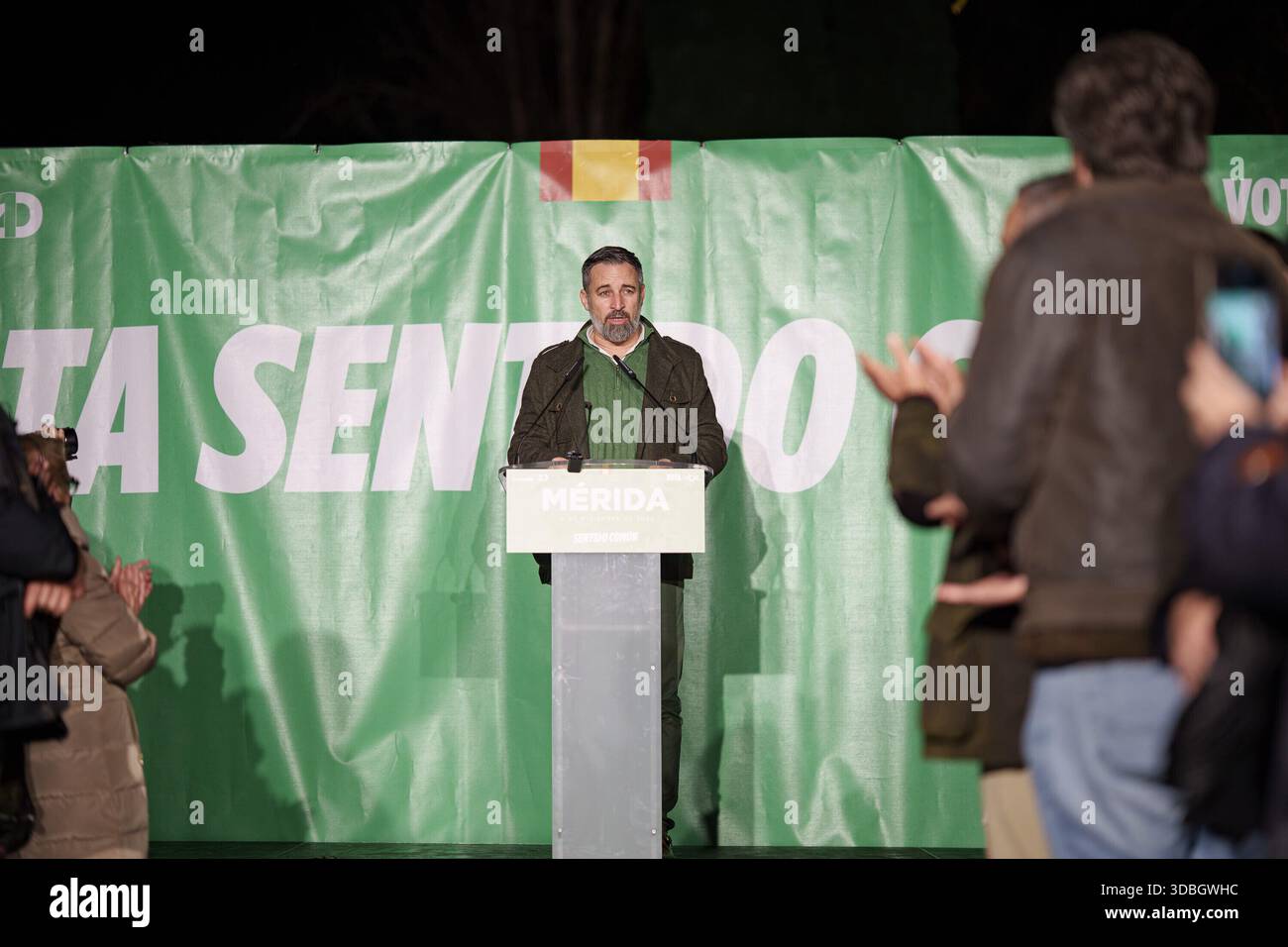
As Spain approaches the Andalusian regional elections on May 17, the right-wing party Vox has intensified its campaign in the strategic stronghold of El Ejido. In a high-energy rally characterized by the waving of Spanish flags and sharp rhetoric, party leader Santiago Abascal and regional candidate Manuel Gavira framed the upcoming vote not merely as a local contest, but as the opening salvo in a broader effort to seize power at the national level.
The choice of El Ejido, a city in Almería known for its intensive greenhouse agriculture and a significant foreign-born population, is a calculated move. Vox is attempting to mobilize a voter base frustrated by migration and public service strain, while simultaneously attempting to peel away supporters from the People’s Party (PP), which has traditionally dominated the region.
During the event, Manuel Gavira explicitly linked the regional outcome to the national government, stating that the “reconquest” beginning in Andalusia is intended to eventually culminate at the Moncloa, the official residence of Prime Minister Pedro Sánchez. This strategy positions the Andalusian vote as a referendum on the central government’s policies, particularly those regarding irregular migration and the coalition’s dealings with independentist parties in Catalonia.
The ‘National Priority’ Strategy in Almería
At the heart of Vox’s appeal is the concept of “National Priority” (prioridad nacional). Manuel Gavira presented this as a “common sense” approach, arguing that Spanish and Andalusian citizens should have preferential access to housing, employment, and social aid over foreign nationals. This messaging is particularly potent in El Ejido, where the demographic makeup is unique; according to data from the National Statistics Institute (INE), Almería maintains one of the highest proportions of foreign residents in Spain due to the labor demands of its agricultural sector.

Gavira specifically targeted the Ley de Infancia y Adolescencia de Andalucía (Andalusia Childhood and Adolescence Law), promising to repeal articles that provide care and promotion for minors under the community’s guardianship, regardless of their migratory status. By framing these legal protections as “ideological filth,” Vox is attempting to distinguish itself from the current regional administration led by Juanma Moreno, accusing the PP of being too cautious in dismantling previous social frameworks.
The party’s discourse suggests that irregular migration is the primary driver of systemic failures in public health and housing. While official analyses often attribute these pressures to broader economic factors and infrastructure deficits, Vox has successfully pivoted the conversation toward “migratory invasion,” a term used by Santiago Abascal to describe recent regularization efforts by the central government.
A Battle for the Right: Vox vs. The People’s Party
The political tension in El Ejido is not just between the left and right, but a fierce competition for the leadership of the conservative bloc. In the 2022 regional elections, the PP secured a commanding lead in the area, while Vox saw a slight decline in its vote share. To counter this, Vox is now targeting the PP’s flank, arguing that Juanma Moreno’s government has not provided a “real change.”
However, the PP has responded by adopting some of the more restrictive stances on migration that were once the exclusive domain of Vox. In the municipal government of El Ejido, the PP has passed motions urging the central government to modify laws to allow local corporations to prohibit the use of the niqab and hijab in municipal facilities. This tactical shift is designed to neutralize Vox’s primary talking point and retain voters who prioritize strict cultural and migratory controls.
Santiago Abascal utilized the rally to ridicule the PP’s campaign strategies, dismissing them as superficial attempts to maintain popularity without addressing “real problems.” He specifically targeted Prime Minister Pedro Sánchez, describing him in derogatory terms and accusing the central government of corruption and betrayal.
National Grievances and Political Rhetoric
The rally served as a platform for Vox to air a series of grievances against the Sánchez administration, ranging from the “Koldo case” to the government’s coalition with Sumar. The party is leveraging these national scandals to convince Andalusian voters that a vote for Vox is a vote against the current state of the Spanish government.
In a more inflammatory segment of the event, Abascal made claims regarding the allocation of national railway funds, alleging that money intended for infrastructure had been misappropriated. He specifically linked this to a railway incident in Adamuz, though the specific casualty figures and claims regarding the misuse of funds mentioned during the rally remain unverified by official government reports or independent judicial findings.
Vox has capitalized on recent political frictions involving María Jesús Montero of the PSOE. Following a debated interpretation of comments regarding the deaths of Civil Guards in Huelva, Gavira asserted that the socialist candidate “has absolutely nothing to do” in the regional government, using the controversy to paint the PSOE as disconnected from the security concerns of the region.
What So for the May 17 Vote
The outcome in El Ejido will be a bellwether for the broader Andalusian election. If Vox can successfully reduce the abstention rate—which stood at 45.1% in the 2022 local contests—and capture a significant slice of the PP’s electorate, they may position themselves as the indispensable partner in any future regional coalition.
For the residents of El Ejido, the stakes are high. The tension between the city’s economic reliance on foreign labor and the rising tide of “National Priority” rhetoric creates a volatile social atmosphere. The party’s promise to prioritize “the Spanish” in access to basic services directly clashes with the operational reality of the region’s agricultural economy.
As the May 17 deadline approaches, the focus remains on whether the PP can maintain its absolute majority by mirroring Vox’s rhetoric, or if Abascal’s “reconquest” strategy will find enough traction to shift the balance of power in the Junta de Andalucía.
The next critical checkpoint will be the official closing of campaign rallies on May 16, followed by the casting of ballots on May 17. Official results are expected to be released by the Junta de Andalucía shortly after the polls close.
Do you believe “National Priority” policies will impact the agricultural economy of Almería? Share your thoughts in the comments below or share this report on social media to join the conversation.
Keep reading