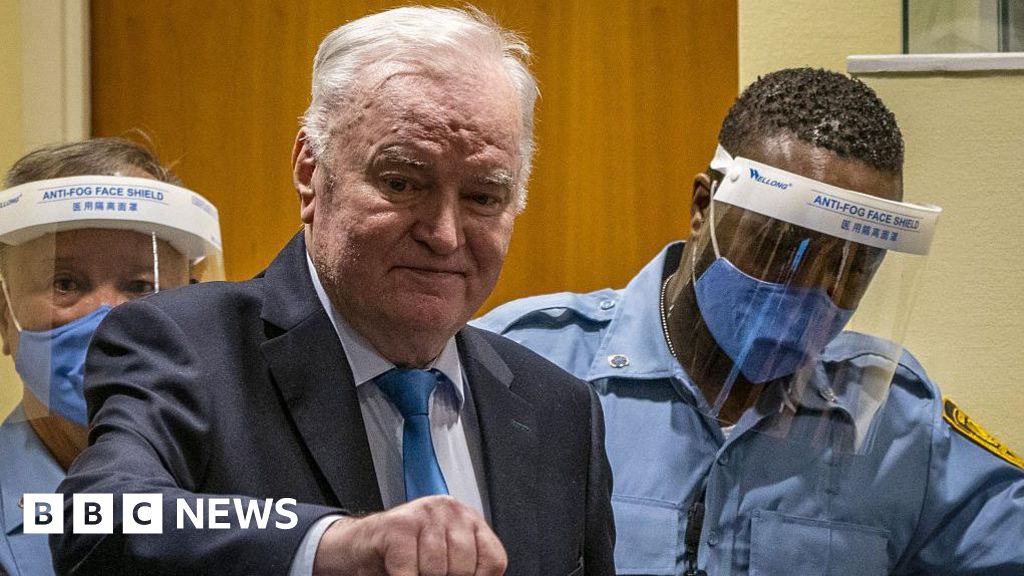
A United Nations court has denied a request for the early release of convicted Bosnian Serb war criminal Ratko Mladić, ruling that despite his failing health, the conditions of his detention in The Hague are sufficient to ensure his comfort in his final days.
The decision comes as Mladić, 84, faces a deteriorating medical condition that his legal team argues makes his continued incarceration inhumane. While the presiding judge acknowledged that the former military officer is in the “final stages of his life,” the court determined that the specialized medical care available within the UN prison system is equivalent to any treatment he would receive outside its walls.
The ruling underscores the tension between the principle of humanitarian release for the terminally ill and the international community’s commitment to upholding life sentences for those convicted of the most severe crimes against humanity. For the victims of the Bosnian War and the survivors of the Srebrenica massacre, the decision reaffirms that the gravity of Mladić’s crimes outweighs the plea for medical clemency.
Judicial Reasoning: “Maximum Comfort” vs. A “Dire” Situation
In a written ruling delivered on Thursday, Judge Graciela Gatti Santana addressed the stark contrast between Mladić’s physical decline and the quality of care provided by the UN detention facility. The judge admitted that Mladić’s “current situation is dire,” acknowledging the severity of his health crisis.
However, the court rejected the bid for release, stating that the conditions at the UN prison and its associated hospital in The Hague “are of such high quality that Mladić comfort can be maximally ensured.” Judge Gatti Santana further noted that there is “no additional treatment available elsewhere that is unavailable in the Netherlands,” effectively nullifying the argument that a transfer to another country or a home-care setting would provide superior medical benefits.
Beyond medical treatment, the ruling highlighted the “exceptional visitation regime” currently in place. This arrangement allows Mladić frequent contact with friends and family, ensuring that his loved ones can be present with him during his final moments—a provision the court viewed as a compassionate balance to his continued detention.
Health Crisis and Legal Arguments
The request for release was prompted by a sharp decline in the health of the man often referred to as the “Butcher of Bosnia.” Earlier this month, Mladić’s lawyers reported that he had been bedridden or dependent on a wheelchair for a significant period.
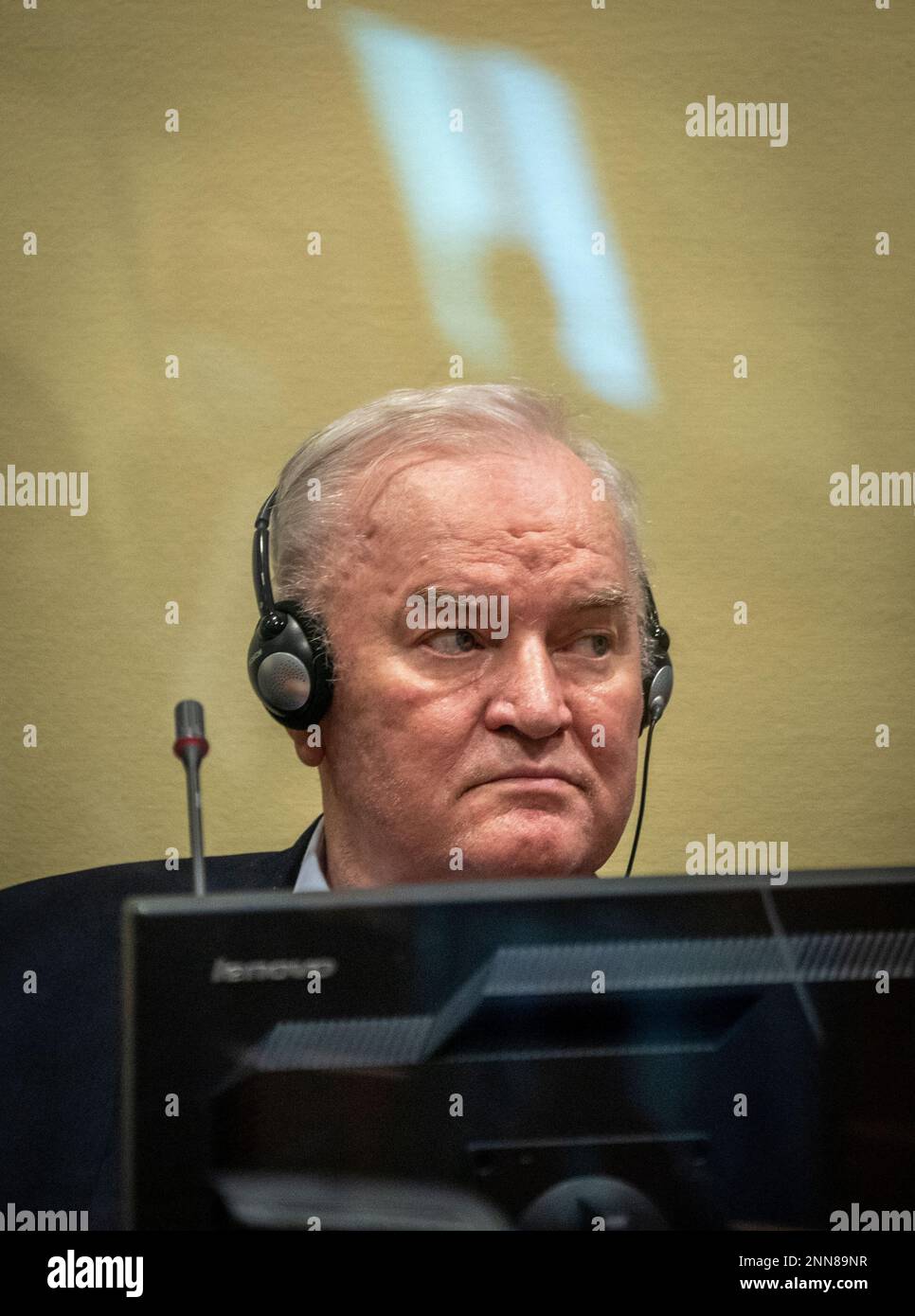
The urgency of the request increased following a suspected stroke. According to legal representatives, the incident occurred during a phone call with his son, leaving Mladić almost unable to speak. These developments were presented to the court as evidence that his condition had reached a point where imprisonment was no longer justifiable under humanitarian standards.
The defense argued that such a fragile state of health requires a level of personalized care and familial support that can only be fully realized outside a prison environment. Despite these claims, the court’s finding that the UN’s medical infrastructure is world-class remained the deciding factor in the denial of the release.
The Legacy of the “Butcher of Bosnia”
Ratko Mladić’s legal battles are the culmination of decades of pursuit by international prosecutors. As the former commander of the Army of Republika Srpska (VRS), Mladić was a central figure in the Bosnian War (1992–1995), leading campaigns characterized by ethnic cleansing and mass killings.
In 2017, he was found guilty of genocide, war crimes, and crimes against humanity by the International Residual Mechanism for Criminal Tribunals (which succeeded the ICTY). The convictions specifically tied him to the 1995 Srebrenica massacre, where thousands of Bosniak men and boys were systematically executed, as well as the prolonged siege of Sarajevo which lasted nearly four years.
Mladić was sentenced to life imprisonment, a verdict that was upheld on appeal in 2021. His detention since 2011 has been a symbol of the international community’s effort to ensure that high-ranking military leaders are held accountable for atrocities, regardless of their rank or the passage of time.
Justice and Medical Clemency in International Law
The denial of Mladić’s release reflects a stringent standard applied to those convicted of genocide. In international criminal law, medical release is typically granted only when it can be proven that the prisoner is terminally ill and that the prison cannot provide the necessary care to prevent suffering.
By asserting that the UN prison’s hospital provides “comprehensive and compassionate treatment,” the court has set a high bar for release. This ensures that life sentences for genocide are not circumvented through medical pleas unless the medical necessity is absolute and cannot be addressed within the judicial system.
This case highlights the role of The Hague as a center for global justice, where the facilities are designed not only for security but to meet rigorous international human rights standards for the treatment of prisoners, ensuring that even those convicted of the worst crimes are treated with basic human dignity.
Key Takeaways: The Mladić Release Ruling
- Ruling: A UN court denied Ratko Mladić’s request for release on medical grounds.
- Judicial Finding: Judge Graciela Gatti Santana ruled that prison and hospital conditions in The Hague ensure “maximum comfort.”
- Health Status: The court acknowledged Mladić’s situation is “dire” and that he is in the “final stages of his life.”
- Medical Context: Defense lawyers cited a suspected stroke and prolonged immobility (bedridden/wheelchair) as grounds for release.
- Legal Background: Mladić is serving a life sentence for genocide, war crimes, and crimes against humanity, upheld in 2021.
Timeline of Legal Proceedings
| Year | Event | Outcome |
|---|---|---|
| 2011 | Arrest and Transfer | Transferred to The Hague for trial. |
| 2017 | Initial Conviction | Found guilty of genocide and war crimes; sentenced to life. |
| 2021 | Appeal Verdict | Life sentence upheld by the appeals chamber. |
| 2026 | Medical Release Request | Request denied by Judge Graciela Gatti Santana. |
As of now, it remains unclear whether Mladić’s legal team will attempt to appeal this specific decision. The court’s ruling ensures that the former general will remain in UN custody, where he continues to be monitored by qualified doctors and nurses.

The next confirmed checkpoint in this matter will be any potential filing for a secondary appeal or a new motion for medical review should his condition change further. We will continue to monitor the official filings from the International Residual Mechanism for Criminal Tribunals for updates.
Do you believe international courts should grant medical release to those convicted of genocide? Share your thoughts in the comments below and share this report to join the conversation on international justice.
Keep reading