
For decades, we spoke of technology as a set of tools—devices we picked up to perform a task and put down when the job was done. We “went online” or “logged in,” implying a clear boundary between our physical existence and our digital interactions. However, that boundary has effectively vanished. Today, we live in a technology-permeated world where the digital layer is no longer an accessory to life, but the very infrastructure upon which modern society operates.
From the algorithms that curate our information diet to the embedded sensors in our urban environments, technology has shifted from being a tool we use to an environment we inhabit. This transition, often described as “ambient intelligence,” means that computing is now woven into the fabric of our homes, workplaces and bodies. While this integration has unlocked unprecedented efficiencies and connectivity, it has also introduced profound psychological and systemic challenges that we are only beginning to quantify.
As a software engineer turned journalist, I have watched this evolution move from the periphery of our lives to the center. The current era is defined not by the invention of new gadgets, but by the seamless integration of intelligence into every touchpoint of human experience. Understanding this shift is critical, as it fundamentally alters how we perceive privacy, labor, and our own cognitive agency.
The Invisible Infrastructure: From Tools to Environments
The hallmark of a technology-permeated world is its invisibility. The most successful technologies are those that disappear into the background. We see this in the rise of the Internet of Things (IoT), where everyday objects—thermostats, refrigerators, and industrial machinery—are continuously exchanging data without human intervention. This “hyper-connectivity” creates a feedback loop where our environment responds to our presence and preferences in real-time.
This shift is underpinned by a massive expansion in global connectivity. According to the International Telecommunication Union (ITU), the vast majority of the global population now has access to mobile broadband, ensuring that the digital layer is present regardless of geographic location. This ubiquity means that the “digital divide” is no longer just about who has a computer, but about who has the literacy to navigate a world where essential services—banking, healthcare, and governance—are exclusively digital.
When technology becomes the environment, the stakes of system failure increase. We are no longer just losing a “tool” when a network goes down; we are losing access to the primary means of navigating our physical and social worlds. This dependency necessitates a new approach to digital resilience, moving away from simple backups toward systemic redundancies that can sustain society during technical collapses.
The Intelligence Epoch: AI and the Redefinition of Agency
If the last decade was about connectivity, the current decade is about intelligence. The integration of generative artificial intelligence (AI) into consumer software marks a pivot from “deterministic” computing—where a computer does exactly what This proves told—to “probabilistic” computing, where the system predicts the most likely desired outcome.
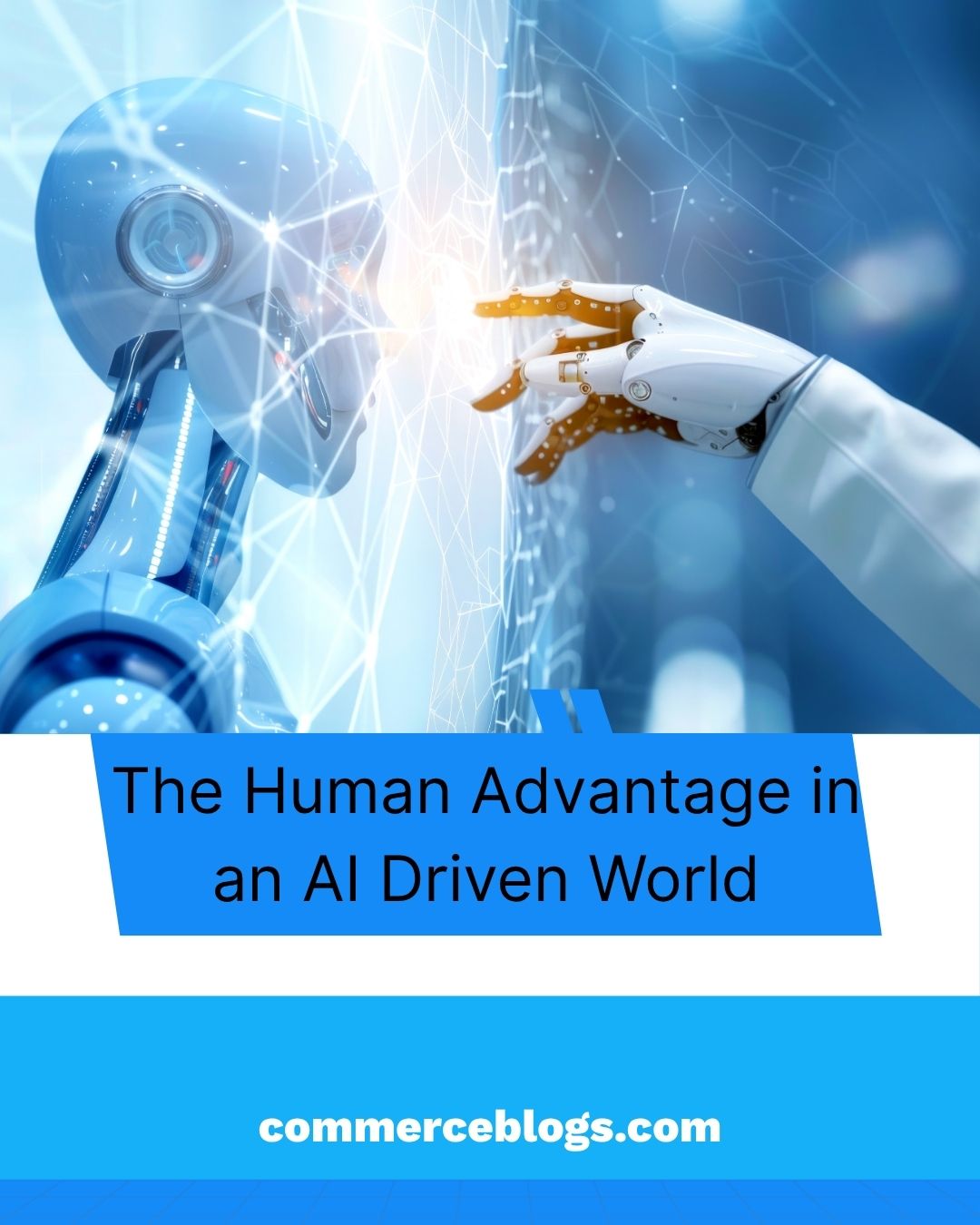
This transition is fundamentally redefining human agency. When AI assists in writing emails, coding software, or diagnosing medical conditions, the human role shifts from “creator” to “editor.” While this increases productivity, it creates a risk of cognitive atrophy. As we delegate more of our critical thinking and synthesis to Large Language Models (LLMs), the ability to perform deep, unstructured work without technological assistance may diminish.
The economic impact is equally significant. The World Economic Forum has highlighted how automation and AI are disrupting traditional job roles, requiring a global shift toward “upskilling” and “reskilling.” The challenge is not necessarily a total loss of employment, but a transformation of the nature of work itself. The value is shifting away from the ability to process information toward the ability to ask the right questions—a skill known as prompt engineering—and the ability to apply ethical judgment to AI-generated outputs.
The Paradox of Connectivity and Digital Wellbeing
Living in a technology-permeated world creates a psychological paradox: we are more connected to the global population than ever before, yet reports of loneliness and social isolation continue to rise. The “always-on” culture, driven by the attention economy, has blurred the lines between professional obligations and personal sanctuary.
This constant stream of stimuli leads to what psychologists call “digital burnout.” The human brain is not evolved for the perpetual state of high-alertness required by constant notifications and the social comparison engines of algorithmic feeds. This has sparked a counter-movement toward “digital wellbeing” and “intentional technology use.” Rather than a total rejection of tech—which is nearly impossible in a society where employment and civic participation require digital access—users are seeking “digital minimalism.”
The “right to disconnect” is becoming a legal reality in several jurisdictions. For example, countries like France have implemented laws that protect employees from the pressure to respond to professional emails outside of working hours. These legal frameworks acknowledge that in a world where technology is pervasive, the only way to protect human mental health is through explicit, legally enforced boundaries.
Ethical Frontiers: Data Sovereignty and Algorithmic Bias
The pervasive nature of technology means that almost every human action now leaves a digital trace. This has transformed personal data into the world’s most valuable commodity, leading to a crisis of data sovereignty. When our environments are permeated by sensors and trackers, the concept of “opting out” becomes a fallacy.
the algorithms that manage this data are not neutral. They are trained on historical datasets that often contain human biases. When these biased algorithms are used to determine creditworthiness, job candidacy, or criminal sentencing, they automate and scale systemic inequality. The pursuit of “algorithmic transparency”—the ability to understand and audit how an AI reached a specific decision—is now a primary goal for regulators worldwide.
The General Data Protection Regulation (GDPR) in the European Union represents one of the most significant attempts to return agency to the individual. By establishing the “right to be forgotten” and requiring explicit consent for data collection, it attempts to create a legal firewall between the individual and the pervasive data-collection machinery of the modern tech ecosystem.
Designing a Human-Centric Future
As we move forward, the goal should not be to strip technology away, but to transition from “technology-centric” design to “human-centric” design. This means building systems that support human flourishing rather than exploiting human psychology for engagement metrics.

Human-centric technology focuses on several key pillars:
- Cognitive Support: Tools that augment human intelligence without replacing the need for critical thinking.
- Privacy by Design: Systems that collect the minimum amount of data necessary and process it locally rather than in the cloud.
- Interoperability: Breaking down the “walled gardens” of big tech to allow users to move their data and digital identities freely between platforms.
- Accessibility: Ensuring that the benefits of a technology-permeated world are available to people of all abilities and socioeconomic statuses.
The ultimate measure of success for future innovation will not be how much more “permeated” our lives become, but how effectively technology can fade into the background to allow us more time for the things that make us human: deep relationships, creative exploration, and presence in the physical world.
Key Takeaways for Navigating the Digital Age
- Audit Your Digital Diet: Regularly evaluate which apps and devices add value to your life and which merely consume your attention.
- Practice “Analog Windows”: Designate specific times and spaces in your home and day as tech-free zones to combat digital burnout.
- Prioritize Data Literacy: Understand how your data is being used and utilize privacy tools to limit unnecessary tracking.
- Focus on High-Value Skills: In an AI-driven economy, prioritize skills that AI cannot easily replicate: empathy, complex ethical judgment, and strategic leadership.
The trajectory of our relationship with technology is not predetermined. While we undeniably live in a technology-permeated world, we still hold the agency to decide how that technology is governed and integrated into our lives. The next decade will be defined by our ability to set boundaries that protect our mental health and our fundamental rights.
The next major checkpoint for global tech governance will be the continued implementation and refinement of the EU AI Act, which aims to categorize AI risks and prohibit certain “unacceptable” uses of the technology. This legislation will likely set the global standard for how pervasive intelligence is regulated.
How do you balance the benefits of a connected world with the need for mental clarity? Share your strategies in the comments below or share this article with your network to start the conversation.
Keep reading