
Ukraine’s military launched a large-scale drone offensive overnight on May 15, 2026, striking multiple targets across Russian territory. The coordinated blitz focused heavily on energy and military infrastructure, signaling a continued strategy to disrupt the Russian Federation’s industrial capacity and logistical support networks.
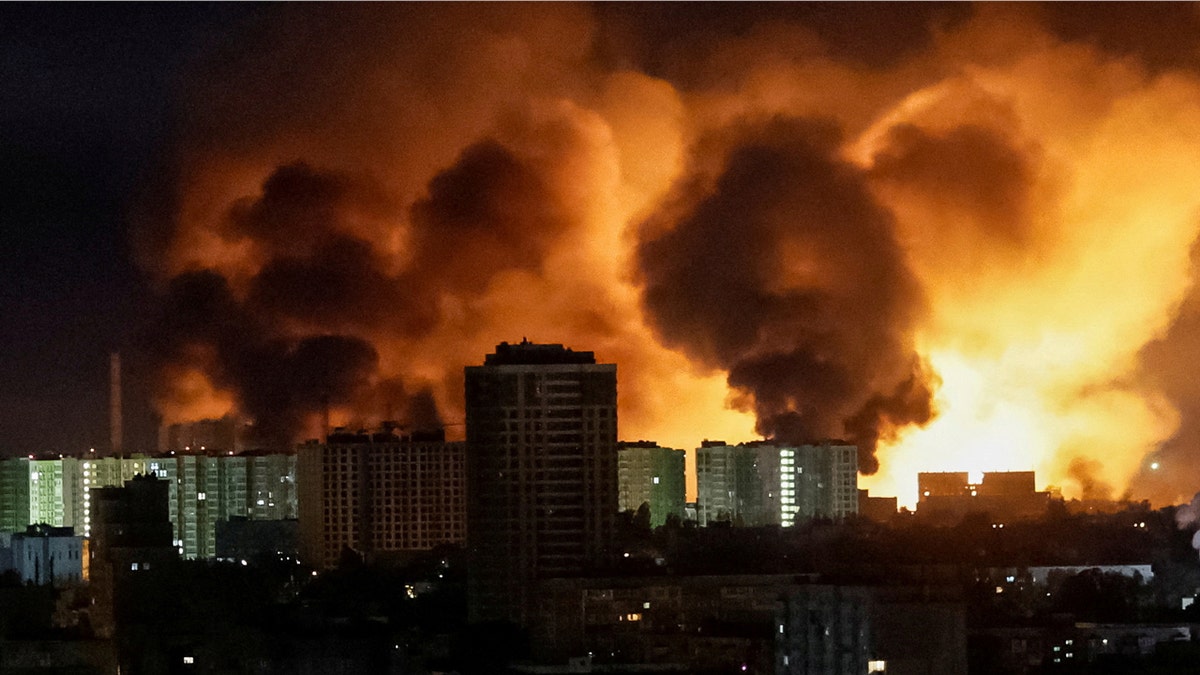
The most significant impact was reported at the Ryazan oil refinery, one of the largest fuel production facilities in Russia. Visual evidence and local reports indicate a catastrophic fire erupted at the site, sending massive plumes of smoke over the city of Ryazan into the morning hours. Local residents reported hearing multiple loud explosions and seeing drones operating overhead prior to the ignition.
The operation was officially confirmed by the Ukrainian military in the afternoon of May 15. The Special Operations Forces described the strike as a successful joint operation conducted alongside the Unmanned Systems Forces and other military branches. This level of inter-branch coordination highlights the evolving sophistication of Ukraine’s long-range strike capabilities.
Strategic Blow to Russian Energy Infrastructure
The targeting of the Ryazan oil refinery represents a calculated effort to inflict economic and operational damage on Russia’s energy sector. By hitting high-capacity refineries, Ukraine aims to restrict the flow of refined petroleum products used by both the civilian economy and the Russian military machine.
Footage shared on social media captured the intensity of the blaze at the refinery, illustrating the vulnerability of critical industrial sites to unmanned aerial vehicle (UAV) attacks.
Experts suggest that these strikes are part of a broader pattern of “pain-infliction” designed to force a shift in the conflict’s dynamics. Hanna Notte, the director of the Eurasia Nonproliferation Program at the James Martin Center for Nonproliferation Studies, noted that “Ukraine has clearly gained an ability to inflict pain on Russia in a way they couldn’t previously,” adding that this specific capability “is not going to go away.”
The Role of Unmanned Systems Forces
The May 15 attacks underscore the critical role of the Unmanned Systems Forces in Ukraine’s modern warfare doctrine. The ability to penetrate Russian airspace and strike targets in multiple regions simultaneously suggests an increase in both the quantity and range of the drones being deployed.
By coordinating with Special Operations Forces, the Ukrainian military is able to conduct high-precision strikes on military airfields and energy hubs. This joint-force approach allows for better intelligence gathering and target acquisition, increasing the likelihood of successful hits on hardened or defended targets.
The strategic objective of these Ukrainian drone attacks on Russian infrastructure is two-fold: reducing the available fuel for Russian armored divisions and creating a psychological burden on the Russian domestic front by bringing the reality of the war closer to its industrial heartlands.
What This Means for the Conflict
The escalation of strikes against energy infrastructure indicates that Ukraine is no longer focusing solely on tactical targets near the front lines. Instead, the focus has shifted toward strategic depth—hitting the economic engines that sustain the Russian war effort.
While the immediate impact is the physical destruction of refinery equipment and the loss of production capacity, the long-term effect is the forced reallocation of Russian air defense systems. As Russia moves assets to protect refineries and airfields in the interior, it may leave other areas more vulnerable to aerial incursions.
The international community continues to monitor these developments, as the ability of Ukraine to strike deep within Russian territory alters the risk calculus for both combatants and their respective allies.
Military observers will be watching for Russia’s response to the Ryazan strike, specifically whether the Kremlin will attempt to increase its own drone campaign against Ukrainian energy grids or if it will prioritize the reinforcement of internal industrial security.
Further updates on the operational status of the Ryazan refinery and any subsequent military responses are expected as official reports from the region emerge.
World Today Journal encourages readers to share this report and join the conversation in the comments section below regarding the strategic shifts in modern drone warfare.
Related reading