
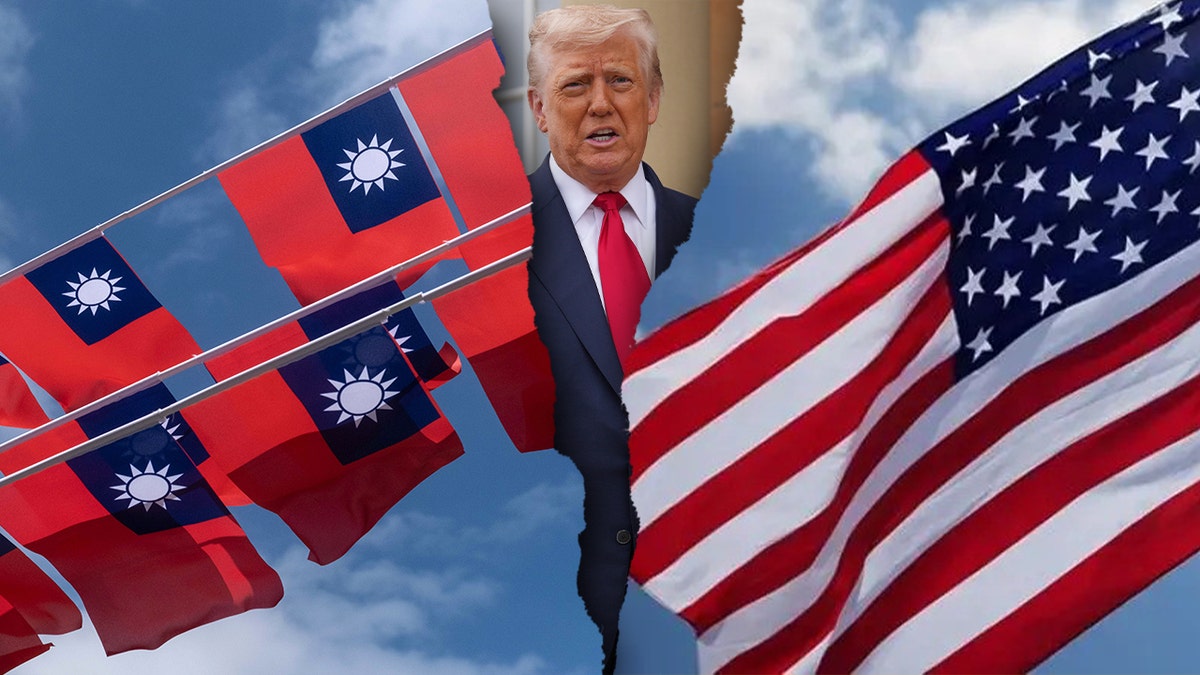
Diplomatic tensions in East Asia have surged following comments made by U.S. President Donald Trump during a state visit to Beijing, prompting a swift and firm rebuttal from Taipei. The friction centers on the status of Taiwan and the extent of U.S. Military commitment to the region, as Taiwan responds to Trump’s independence warning by reasserting its status as a self-governing entity.
During his visit to the Chinese capital this week, President Trump expressed opposition to the idea of Taiwan formally declaring independence from China. His remarks sparked immediate concern in Taiwan, where the government maintains that its democratic systems and existing governance already establish its autonomy, regardless of a formal declaration.
The exchange highlights a precarious balancing act in U.S.-China relations, where the promise of security for Taiwan often clashes with the strategic desire to avoid a direct military confrontation with Beijing. As the U.S. Weighs its role in the region, Taiwan is doubling down on its identity as a sovereign democratic country, emphasizing that its security cannot be treated as a bargaining chip.
Trump Questions U.S. Military Intervention
The catalyst for the current diplomatic row was a series of statements made by President Trump, including comments directed toward Fox News. Trump questioned the strategic logic of committing U.S. Forces to a conflict thousands of miles away, specifically referencing the distance between the United States and the Taiwan Strait.
“I’m not looking to have somebody go independent and, you know, we’re supposed to travel 9,500 miles to fight a war. I’m not looking for that,” Trump stated. He further urged both sides to “cool down” to avoid escalating tensions into an open conflict.
This rhetoric suggests a shift toward a more transactional approach to regional security, where the U.S. May be less inclined to provide unconditional military support if it perceives that Taiwan’s political moves—such as a formal declaration of independence—are the primary cause of instability.
Taiwan’s Rebuttal: ‘A Sovereign Democratic Country’
Taiwan’s foreign ministry responded on Saturday, issuing a statement that sought to acknowledge the U.S. President’s desire for peace while firmly rejecting any notion that Taiwan falls under the authority of the People’s Republic of China. In its response, the ministry reasserted that Taiwan is a “sovereign democratic country.”

The ministry was explicit regarding the lack of legal or political authority held by the mainland, stating that “Beijing has no right to claim jurisdiction over Taiwan.” This response serves as a direct counter to Beijing’s long-standing claim that Taiwan is a breakaway province that must eventually be reunited with the mainland.
While the foreign ministry thanked President Trump for his support of peace efforts in the region, it maintained that stability is best achieved through a combination of diplomacy and deterrence. The ministry stated that the government would “continue to deepen cooperation with the United States, maintain peace through strength, and ensure that the security and stability of the Taiwan Strait are not threatened or undermined.”
The Beijing Perspective and Strategic Stakes
The timing of Trump’s comments coincides with a period of heightened pressure from Beijing. A spokesperson for Chinese President Xi Jinping characterized the status of Taiwan as the “most important issue in China-U.S. Relations,” suggesting that the outcome of this dispute is central to the future of the two nations’ dealings with one another.
China continues to view Taiwan as a part of its sovereign territory. While Beijing prefers a peaceful reunification, President Xi has not ruled out the use of force to bring the island under mainland control. This looming threat is why Taiwan’s insistence on “peace through strength” is critical; the island views U.S. Military support not as a provocation, but as a necessary deterrent against aggression.
The tension is further complicated by the internal politics of Taiwan, which operates with its own democratically elected government and maintains a distinct legal and economic system from the mainland. For Taipei, the “independence” Trump warned against is viewed not as a future goal to be declared, but as a current reality to be preserved.
What This Means for Regional Stability
The current friction reveals a widening gap in how the U.S. And Taiwan perceive the “status quo.” While Taiwan sees its sovereign existence as the baseline for peace, the current U.S. Administration appears focused on preventing any formal change in status that could trigger a Chinese military response.

The phrase “peace through strength,” utilized by Taiwan’s foreign ministry, underscores a strategy of increasing defense capabilities and strengthening international ties to make the cost of an invasion prohibitively high for Beijing. By emphasizing cooperation with the U.S., Taiwan is attempting to ensure that despite the President’s rhetoric regarding the distance of the conflict, the strategic alliance remains intact.
For the global community, the stability of the Taiwan Strait is not merely a regional concern but a global economic necessity. The region is a critical artery for international trade and a hub for high-tech manufacturing, meaning any escalation in the conflict could have immediate and severe impacts on global supply chains.
As the U.S. Continues its diplomatic engagements with Beijing, the focus will remain on whether the U.S. Continues to provide the military hardware and political guarantees that Taiwan believes are essential for its survival. The assertion that Taiwan responds to Trump’s independence warning with a claim of sovereignty indicates that Taipei will not remain silent if its security is questioned on the world stage.
The next critical checkpoint for this developing story will be the official follow-up communications between the U.S. State Department and Taiwan’s foreign ministry to clarify the parameters of military support and the shared definition of regional stability.
We invite our readers to share their perspectives on this developing geopolitical situation in the comments below.