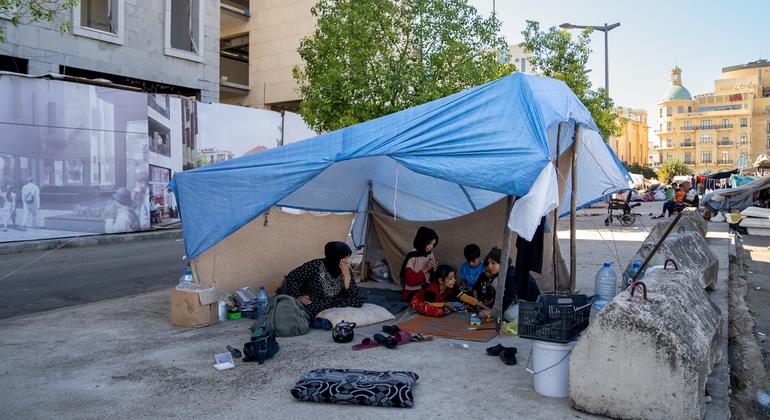
The skyline of the modern global city is often a study in contradictions. In hubs from Mumbai to Nairobi, and Sao Paulo to Manila, gleaming glass towers of finance and luxury residential complexes frequently cast long shadows over sprawling informal settlements. For the estimated 1.1 billion people currently living in slums, the “urban dream” is not defined by upward mobility, but by a daily struggle for the most basic of human needs: a safe, dry, and permanent place to call home.
This disparity is the epicenter of a deepening global housing crisis. According to data from UN-Habitat, the United Nations agency for human settlements, the scale of inadequate housing is staggering, affecting billions worldwide through a combination of homelessness, overcrowding, and a lack of essential services. The crisis is not merely a failure of architecture or urban planning; It’s a systemic economic failure that traps generations in a cycle of poverty, and precariousness.
As an economist, I have long observed that housing is the primary lever of economic stability. When a family lacks tenure security—the legal certainty that they will not be arbitrarily evicted—they are unlikely to invest in their own dwellings or their local community. This stagnation ripples outward, hindering local commerce and straining public health systems. The question facing global leaders today is no longer whether People can afford to house the world’s urban poor, but whether we can afford the compounding cost of leaving them in the shadows.
To move toward “housing in dignity,” the global community must shift its perspective from seeing slums as blight to be cleared, to seeing them as organic urban neighborhoods that require strategic investment and legal recognition.
The Economic Toll of Informal Settlements
The global housing crisis is often framed as a humanitarian issue, but its economic implications are profound. Informal settlements are characterized by a lack of “tenure security,” meaning residents often have no legal title to the land they occupy. This creates a “dead capital” effect, a term popularized by economist Hernando de Soto, where trillions of dollars in assets remain locked because they cannot be used as collateral for loans to start businesses or improve homes.

Beyond the balance sheet, the lack of dignified housing manifests as a public health crisis. In many of the world’s largest slums, access to clean water and managed sanitation is minimal. The World Health Organization (WHO) has consistently linked poor housing conditions to the rapid spread of communicable diseases and chronic respiratory issues due to poor ventilation and indoor air pollution. When a significant portion of a city’s workforce is plagued by preventable illness, labor productivity drops and the burden on state-funded healthcare rises.
the spatial isolation of slums often pushes the poorest residents to the peripheries of cities, far from employment hubs. This “spatial mismatch” forces workers to spend a disproportionate amount of their meager income and time on inefficient transport, further entrenching the poverty trap. Dignified housing, is not just about the structure of the house, but its integration into the economic fabric of the city.
From Slum Clearance to Slum Upgrading
For decades, the default government response to informal settlements was “slum clearance”—the forced eviction of residents and the demolition of their homes to make way for formal developments. History has shown this approach to be a failure. Relocating residents to the outskirts of cities often severs their social networks and destroys their livelihoods, frequently resulting in the creation of new slums in the relocation sites.

The contemporary gold standard is shifting toward “slum upgrading.” This approach recognizes that the residents have already invested significant time and resources into building their communities. Instead of demolition, upgrading focuses on providing the “skeleton” of a formal city: paving roads, installing sewage lines, providing electricity, and, most importantly, granting legal land titles.
Successful models of upgrading have demonstrated that when residents are given legal tenure, they naturally begin to improve their own homes. This organic growth is more sustainable and cost-effective than massive, state-led public housing projects, which often suffer from poor maintenance and social alienation. By treating slum dwellers as partners in urban development rather than obstacles to it, cities can integrate these populations into the formal economy.
The Path to Dignity: Essential Components of Adequate Housing
Housing “in dignity” is a multifaceted concept that goes beyond the presence of four walls and a roof. The United Nations defines adequate housing as a human right, which encompasses several critical dimensions that must be met to ensure a dignified existence:
- Security of Tenure: Legal protection against forced eviction, allowing residents to invest in their homes without fear.
- Availability of Services: Consistent access to safe drinking water, energy for cooking and lighting, and sanitary waste disposal.
- Affordability: Housing costs must not compromise the resident’s ability to afford other basic needs, such as food and medicine.
- Habitability: Protection from the elements, adequate space to prevent overcrowding, and structural safety.
- Accessibility: Housing that accommodates the needs of marginalized groups, including the elderly and people with disabilities.
- Location: Proximity to employment, healthcare, and education to ensure social and economic integration.
Achieving these standards on a global scale requires a departure from traditional market-driven housing models. In many developing nations, the formal real estate market is geared toward the middle and upper classes, leaving a vacuum that is filled by informal settlements. To bridge this gap, governments must implement “inclusive zoning” and incentivize the construction of low-income housing through subsidies or land grants.
Financing the Future of Urban Living
The primary barrier to solving the global housing crisis is often cited as a lack of funding. However, the challenge is frequently one of financing mechanisms rather than a total absence of capital. Traditional mortgage systems are inaccessible to the poor because they require formal proof of income and land titles.
Innovative financing is essential to unlock the potential of the urban poor. Micro-housing loans and community-led savings groups have shown promise in allowing residents to fund incremental improvements to their homes. “land value capture” strategies—where governments tax the increase in land value resulting from public infrastructure projects—can provide a sustainable revenue stream to fund affordable housing initiatives.
International cooperation is also vital. The World Bank and other multilateral lenders are increasingly focusing on “urban resilience,” recognizing that investing in slum infrastructure is a key component of climate adaptation. Informal settlements are often located in the most disaster-prone areas—floodplains or steep hillsides. Upgrading these areas with resilient infrastructure is not only a matter of dignity but of survival in an era of increasing climate volatility.
The Role of Governance and Political Will
the transition from slums to dignified housing is a political choice. The persistence of informal settlements is often a symptom of weak governance, corruption in land administration, or a lack of political will to recognize the rights of the urban poor. In many cases, the “informality” of these settlements is maintained because it allows powerful actors to exploit residents through exorbitant rents for substandard shacks.

To dismantle these systems, cities need transparent land registries and a commitment to the Sustainable Development Goal 11, which aims to make cities and human settlements inclusive, safe, resilient, and sustainable. This requires a shift in urban planning from a top-down approach to a participatory one, where the people living in the settlements have a direct say in how their neighborhoods are improved.
When we empower the 1.1 billion people living in slums to become stakeholders in their cities, we do more than provide shelter. We unlock a massive reservoir of human potential. The entrepreneur in a Nairobi slum or the artisan in a Mumbai chawl possesses a resilience and ingenuity that, if supported by stable housing and basic services, could drive global economic growth for decades to come.
The global housing crisis is a daunting challenge, but it is solvable. The blueprint exists: tenure security, incremental upgrading, inclusive financing, and participatory governance. The question remains whether the world’s leaders will act with the urgency that the scale of this crisis demands.
The next critical milestone for global urban policy will be the continued implementation of the New Urban Agenda, with upcoming regional reviews expected to track progress on slum upgrading and affordable housing targets. These reports will determine whether the rhetoric of “dignity” translates into bricks, mortar, and legal titles for the world’s most vulnerable.
Do you believe the shift toward “slum upgrading” is more effective than building new public housing? Share your thoughts in the comments below and join the conversation on urban equity.