
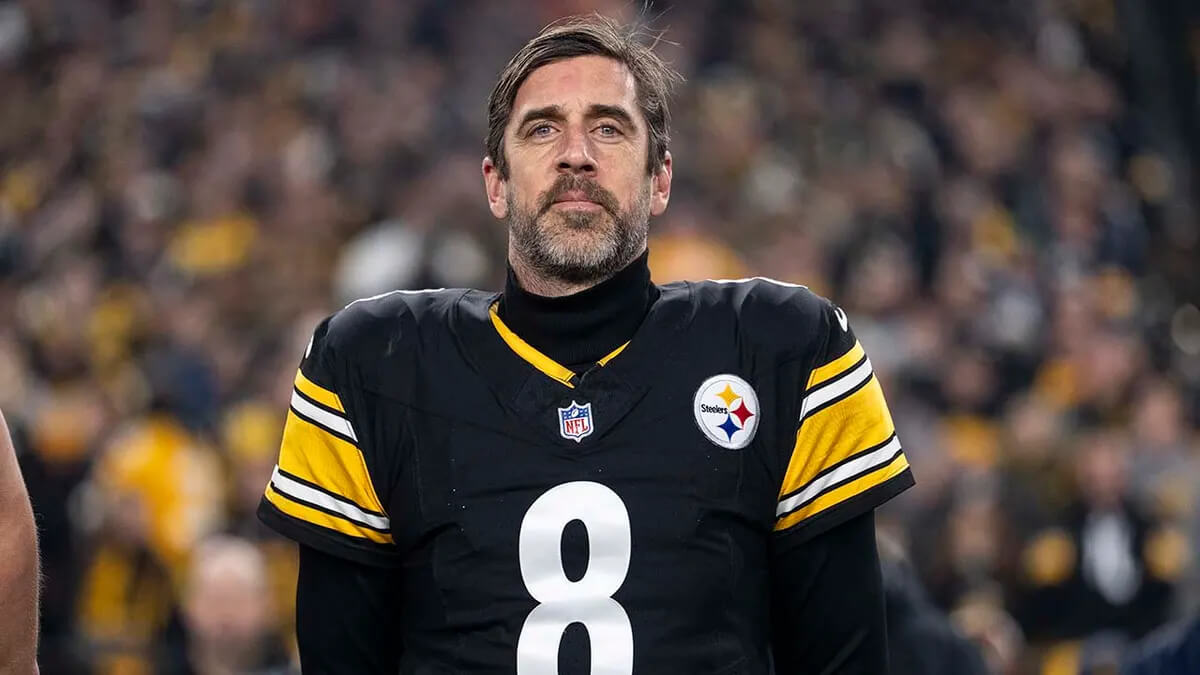
In the high-stakes environment of the National Football League, the prevailing wisdom has long been centered on the “grind.” For decades, the gold standard for athletic excellence was defined by sheer volume: more reps, more weight, and a relentless commitment to pushing the body past its breaking point. But as I have observed throughout my 13 years covering international sports from Lisbon, the most enduring athletes are rarely those who simply work the hardest; they are the ones who work the smartest.
Enter Aaron Rodgers. To the casual observer, Rodgers is a generational talent with a rocket arm and a preternatural ability to extend plays. To the student of the game, however, he represents a fundamental shift in how professional athletes approach the concept of longevity. What has become known as “The Rodgers Way” is not a specific playbook or a rigid set of drills, but rather a holistic, often unconventional philosophy that prioritizes mental clarity and physiological recovery over traditional athletic dogma.
Whether he is leading the New York Jets or spending his off-seasons in deep contemplation, Rodgers has consistently challenged the status quo of sports medicine and performance psychology. By treating his body and mind as an integrated system rather than a machine to be worn down, he has managed to maintain elite-level production well into his 40s—a feat that remains rare for quarterbacks in the most physically demanding league in the world.
Understanding this approach requires looking beyond the box scores. It involves analyzing the intersection of mindfulness, anti-inflammatory living, and a psychological refusal to conform to the expectations of the “company man” in professional sports. For athletes and high-performers globally, the Rodgers Way offers a provocative case study in how to sustain peak performance by questioning the very systems designed to produce it.
The Architecture of Mindset: Beyond the Field
For most NFL players, the off-season is a period of physical rebuilding. For Aaron Rodgers, it is often a period of mental recalibration. The most striking example of this is his documented use of “darkness retreats”—periods of extended isolation in complete darkness to induce a state of deep introspection and sensory deprivation. While such practices may seem eccentric to the average fan, they align with a broader strategy of mental fortitude and psychological detachment.
This focus on the mind-body connection is central to his performance. Rodgers has frequently spoken about the importance of “flow state,” the psychological phenomenon where an athlete becomes fully immersed in the activity, losing a sense of time and self-consciousness. By utilizing meditation and mindfulness, Rodgers aims to enter this state more reliably, allowing him to process the chaos of a collapsing pocket with a level of calm that borders on the surreal.
This mental discipline extends to his approach to pressure. While many quarterbacks are crushed by the weight of expectations or the noise of critical media, Rodgers has cultivated a psychological barrier. He views the game as a puzzle to be solved rather than a battle to be survived. This detachment allows him to maintain a high level of cognitive function under extreme stress, ensuring that his decision-making remains precise even when the physical environment is volatile.
Redefining Recovery: The War on Inflammation
If the mental aspect of the Rodgers Way is about clarity, the physical aspect is about sustainability. The traditional NFL approach to recovery often involves aggressive interventions—cortisone shots, heavy medication, and rigorous physical therapy designed to get a player back on the field as quickly as possible. Rodgers has historically taken a more cautious, holistic path, focusing heavily on the reduction of systemic inflammation.
A cornerstone of his physical philosophy is the belief that the body can heal itself if given the correct environment. This involves a meticulous approach to nutrition and a preference for natural recovery modalities. By avoiding the “quick fix” of traditional sports medicine in favor of long-term physiological health, Rodgers has avoided many of the degenerative issues that plague veteran quarterbacks.
This philosophy was put to the ultimate test following his devastating Achilles tendon rupture during the 2023 season. The return from such an injury is notoriously difficult for athletes in their late 30s and early 40s. However, Rodgers’ approach to his rehabilitation was consistent with his career-long philosophy: a blend of cutting-edge science and holistic wellness. Rather than rushing the timeline, the focus remained on the quality of the tissue repair and the synchronization of his kinetic chain, ensuring that his return to the field was not just fast, but sustainable.
The Friction of Non-Conformity
Adopting a philosophy like the Rodgers Way inevitably leads to friction. In a league characterized by strict hierarchies and a culture of conformity, Rodgers has often found himself at odds with team management, league mandates, and the broader medical establishment. His public skepticism regarding traditional pharmaceutical interventions and his advocacy for alternative health perspectives have made him a polarizing figure.
From a journalistic perspective, this tension is where the story becomes most interesting. The Rodgers Way is not just about health; it is about autonomy. He has consistently asserted that the athlete should be the primary stakeholder in their own health decisions, rather than deferring entirely to team doctors whose primary goal is often the immediate availability of the player for the next game.
This pursuit of autonomy has occasionally come at a cost to his public image, leading to accusations of being “difficult” or “distracted.” Yet, the results are difficult to ignore. Throughout his tenure with the Green Bay Packers and his transition to the Jets, Rodgers has remained one of the most efficient passers in league history. His ability to maintain a high completion percentage and a low interception rate over two decades is a testament to the efficacy of his personalized approach to maintenance.
Longevity as a Competitive Advantage
In the modern NFL, the “window” for a quarterback’s prime is typically seen as a decade. Rodgers has effectively extended that window. By treating his career as a marathon rather than a series of sprints, he has redefined what is possible for the aging athlete. This shift in perspective provides a blueprint for other players who are looking to extend their careers through smarter recovery and mental hygiene.
The impact of the Rodgers Way can be broken down into three primary pillars of longevity:

- Selective Effort: Understanding when to push the body to the limit and when to prioritize rest, avoiding the burnout associated with “over-training.”
- Cognitive Flexibility: The ability to adapt his playing style as his physical tools evolve, relying more on anticipation and timing than raw athleticism.
- Holistic Integration: Treating sleep, nutrition, and mental health not as supplements to training, but as the foundation of training itself.
This integrated approach transforms the athlete from a disposable asset into a sustainable enterprise. For the New York Jets, the value of Rodgers is not just in his arm, but in his knowledge of how to maintain an elite body in a league designed to break it.
What the Rodgers Way Means for the Future of Sport
As we see a rise in athletes like LeBron James and Cristiano Ronaldo—who similarly defy the traditional aging curve—it becomes clear that Aaron Rodgers is part of a larger movement. We are entering an era of “precision performance,” where the generic training regimen is replaced by a highly individualized protocol based on the specific biological and psychological needs of the athlete.
The Rodgers Way suggests that the next frontier of athletic performance is not found in a new gym machine or a faster sprint drill, but in the optimization of the nervous system and the reduction of systemic stress. When an athlete can master their internal environment, the external environment—no matter how chaotic the pocket or how loud the crowd—becomes manageable.
For the global sports community, the lesson is clear: the pursuit of excellence does not have to come at the expense of long-term health. By questioning the “way it’s always been done,” athletes can find a path that allows them to compete at the highest level for longer, with more joy and less physical degradation.
Key Takeaways of the Rodgers Philosophy
| Focus Area | Traditional NFL Approach | The Rodgers Way |
|---|---|---|
| Recovery | Aggressive intervention/Medication | Anti-inflammatory/Holistic healing |
| Mindset | Mental toughness/Grind culture | Mindfulness/Flow state/Detachment |
| Off-Season | Physical rebuilding/Volume | Mental recalibration/Sensory deprivation |
| Health Agency | Deferral to team medical staff | Athlete-led health autonomy |
As the NFL season progresses, the focus will inevitably shift back to wins, losses, and statistics. However, the more compelling story remains the man behind the numbers. Aaron Rodgers continues to serve as a living experiment in the power of unconventional thinking. Whether his methods are universally applicable is debatable, but their impact on his own career is undeniable.
The next major checkpoint for the Rodgers Way will be the continued evaluation of his performance following his Achilles recovery, as the league watches to see if his holistic approach can truly erase the typical decline associated with such a severe injury in a veteran player.
Do you believe the “grind” culture in professional sports is outdated, or is Rodgers’ approach too unconventional for the average athlete? Let us know your thoughts in the comments below and share this analysis with your fellow sports fans.