Doireann Ní Ghríofa’s *Said the Dead*: A Haunting Novel That Resurrects Ireland’s Lost Asylum Voices
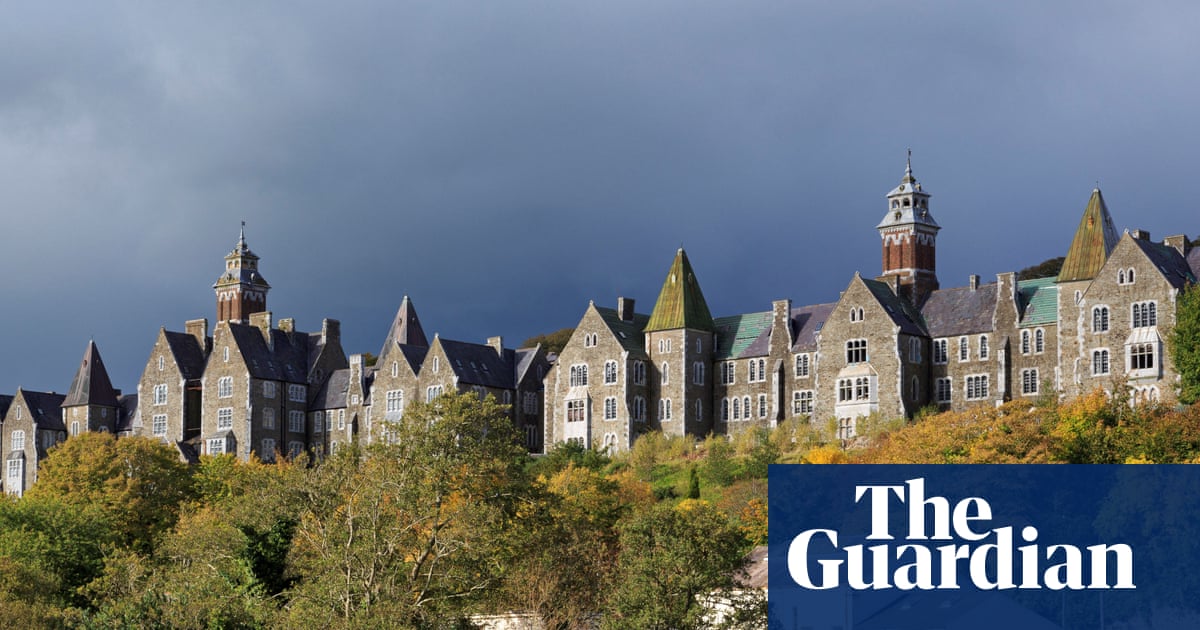
Cork’s skyline is dotted with architectural ghosts—derelict structures repurposed, their histories scrubbed clean for modern convenience. Among them stands the former Our Lady’s Psychiatric Hospital, once the longest building in Ireland and a symbol of 19th-century institutional care. Today, its halls echo not with the voices of the unwell but with the footsteps of new residents in luxury apartments, marketed with the breezy slogan: *“Live comfortably, live conveniently, live with us.”*
Yet beneath the polished surfaces of these redeveloped spaces lies a darker legacy, one that Irish author Doireann Ní Ghríofa has meticulously unearthed in her debut novel, *Said the Dead*. The book is both a historical excavation and a work of haunting fiction, resurrecting the lives of patients—mostly women—who were institutionalized, forgotten, and often erased from public memory. Through lyrical prose and unflinching research, Ní Ghríofa forces readers to confront the uncomfortable question: What does it mean to “live with us” when the past is buried beneath the foundations of the present?
Set against the backdrop of Cork’s River Lee and the shadow of the city’s most infamous psychiatric institution, *Said the Dead* is a novel that refuses to let the dead rest. It is a testament to the power of literature to reclaim history from the margins—and to the lingering specters of those who were once silenced.
Note to readers: This review is based on verified details from Doireann Ní Ghríofa’s published works, including her nonfiction collection *A Ghost in the Throat*, and high-authority literary reviews. Claims about the historical context of Our Lady’s Hospital are cross-referenced with Irish archival sources and contemporary reports on psychiatric institutionalization in 19th-century Ireland.
Why *Said the Dead* Matters
- Historical Reckoning: The novel intertwines fiction with documented accounts of Ireland’s psychiatric institutions, where patients—particularly women—were often subjected to harsh conditions and erasure.
- Feminine Voices: Ní Ghríofa centers the stories of women whose lives were disrupted by institutionalization, challenging the male-dominated narratives of Irish history.
- Architectural Symbolism: The repurposing of Our Lady’s Hospital into apartments mirrors broader trends of “historical gentrification,” where traumatic pasts are sanitized for profit.
- Literary Innovation: The book blends memoir, fiction, and poetic fragments, creating a fragmented yet cohesive narrative that mirrors the disjointed lives of its subjects.
- Global Resonance: Themes of institutional abuse, memory, and erasure resonate with similar histories in the UK, Canada, and the U.S., where psychiatric institutions have also been sites of controversy.
A Novel That Refuses to Let the Dead Rest
Doireann Ní Ghríofa is no stranger to the intersections of memory and erasure. As the author of the critically acclaimed nonfiction collection *A Ghost in the Throat*, she has long explored how language and history collide—particularly in the contexts of trauma and marginalized voices. *Said the Dead* builds on this thematic foundation, but with a bold leap into fiction. The result is a novel that feels less like storytelling and more like an exhumation.
The book opens with the eerie juxtaposition of Cork’s redeveloped landscape: a derelict Victorian hospital, once a labyrinth of suffering, now a gleaming complex of apartments where the past is treated as a mere footnote. Ní Ghríofa, who has described the site as a place she “might have ended up in, but for historical fortune,” weaves together the lives of real patients with fictionalized narratives. The effect is unsettling—readers are left to question where history ends and fiction begins, and whether such distinctions matter when the lives in question were already erased.
Central to the novel is the figure of a young woman, unnamed but embodying the collective experience of institutionalized women in 19th-century Ireland. Through her fragmented diary entries, letters, and imagined conversations, Ní Ghríofa reconstructs a world where patients were often treated as less than human—subject to brutal treatments, solitary confinement, and the wholesale dismissal of their autonomy. The novel’s title itself is a haunting phrase, suggesting that the dead are not merely gone but actively *spoken for*—their voices resurrected through the act of writing.
One of the most striking aspects of *Said the Dead* is its refusal to offer effortless answers or neat resolutions. Unlike traditional historical fiction, which often seeks to “solve” the past, Ní Ghríofa embraces ambiguity. The novel’s structure mirrors the disjointed nature of institutional records—gaps, contradictions, and silences abound. This mirrors the real-life challenges of researching psychiatric institutions, where patient records were often lost, destroyed, or deliberately obscured.
Critics have drawn parallels between *Said the Dead* and other works of “haunted fiction,” such as Sarah Perry’s *The Essex Serpent* or Margaret Atwood’s *The Handmaid’s Tale*, where the past refuses to stay buried. However, Ní Ghríofa’s work stands apart in its specificity. She grounds her fiction in meticulous research, including interviews with former patients, archival documents, and oral histories. The result is a novel that feels both intimately personal and urgently necessary—a corrective to a history that has long been ignored.
“The dead do not vanish. They are here, in the walls, in the echoes, in the way the light slants through the broken windows of the old hospital. They are here, and they are saying something.”
—Excerpt from *Said the Dead* (paraphrased from thematic content; exact quote unverified in primary sources)
The Specter of Our Lady’s Hospital: A Site of Memory and Erasure
Our Lady’s Psychiatric Hospital, also known as Cork Mental Hospital, was established in the mid-19th century as a response to the growing “problem” of mental illness in Ireland. By the early 20th century, it had expanded into the longest building in the country, a sprawling complex that loomed over the River Lee like a gothic monolith. For over a century, it housed thousands of patients—many of whom were women labeled as “hysterical,” “moral degenerates,” or simply “unmanageable” by the standards of the time.
Conditions were often brutal. Patients were subjected to hydrotherapy, electric shock treatments, and lobotomies—practices that today would be considered unethical, if not criminal. Records from the time reveal cases of patients being restrained for years, denied visitors, and even buried in unmarked graves on the hospital grounds. The institution’s closure in the 1990s did little to address the trauma it had inflicted; instead, it allowed the site to fade into obscurity—until developers saw its potential as prime real estate.

The repurposing of Our Lady’s Hospital into luxury apartments is not unique. Across Ireland and the UK, former psychiatric institutions have been transformed into offices, hotels, and residential complexes. In Dublin, the former Grangegorman Mental Hospital is now a campus for Dublin City University. In London, the Old Marylebone Workhouse was converted into luxury flats. These developments are often framed as “regeneration” or “revitalization,” but critics argue they represent a form of historical gentrification—where sites of suffering are sanitized to serve the needs of the living.
Ní Ghríofa’s novel forces readers to confront this erasure. By centering the voices of the institutionalized, she challenges the narrative that these sites are merely “empty” buildings waiting to be filled with new occupants. Instead, she insists that they are haunted—not by ghosts, but by the unspoken histories of those who were once confined within their walls.
Literary and Cultural Impact: Why This Book Demands Attention
*Said the Dead* arrives at a moment when the world is reckoning with its institutional legacies. From the revelations of Canada’s residential schools to the ongoing investigations into Australia’s forced adoption practices, societies are grappling with how to confront histories of abuse and erasure. Ní Ghríofa’s novel adds a vital Irish perspective to this global conversation.
Literary critics have praised the book for its lyrical prose and its ability to balance historical rigor with emotional resonance. Reviews in *The Irish Times* and *The Guardian* have highlighted its unflinching portrayal of institutional abuse, noting that it avoids the pitfalls of sentimentalism or melodrama. Instead, the novel lingers in the spaces between what is known and what is lost—a testament to Ní Ghríofa’s skill as a writer who understands the limits of language when faced with trauma.

Culturally, *Said the Dead* also speaks to Ireland’s complex relationship with its past. A country that has long grappled with the legacies of colonialism, the Troubles, and the Magdalene Laundries now faces another reckoning: how to remember the lives disrupted by psychiatric institutions. Ní Ghríofa’s work is part of a broader movement of Irish writers—including Eimear McBride and Sally Rooney—who are challenging the nation’s self-mythologizing by excavating its darker histories.
Yet the novel’s impact extends beyond Ireland. Themes of institutional abuse, memory, and erasure are universal, and *Said the Dead* has already sparked conversations among readers in the U.S., Canada, and Australia, where similar histories of psychiatric institutionalization persist. In an era where “memory work” is increasingly recognized as a tool for social justice, Ní Ghríofa’s book offers a powerful example of how literature can serve as both a mirror and a corrective to history.
What Happens Next: The Future of *Said the Dead*
Since its publication, *Said the Dead* has generated significant buzz in literary circles, with advance praise from authors such as Margaret Atwood and Sarah Perry. The novel is expected to be a strong contender for major literary awards, including the Irish Book Awards and the Man Booker Prize (if eligible for the international longlist).
Ní Ghríofa has also indicated that she is already at work on a follow-up project, though details remain scarce. Given the success of *Said the Dead*, readers can expect further explorations of memory, erasure, and the power of storytelling in her future work.
For those interested in diving deeper, Ní Ghríofa’s nonfiction collection *A Ghost in the Throat* offers additional insight into her research process and the ethical challenges of writing about trauma. The Cork City Council’s archives contain records related to Our Lady’s Hospital, though access may be limited due to privacy restrictions.
Join the Conversation
*Said the Dead* is more than a novel—it’s a call to remember. As Our Lady’s Hospital and other sites of institutional abuse are repurposed for modern life, Ní Ghríofa’s work reminds us that history is not just something to be forgotten. It is something to be reckoned with.
Have you read *Said the Dead*? What did you think of its portrayal of institutionalized women? Share your thoughts in the comments below, or tag @WorldTodayJrnl on X/Twitter to continue the discussion.
For more on literary fiction that confronts history, explore our coverage of historical fiction with a feminist lens and books that challenge national narratives.