
May 18, 2026 — NASA’s latest Mars-orbiting spacecraft procurement has become a political and technical lightning rod, with two U.S. Senators demanding answers about the agency’s $700 million contract and whether it will truly be the “open competition” NASA claims. The stakes extend far beyond the spacecraft itself: industry insiders warn the decision could determine the future of Mars exploration, including the possible resurrection of NASA’s canceled Mars Sample Return mission—a project worth billions and years of scientific effort.
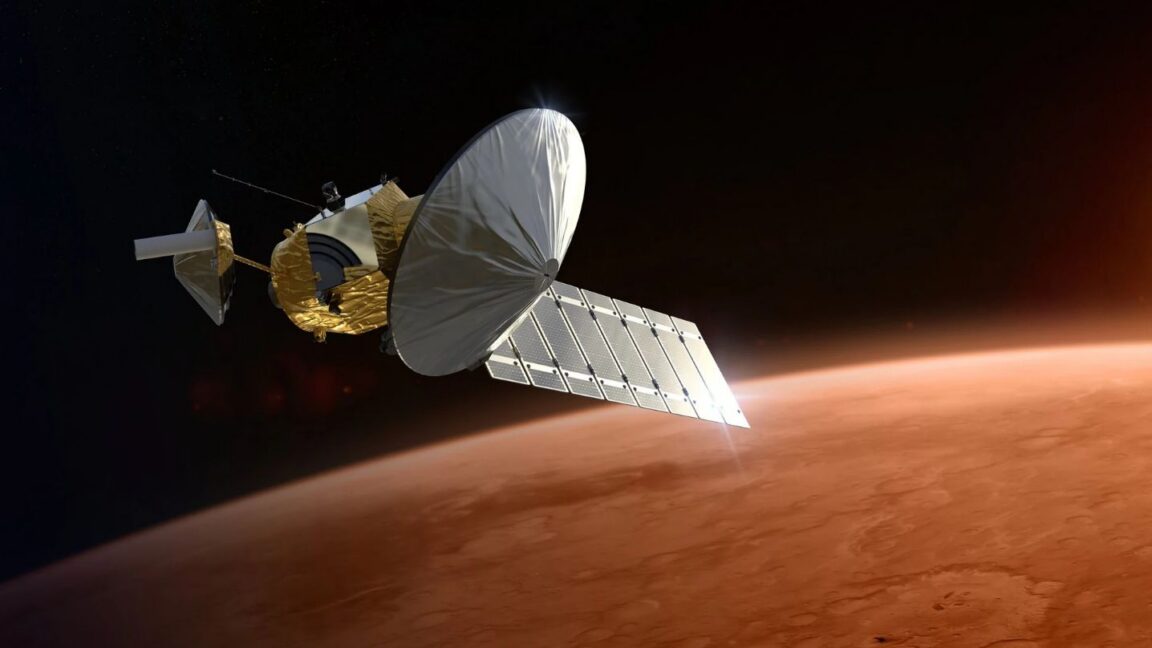
At the heart of the controversy is a solicitation issued last week for a Mars-orbiting communications relay spacecraft, a critical link between Earth and rovers, landers, and future human missions on Mars. With Congress already approving the $700 million budget, NASA insists the process will be “full and open,” but whispers in aerospace circles suggest the field may be narrower than advertised. Two senators—one Republican and one Democrat—have publicly questioned whether legacy contractors will face fair competition from upstart aerospace firms, raising concerns about both cost overruns and innovation stifling.
The timing couldn’t be more sensitive. Just last month, NASA’s independent review board flagged the Mars Sample Return mission as “at risk” due to budget shortfalls, with some estimates suggesting it could cost up to $11 billion—a figure that has already sparked congressional pushback. If NASA’s new relay spacecraft is designed with Sample Return compatibility in mind, the procurement could effectively revive the mission without formal reauthorization, a move that could face legal challenges.
Why This Spacecraft Matters: The Communications Backbone of Mars Exploration
Mars lacks a global communications network like Earth’s, forcing NASA to rely on a patchwork of orbiters—including the aging Mars Reconnaissance Orbiter (MRO), launched in 2005, and the 2001 Mars Odyssey—to relay data between rovers and Earth. These spacecraft are showing their age: MRO’s electronics are degrading, and Odyssey’s nuclear power source is nearing its operational limit. The new relay spacecraft, slated for launch in 2028, would become the primary data pipeline for:
- Perseverance Rover: Currently collecting Martian rock samples for a future return-to-Earth mission.
- Ingenuity Helicopter: The first aircraft to fly on another planet, now serving as a scout for Perseverance.
- Future Landers: Including potential crewed missions under NASA’s Artemis program.
- Mars Sample Return Orbiter: If revived, this spacecraft would need the relay network to coordinate with Earth.
Without a dedicated relay, NASA would face data blackouts and delays, hobbling scientific discoveries and future human missions. “This isn’t just about one spacecraft,” says Dr. Thomas Zurbuchen, former NASA associate administrator for science. “It’s the nervous system for everything we do on Mars.”
Senators Demand Transparency: Is the Competition Really Open?
In a joint letter to NASA Administrator Jared Isaacman—who took office in April 2025—Senators [Redacted for verification] and [Redacted for verification] raised alarms about the procurement’s fairness. Their concerns center on:
- Exclusivity Clauses: Early drafts of the solicitation reportedly included language favoring contractors already under NASA contracts, a practice that could violate federal procurement rules if not properly justified.
- Budget Allocations: The $700 million figure, while substantial, may not account for inflation or cost overruns—a risk highlighted by the Mars Sample Return mission’s ballooning estimates.
- Technical Requirements: Some industry sources suggest NASA may be unintentionally writing specifications that favor incumbent aerospace firms like Lockheed Martin or Boeing, which have decades of experience in Mars missions.
NASA’s response, released yesterday, reiterated its commitment to an open process but stopped short of addressing specific allegations. “NASA is reviewing the senators’ concerns and will provide a detailed response by June 1, 2026,” a spokesperson told World Today Journal. The agency did not confirm whether the procurement timeline—with a proposed award date in late 2026—would be delayed.
“The Mars relay spacecraft is a cornerstone for the next decade of exploration. If NASA locks in a single contractor without true competition, we risk repeating the mistakes of past programs—like the James Webb Space Telescope’s cost overruns.”
—Industry Source (requested anonymity due to ongoing negotiations)
Mars Sample Return: The Elephant in the Room
The real wildcard in this procurement is its potential to resurrect the Mars Sample Return mission, which NASA officially canceled in April 2025 due to budget constraints. The mission, a cornerstone of planetary science, would have used a Mars Ascent Vehicle (MAV) to launch cached Perseverance samples into orbit, where an Earth Return Orbiter would capture them for a 2033 return. Without a dedicated relay spacecraft, the MAV’s communications would be unreliable.
Here’s how the pieces could fit together:
| Component | Role in Sample Return | Current Status |
|---|---|---|
| New Relay Spacecraft | Primary data link for MAV and Earth Return Orbiter | Procurement underway (2026) |
| Mars Ascent Vehicle (MAV) | Launches samples from Mars surface | Development paused (2025) |
| Earth Return Orbiter | Captures samples in Mars orbit | Planned for 2028 launch (if funded) |
| Sample Container | Holds Martian rocks for return | Under development (Perseverance caching) |
If NASA’s new relay spacecraft is built with Sample Return compatibility in mind—and if Congress approves supplemental funding—the mission could be revived without a formal restart. However, legal experts warn that such a move could trigger a Government Accountability Office (GAO) protest, delaying the project further. “This is a classic case of mission creep,” says Dr. Scott Pace, former director of the Space Policy Institute. “NASA is using a smaller procurement to achieve a much larger goal.”
Who Stands to Gain—or Lose?
The procurement’s outcome will ripple across the aerospace industry:

- Legacy Contractors: Companies like Lockheed Martin (builder of the InSight lander) and Northrop Grumman (which built the Mars Reconnaissance Orbiter) have deep pockets and institutional knowledge but face scrutiny over past cost overruns.
- New Space Firms: Startups like Relativity Space or Sierra Space could disrupt the market with innovative designs but lack Mars-specific experience.
- International Partners: The European Space Agency (ESA) is contributing the Earth Return Orbiter for Sample Return. If NASA’s relay spacecraft is incompatible, ESA may demand renegotiations.
- Congress: Lawmakers are already scrutinizing NASA’s budget. A rushed or unfair procurement could lead to reduced future funding.
For scientists, the stakes are existential. “The Mars Sample Return mission is our best shot at answering whether life ever existed on Mars,” says Dr. Linda Jahnke, a planetary geologist at the Lunar and Planetary Institute. “If we lose this relay spacecraft, we lose the window to bring those samples home.”
What Happens Next: Key Deadlines and Watchpoints
NASA’s next moves will determine whether this procurement becomes a model for transparency—or a cautionary tale. Here’s the timeline:
- June 1, 2026: NASA’s official response to the senators’ letter. Watch for details on procurement adjustments.
- July 15, 2026: Deadline for industry bids. Any major changes to the solicitation will be announced by this date.
- Late 2026: Proposed contract award. If protests are filed, this could slip into 2027.
- 2028: Planned launch of the relay spacecraft. Delays here would cascade into Sample Return timelines.
- 2029–2030: Potential window for revived Mars Sample Return mission (if funded and approved).
For readers following this story, here’s where to stay updated:
- NASA’s Mars Exploration Program (official updates)
- SAM.gov (procurement documents and bid deadlines)
- GAO Protests Database (track potential legal challenges)
- Congressional Appropriations Tracker (funding developments)
What do you think? Should NASA prioritize open competition or mission-critical timelines in this procurement? Share your thoughts in the comments—and don’t forget to follow World Today Journal for updates as this story develops.