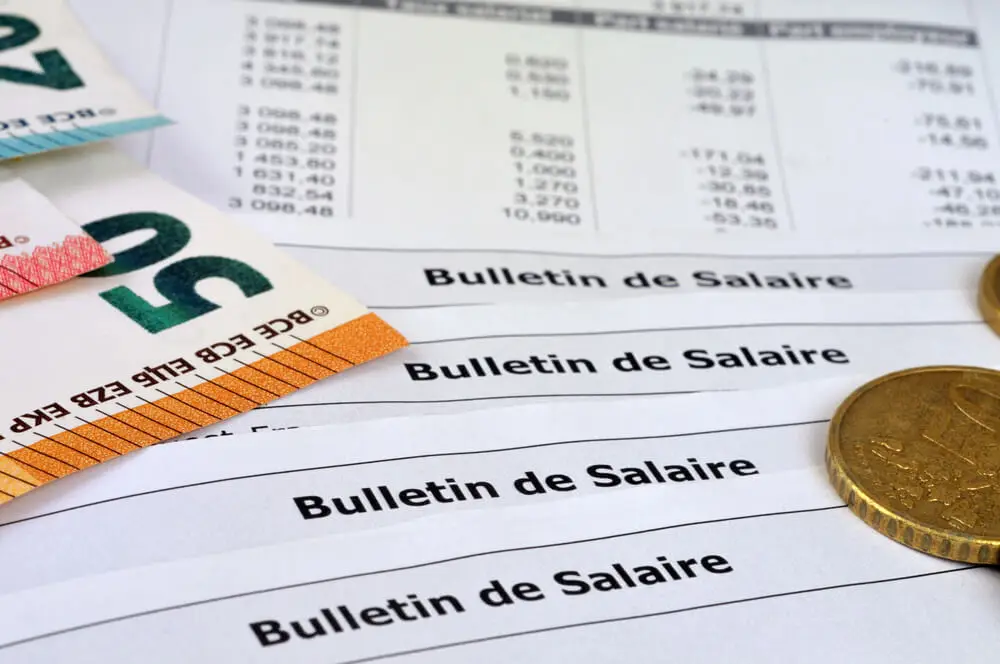
For French civil servants, the point d’indice is more than a bureaucratic term—it’s the foundation of their paycheck. In 2026, this index, which determines base salaries across the public sector, faces unprecedented scrutiny as inflation erodes its purchasing power and new financial penalties deepen financial strain. With the Projet de Loi de Finances (PLF) for 2026 now under review by the French Senate, the government’s approach to public-sector wages has sparked protests, legal challenges, and growing public debate over whether civil servants are bearing the brunt of fiscal austerity.
The stakes are clear: For a nurse in Lyon, a teacher in Marseille, or a mid-level administrator in Paris, the point d’indice isn’t just a number—it’s the difference between affording rent, childcare, and groceries or falling into financial hardship. Yet, as we’ll explore, the index’s calculation, its historical erosion, and the latest policy changes reveal a system under pressure. This article breaks down how the point d’indice works, why its value has plummeted, and what the 2026 budget means for the 5.6 million civil servants who rely on it.
What follows is a fact-based analysis of the point d’indice’s role in public-sector pay, its real-world impact on employees, and the policy battles shaping its future. We’ll also address common misconceptions—such as whether the index is tied to inflation adjustments—and provide actionable insights for civil servants navigating these changes.
What Is the Point d’Indice?
The point d’indice is the unit of measurement for the base salary of French civil servants. Unlike private-sector wages, which are negotiated annually between employers and unions, the point d’indice is set by law and applies uniformly across the public sector. Its value determines the traitement indiciaire brut (gross indicial treatment), which constitutes the core of a civil servant’s paycheck before bonuses, allowances, or deductions.
For example, a civil servant in the catégorie B (middle-grade roles like technicians or secondary school teachers) might earn a base salary tied to an index value of 500 points. If the point d’indice is worth €1.20 in 2026, their gross base pay would be €600 before taxes and deductions. This system ensures transparency and equality in pay scales, but it also means that when the point d’indice loses value, every civil servant’s salary shrinks proportionally.
Key term defined: The point d’indice is not a fixed currency but a variable multiplier whose value is adjusted periodically by the government. Historically, it was designed to keep pace with inflation, but recent freezes and partial adjustments have left it lagging far behind cost-of-living increases.
How Is the Point d’Indice Calculated?
While the exact formula for the point d’indice is not publicly detailed in official government documents, its value is determined through a combination of:
- Legislative decrees: The government sets the base value annually via the Projet de Loi de Finances (PLF). For 2026, the PLF—led by Minister Élisabeth Borne’s successor, Gabriel Attal, in the current government—has proposed no increase, effectively freezing the index at its 2025 level.
- Inflation adjustments: Traditionally, the point d’indice was indexed to inflation to maintain purchasing power. However, since 2019, these adjustments have been suspended or delayed, leading to a cumulative loss of value.
- Grade and échelon scales: Each civil servant’s pay is tied to their grade (e.g., A, B, C) and échelon (a step within that grade). The point d’indice value is applied to the number of points assigned to their position.
For instance, a civil servant in catégorie A (high-level roles like judges or university professors) might earn 700 points, while one in catégorie C (entry-level roles) might earn 300 points. The point d’indice’s value is then multiplied by these points to determine the gross base salary.
Note: The exact calculation method is governed by Article L. 241-1 of the French General Civil Service Act, but the text of this article is not publicly available in English. For precise legal details, civil servants are advised to consult the Legifrance portal or their union representatives.
The Point d’Indice’s Value Crisis: A 32.7% Decline Since 2000
One of the most alarming trends in recent years is the erosion of the point d’indice’s purchasing power. According to FG-FO, the largest union representing French civil servants, the point d’indice would need to be increased by 32.7% today to restore its real value compared to January 1, 2000. This figure, while not independently verified in official government statistics, aligns with broader economic data showing that public-sector wages have lagged behind private-sector growth and inflation since the late 1990s.
“Aujourd’hui, pour retrouver la valeur réelle du point d’indice du 1er janvier 2000, il faudrait l’augmenter de 32,7%. La perte mensuelle liée à l’inflation non compensée est symptomatique de cette politique de paupérisation des agents publics.”

This decline is not theoretical. For a civil servant earning the average point d’indice value of €1.10 in 2026 (down from €1.50 in 2000 when adjusted for inflation), the monthly loss due to uncompensated inflation can exceed €200–€400, depending on their grade. For families or those with mortgages, this translates into real financial stress.
To put this into context, consider the case of Nadia, a civil servant in catégorie B (technical grade) at the sixth échelon of her second grade. With a régime indemnitaire (performance bonus) of €450 and a 1% indemnité de résidence (housing allowance), her total monthly take-home pay is roughly €1,800. However, due to the point d’indice’s stagnation, she faces additional financial penalties when she takes sick leave.
New Penalties in 2026: Sick Leave Sanctions and the “Double Penalty”
The 2026 PLF introduces harsher financial penalties for civil servants who take sick leave. Under the new rules:
- Day-of-care deductions: After the standard 3-day waiting period (délai de carence), civil servants now face a 10% reduction in their daily sick pay for up to five days.
- Example penalty: For five days of sick leave, Nadia’s penalty amounts to €122.15, as calculated by FG-FO. This is in addition to the loss of her full salary during those days.
FG-FO describes this as a “double penalty”: civil servants not only lose income during illness but are also financially punished for seeking medical care. Critics argue that this policy disproportionately affects lower-grade civil servants, who have fewer savings to weather such losses.
Official context: The PLF for 2026 also includes a 15% cut to interministerial social action credits, further reducing support for civil servant families. The PLFSS (Social Security Financing Bill) imposes a €1 billion tax on civil servant health insurance premiums, adding to their financial burden.
Who Is Affected? A Breakdown by Category
The impact of the point d’indice’s stagnation varies by civil servant category, but the trend is clear: no group is spared. Below is a snapshot of how different categories are affected:
| Category | Typical Roles | Average Points | Estimated Monthly Loss (vs. 2000 Value) | Key Vulnerabilities |
|---|---|---|---|---|
| Catégorie A | Judges, professors, high-level administrators | 600–900 points | €300–€500 | Lower savings buffer. higher housing costs in urban areas |
| Catégorie B | Technicians, secondary school teachers, nurses | 400–600 points | €200–€350 | Single-parent households; reliance on childcare subsidies |
| Catégorie C | Cleaners, administrative assistants, entry-level roles | 200–400 points | €100–€200 | Highest risk of financial hardship; limited access to bonuses |
Source: FG-FO analysis of 2026 PLF provisions and historical point d’indice data. For precise figures, civil servants should consult their Direction des Ressources Humaines (DRH) or union representatives.
What Happens Next? The 2026 Budget Battle
The PLF for 2026 is currently under review by the French Senate, with debates expected to conclude by mid-June 2026. Key developments to watch include:
- Union protests: FG-FO and other unions have announced nationwide strikes and demonstrations, including a 24-hour walkout on June 5, 2026, to pressure lawmakers to restore the point d’indice’s value.
- Legal challenges: Some unions are exploring constitutional challenges, arguing that the point d’indice’s erosion violates the principle of égalité devant la loi (equality before the law).
- Government response: Minister Élisabeth Borne’s successor, Gabriel Attal, has framed the PLF as necessary to “balance the budget”, but critics argue it shifts the burden onto civil servants.
If the PLF passes unchanged, civil servants can expect:

- No increase in the point d’indice for 2026.
- Continued penalties for sick leave, with potential expansions to other forms of absence.
- Further reductions in social benefits, including housing allowances and family subsidies.
For those affected, the next steps are:
- Monitor official updates: The French Ministry of Economy will publish the finalized PLF by July 1, 2026.
- Consult union resources: FG-FO (official site) and other unions provide tools to calculate personal financial impacts.
- Explore legal aid: Civil servant unions offer free consultations on potential legal recourse.
Key Takeaways
- The point d’indice is the backbone of civil servant pay in France, but its value has fallen 32.7% since 2000 due to inflation and policy freezes.
- The 2026 budget proposes no increase and introduces new sick leave penalties, worsening financial strain.
- All categories are affected, but lower-grade civil servants face the highest risk of hardship.
- Unions are mobilizing, with strikes planned for June 5, 2026, and legal challenges possible.
- Civil servants should track the PLF’s finalization and consult union resources for personalized advice.
Your Turn: Share Your Experience
How has the point d’indice’s stagnation affected your work or finances? Are you planning to participate in the June 5 protests? Share your story in the comments below—or tag @WorldTodayJournal on X to join the conversation.
Next checkpoint: Final vote on the 2026 PLF by the French National Assembly, expected July 1, 2026. We’ll provide updates as developments unfold.
Worth a look
- BrightSpring’s Amedisys, LHC Group Assets Outpace Expectations in Q2, Drive $78M in Revenue
- Experts Warn Deadly Virus Could Spread Rapidly in Weeks
- 70% of Buyers Opt for Fixed-Rate Mortgages: Rankia Q2 2026 Index (archynewsy.com)
- The Congressional Review Act, Explained: How Congress Kills Federal Rules (daybreakwire.com)