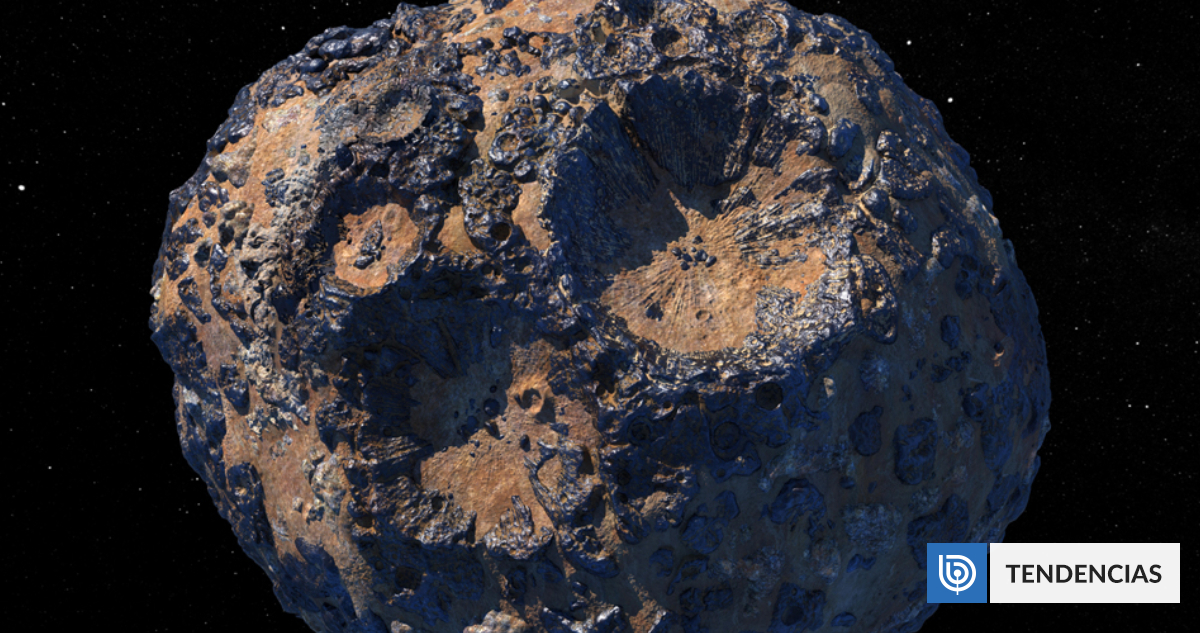
NASA’s Psyche mission has successfully reached a significant milestone in its multi-year journey through the solar system. On May 15, 2026, the spacecraft performed a crucial gravity assist maneuver by flying past Mars, a move designed to harness the planet’s gravitational pull to accelerate the probe toward its ultimate destination: the metal-rich asteroid Psyche.
This Mars flyby served as more than just a speed boost; it provided the mission team with a valuable opportunity to calibrate the spacecraft’s scientific instruments. As the probe makes its way toward the main asteroid belt, the mission remains on track to begin its primary exploration of the asteroid by August 2029. The Psyche mission, which originally launched on October 13, 2023, aims to study the unique celestial body, which scientists believe may be the exposed nickel-iron core of an early planetesimal—a building block of an early planet.
A Strategic Maneuver in Deep Space
The use of a planetary gravity assist is a well-established technique in space exploration, allowing NASA to conserve propellant while reaching high speeds necessary for deep-space travel. By swinging around Mars, the Psyche spacecraft successfully adjusted its trajectory and velocity, effectively using the Red Planet as a cosmic slingshot. According to official mission updates from NASA, this encounter was a critical step in ensuring the spacecraft maintains its precise course for its 2029 rendezvous.
Beyond the mechanical benefits, the flyby functioned as a rigorous training exercise. Engineers and scientists at NASA utilized the proximity to Mars to test and fine-tune the onboard instruments that will eventually be used to map and analyze the asteroid’s surface. The data gathered during this maneuver will be instrumental in ensuring the probe is fully operational and optimized for the high-stakes science mission that lies ahead in the asteroid belt.
Understanding the Target: The Asteroid Psyche
The asteroid Psyche has long captured the interest of the scientific community due to its unusual composition. Unlike many other asteroids that are primarily composed of rock or ice, Psyche is believed to be exceptionally metal-rich. Researchers hypothesize that it represents the remains of a protoplanetary core, offering a rare window into the violent processes of planetary formation that occurred during the early history of our solar system.

Studying this object could provide fundamental insights into how Earth and other terrestrial planets formed their own metallic cores. By examining the surface of Psyche, mission scientists hope to determine whether the asteroid is indeed the remnant core of a planetesimal or if it formed in a different, equally compelling way. The mission is part of NASA’s broader portfolio of robotic spaceflight programs, which continue to expand our understanding of the solar system’s origins.
Looking Ahead: The Road to 2029
With the Mars flyby now successfully behind it, the Psyche spacecraft is continuing its cruise phase through the solar system. The journey to the main asteroid belt is a long-term endeavor, and the mission team will continue to monitor the health and performance of the spacecraft as it travels millions of miles from Earth. For those interested in tracking the mission’s progress, NASA provides ongoing updates through the official Psyche mission portal, where the public can also access interactive tools like “Eyes on the Solar System” to see the spacecraft’s current position in real-time.

The next major phase for the mission will be the arrival at the asteroid in 2029, where the spacecraft will enter orbit to conduct an extensive study of the asteroid’s topography, gravity, and magnetic fields. As the mission progresses, You can expect further discoveries that will refine our knowledge of planetary science and the diverse objects that inhabit our solar system.
As a technology editor, I find the engineering precision required for these gravity-assist maneuvers truly remarkable. The ability to use the movement of planets to navigate the vastness of space is a testament to the ingenuity of the teams at NASA. I invite you to share your thoughts on this mission in the comments below, and stay tuned for more updates as the Psyche spacecraft continues its historic journey.
Related reading