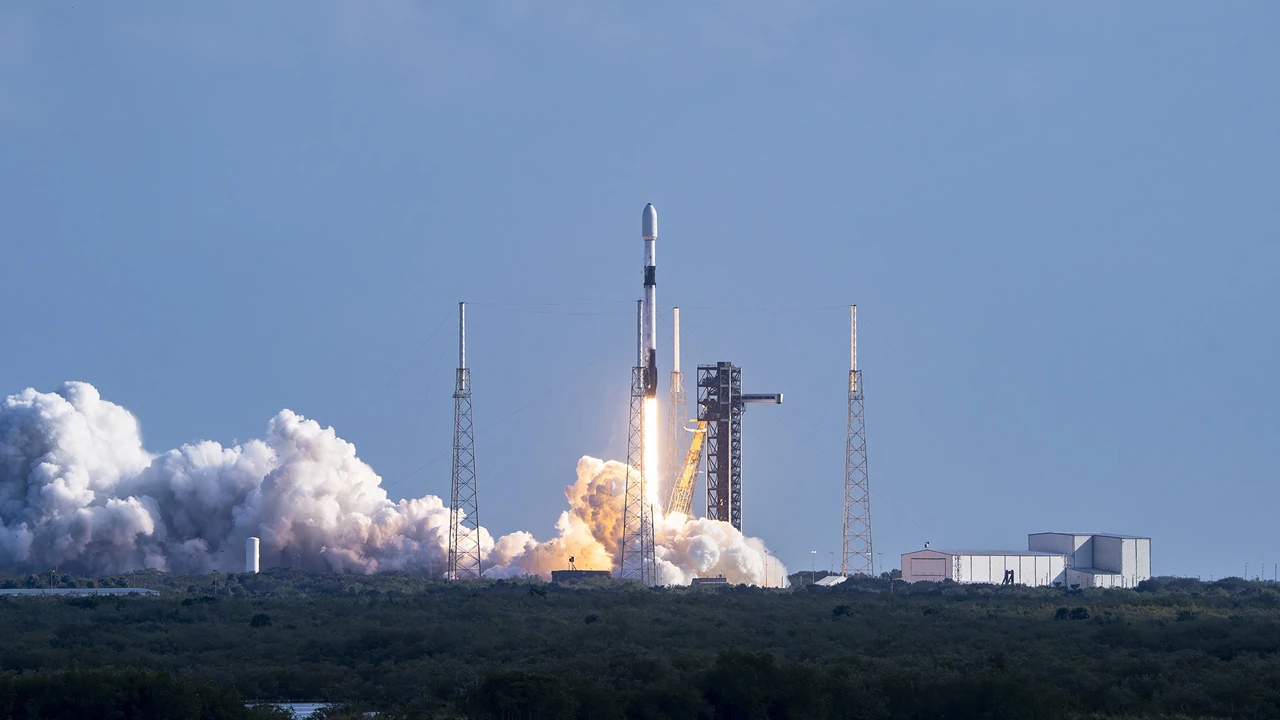
A discarded upper stage of a SpaceX Falcon 9 rocket crashed into the surface of the moon on Wednesday, Aug. 5, after drifting off course in space for over a year, scientists reported.
SpaceX Rocket Stage Slams Into Moon After Year in Orbit
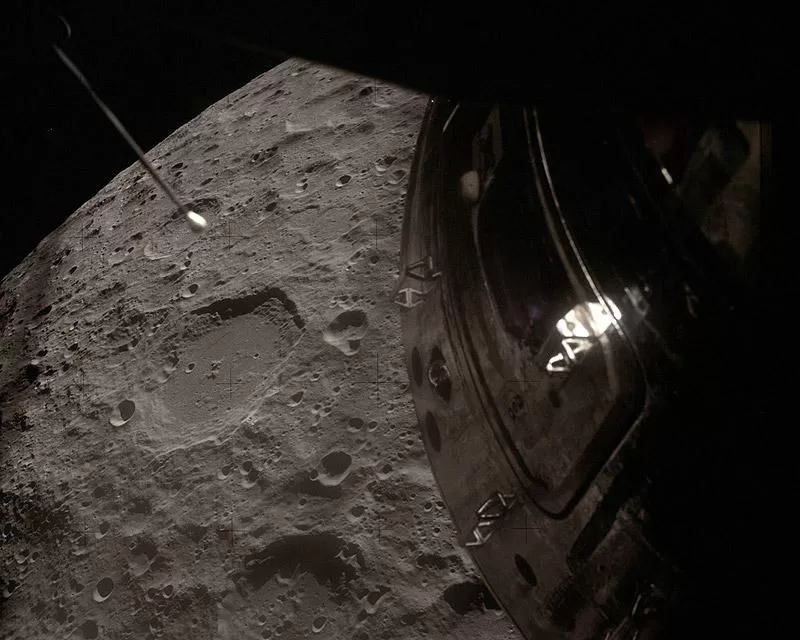
The roughly four-ton, 45-foot-long upper stage slammed into the lunar surface at a speed of more than 5,400 mph (8,700 kph). According to apnews.com, the impact occurred on a dusty, barren patch near Einstein Crater on the moon’s sunlit western limb, near the edge of the near and far sides.
NASA’s Center for Near Earth Object Studies confirmed on Aug. 4 that the rocket segment had a 100% chance of hitting the moon. Because the moon lacks an atmosphere, the hardware had no way to burn up before reaching the surface.
Origins of the Drifting Rocket Stage
The upper stage remained in space following a mission on Jan. 15, 2025, when a Falcon 9 launched from Cape Canaveral, Florida, to send a pair of commercial lunar landers on their way to the moon, as reported by apnews.com. The mission delivered Firefly Aerospace’s Blue Ghost lander and ispace’s Resilience lander. While Blue Ghost successfully touched down, the upper stage was left adrift in an extended orbit because extra thrust was required for the flight.
Over the past year, a combination of solar activity, solar wind, and gravitational pulls from the sun and the moon gently nudged the dead stage onto a collision course, according to SpaceX officials and CNET. Julianna Scheiman of SpaceX stated that the company is working with NASA to avoid future wrecks and emphasized that the projected crash was unintentional.
Search for Visual Confirmation and Lunar Craters
Astronomers and space tracking experts predicted the exact timing of the impact, but direct visual confirmation proved difficult. Because the crash site is located near the visible edge of the moon, neither professional nor amateur astronomers could spot the actual collision or the resulting dust plume from Earth.

Space tracking calculations and independent projections from astronomer Bill Gray—who developed the Project Pluto software—accurately pointed to the Aug. 5 impact time. NASA estimated that the violent descent would carve out a new crater approximately 60 feet wide and 12 feet deep.
To verify the aftermath, NASA and international space agencies tasked orbiting spacecraft with photographing the location. Both NASA’s cnet.com and South Korea’s Korea Pathfinder Lunar Orbiter were scheduled to capture before-and-after imagery of the site. Space agencies noted that it could take several days to receive and process photos from the orbiters.
Broader Concerns Over Lunar Debris
The unplanned lunar impact has reignited discussions among scientists regarding space debris between Earth and the moon. With space agencies and private companies ramping up lunar exploration and planning crewed bases, experts warn that orbital clutter could pose growing challenges.
Despite concerns over increasing lunar traffic, NASA noted in a statement that disposing of upper stages on the lunar surface is a technically accepted method for certain missions and that the impact poses no danger to Earth.
Keep reading
- Canada Fossils Push Back Timeline of Complex Animal Evolution
- Facebook: Comunicador niega vínculo con irregularidades tras operativo policial
- SpaceX Insiders Can Sell 912 Million Shares as First Lockup Expires (news-usa.today)
- SpaceX Engineer Plans to Cash Out $23M Stake Following Nasdaq Listing (archyworldys.com)