
For years, the digital media landscape has been defined by a single, relentless metric: the click. From the rise of social media to the dominance of traditional search engines, the industry has been caught in a cycle of chasing engagement. This pursuit often resulted in a “fire hose” of content designed for human impulse rather than human intellect—listicles, outrage bait, and formulaic pieces designed to capture a fleeting gaze. However, as artificial intelligence begins to reshape how information is consumed, that entire incentive model is facing a fundamental disruption. We are witnessing the emergence of a new AI search incentive system that may prioritize different values altogether.
The central anxiety for publishers today is the “traffic detour.” The fear is simple: if a user asks an AI for a summary of a complex topic, the AI provides the answer directly, detouring the user away from the original source. While the economic complexities of AI scraping and publisher compensation remain a subject of intense debate, a new reality is becoming clear. The battle for attention is shifting. It is no longer just about who can attract the most eyeballs to a website; it is about whose information is most prominently cited within an AI-generated summary. In this new era, AI presence is becoming the primary proxy for relevance, and authority.
This shift suggests a potential resurgence for high-quality journalism. If AI systems reward well-sourced, domain-specific content over mere “social heat,” the incentive to produce shallow, high-engagement content may diminish. Instead, the digital distribution evolution is moving toward a model where substance is the currency. Yet, as we begin to understand the mechanics of AI citations and how large language models (LLMs) prioritize information, we see that this new system is not without its own set of complexities and potential pitfalls.
The Authority of the Individual: Why Platforms Like LinkedIn Are Winning
Recent data suggests that the way AI engines perceive authority is significantly different from how social media users perceive popularity. A pair of recent studies evaluating millions of AI citations have provided a roadmap for understanding this distinction. According to research from Meltwater, a communications intelligence company, LinkedIn has emerged as one of the most authoritative sources on the internet for AI-mediated search, ranking as the second most-cited source trailing only YouTube. This finding is supported by a separate study from the search-data analytics firm Semrush, which also placed LinkedIn at the No. 2 spot, closely following Reddit.

Crucially, the Meltwater data indicates that this “bot bump” is not driven by celebrity or massive follower counts. Instead, the citations were largely driven by individual members rather than brand or company accounts. The data revealed that more than half of the citations went to members with fewer than 10,000 followers. This represents a vital distinction for content creators: the AI is not simply looking for the loudest voice in the room, but for the most structured and reliable one. Semrush’s findings echoed this, noting that the most-cited LinkedIn posts often had only modest engagement on the platform itself, providing strong evidence against a simple popularity-based model.
This trend highlights a growing importance for semantic structure in journalism. The most successful content in the eyes of an AI was structured content, such as newsletters and organized posts. This suggests that the new digital media landscape rewards information that is not just accurate, but highly retrievable. For professionals looking to build authority, the message is clear: expertise, when presented in a clear and organized format, can bypass the need for massive social media reach.
The Structure Trap: When Machines Prioritize Form Over Fact
While the shift toward substance is encouraging, there is a significant caveat: AI systems appear to value structure with an almost clinical intensity, sometimes at the expense of actual depth. This creates a new kind of “gameable” environment. If an article is perfectly optimized for a machine but lacks real insight, it may still outperform a masterpiece of investigative reporting that is poorly formatted.
Academic research into LLM information retrieval highlights this vulnerability. A paper from the Canadian AI company Cohere demonstrates that large language models can miss critical facts if an article lacks clear titles and headings. Without these structural signposts, the AI may fail to connect the dots between the data and the narrative. Similarly, research from Stanford University indicates that AI search systems exhibit a strong bias toward the beginning and the end of documents. If the most vital, “meaty” information is buried in the middle of a piece, the AI may overlook it entirely, regardless of its importance.
This creates a tension between traditional human-centric writing and machine-readable content. Traditional storytelling often uses “hooks,” clever titles, and narrative builds that delay the core information to create suspense. However, in an era of AI-mediated search, these techniques can become liabilities. If the goal is to be cited, the information must be easy for a bot to find, categorize, and extract. This brings us to the rise of a new discipline: Generative Engine Optimization (GEO).
Navigating the Era of Generative Engine Optimization (GEO)
Generative Engine Optimization (GEO) is the successor to traditional search engine optimization vs GEO. While SEO focused on keywords and backlinks to satisfy a search algorithm, GEO focuses on making content “digestible” for generative AI. This involves a shift in how journalists and subject matter experts approach their work. To succeed in the new AI search incentive system, content must be optimized for both human readers and machine crawlers.
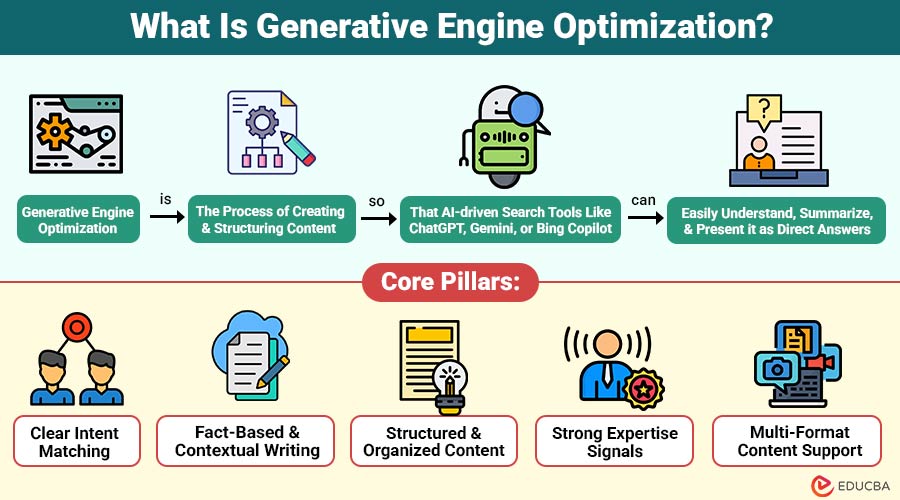
For content creators, this does not mean abandoning quality, but rather augmenting it with machine-friendly architecture. Effective GEO involves:
- Declarative Introductions and Conclusions: Clearly stating the “what” and the “so what” at the start and end of a piece to satisfy the AI’s preference for document boundaries.
- Consistent Titling and Subheadings: Using clear, descriptive headings that act as a map for LLMs to navigate the content.
- Explicit Question-and-Answer Formats: Directly addressing common queries within the text to facilitate easier extraction by AI summaries.
- Named Source Integration: Connecting the dots by explicitly referencing other reputable sources by name, which helps the AI build a web of context.
The risk, of course, is that GEO could lead to a “sanding off” of the human element—the nuance, the wit, and the narrative complexity that makes journalism worth reading. The challenge for the modern newsroom is to make quality work easier for machines to understand without stripping away the very qualities that make it valuable to humans.
Key Takeaways for the AI-Mediated Future
- Citations are the new clicks: Authority is increasingly measured by how often your information is included in AI summaries rather than just raw website traffic.
- Structure is a prerequisite: AI models heavily favor structured content with clear headings, titles, and declarative summaries.
- Substance over popularity: Data shows that AI often cites individual experts with modest followings, suggesting that depth of knowledge is more important than massive social reach.
- The rise of GEO: Generative Engine Optimization is becoming essential, requiring a balance of machine-friendly formatting and high-quality, original reporting.
- Beware the “Middle” bias: Because AI tends to prioritize the beginning and end of documents, critical information must be placed strategically to avoid being missed.
The winners in this new era will not necessarily be the loudest voices or those with the most aggressive clickbait strategies. Instead, they will be the people who can demonstrate real expertise and present it in a way that both humans and machines can easily recognize and trust. The incentive system is changing, and while it will undoubtedly create new ways to exploit the algorithm, it also offers a profound opportunity for a return to substance-driven media.
As AI search technologies continue to evolve, we expect further studies from institutions like Stanford and specialized AI firms to refine our understanding of how these models prioritize information. We will be closely monitoring upcoming research into the long-term impact of GEO on journalistic integrity.
What do you think? Is the shift toward machine-friendly structure a threat to good writing, or a tool for better discovery? Share your thoughts in the comments below and share this article with your network.
Keep reading