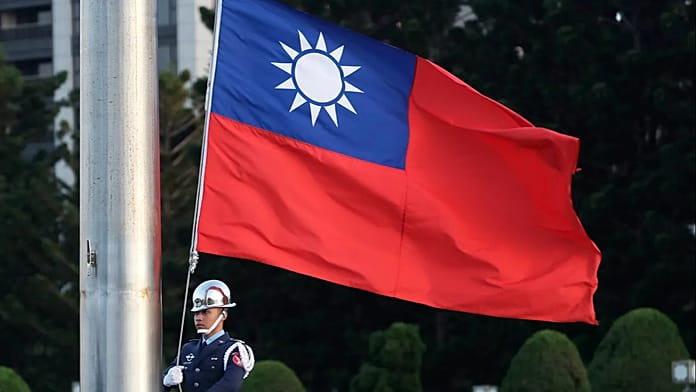
TAIPEI — Taiwan’s government has formally addressed reports concerning the status of a significant U.S. Arms sale, stating on Friday that it has received no notification of any pause regarding the planned $14 billion munitions package. The clarification comes following testimony provided to a U.S. Senate committee that suggested potential delays in foreign military assistance as the United States prioritizes its own defense requirements.
The uncertainty surrounding the arms package, which has been a focal point of international security discussions, emerged after the acting U.S. Navy secretary, Hung Cao, spoke before the U.S. Senate Appropriations Defense Subcommittee on Thursday. During the hearing, Cao indicated that certain foreign military sales were being adjusted to ensure the U.S. Military maintains sufficient munitions levels for an ongoing operation described as “Epic Fury.”
“Right now we’re doing a pause in order to make sure we have the munitions we need for ‘Epic Fury,’” Cao told the subcommittee, adding that foreign military sales would resume when the administration deems it appropriate. The comments arrived shortly after President Donald Trump publicly raised questions regarding the continuation of arms sales to the island, a territory that China maintains is a breakaway province to be reunified, by force if necessary.
Government Response and Current Status
In response to the testimony, Taiwanese presidential spokesperson Karen Kuo stated on Friday that while authorities are aware of the reports circulating in the media, “currently there is no information regarding any adjustments the U.S. Will make to this arms sale.” The statement serves to stabilize concerns regarding the island’s defense procurement pipeline, which is vital for maintaining its security posture in the region.
The United States, despite lacking formal diplomatic ties with Taipei, remains the island’s most significant arms supplier and security backer. This long-standing policy is governed by the framework of the Taiwan Relations Act, which provides for the supply of defensive weapons to help the island maintain a sufficient self-defense capability. While the administration has not issued an official halt, the comments from the acting Navy secretary reflect the complex balancing act currently facing U.S. Defense planners as they navigate multiple global theaters of operation.
The Context of U.S. Defense Priorities
The mention of the “Epic Fury” operation underscores the current strain on U.S. Stockpiles. The Senate Appropriations Defense Subcommittee continues to review the administration’s allocation of defense resources, weighing the necessity of maintaining readiness for immediate operations against the strategic imperative of supporting international partners.
For Taiwan, the $14 billion package represents a critical component of its effort to modernize its armed forces. The island has faced increasing military pressure from Beijing, and any perceived disruption in its ability to acquire defensive munitions is closely monitored by regional analysts. However, Taipei’s official stance remains that the procurement process continues as planned, absent any formal communication from Washington to the contrary.
What Happens Next
The situation remains fluid as Congress continues its oversight of the administration’s foreign military sales program. Observers are looking toward future sessions of the Senate Appropriations Defense Subcommittee for further clarification on how the administration intends to reconcile domestic munitions requirements with its commitments to Taiwan.
The U.S. Administration has not provided a specific timeline for when the next phase of the arms package will move forward, noting only that sales will resume when it is deemed appropriate. For now, the status of the $14 billion sale remains unchanged from the perspective of the Taiwanese government. We will continue to provide updates as official statements are released by either the Department of Defense or the Taiwanese Presidential Office.
Do you have thoughts on the shifting priorities in international defense policy? Share your perspective in the comments section below.