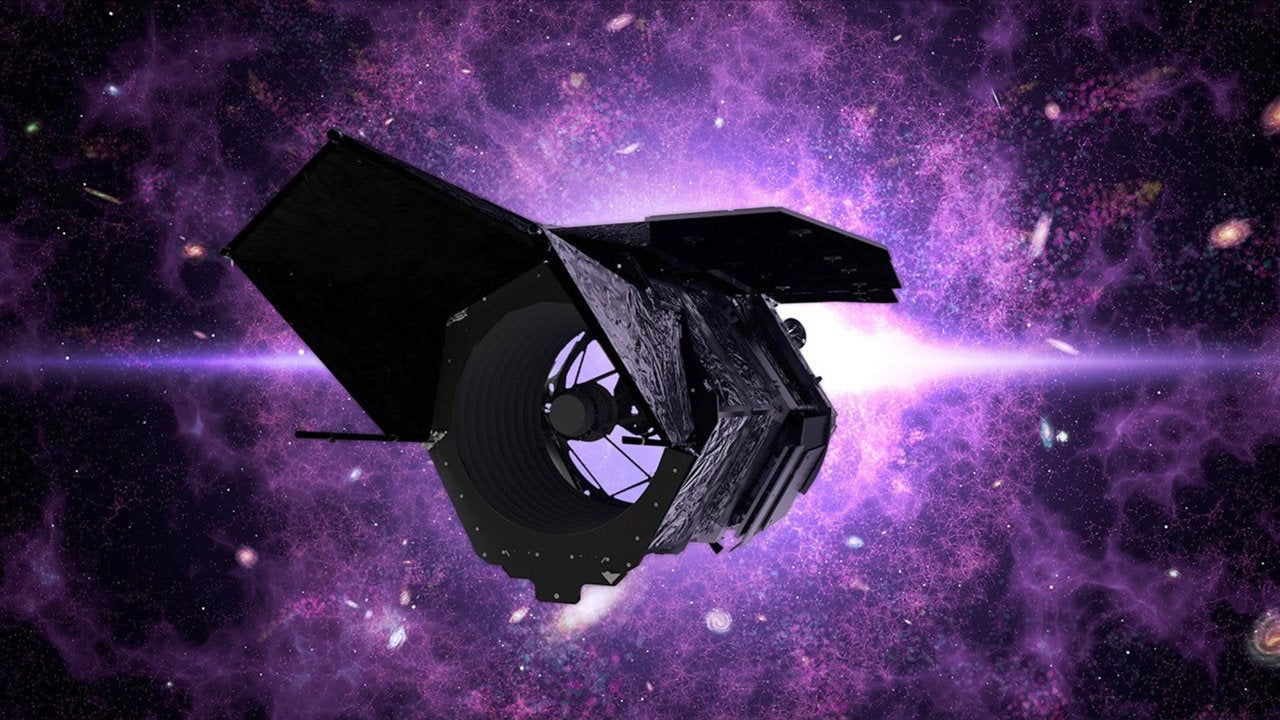
As we look toward the next generation of space exploration, astronomers are preparing to solve one of the Milky Way’s most enduring mysteries: the location of thousands of missing neutron stars. These ultra-dense remnants of massive stars are notoriously difficult to detect, but a new study suggests that the upcoming Nancy Grace Roman Space Telescope may finally provide the tools necessary to uncover this hidden population.
For years, researchers have understood that neutron stars should be scattered throughout our galaxy as a consequence of supernova explosions. However, because these objects are often dim and isolated, they remain largely invisible to current observational technology. The potential for the Roman Space Telescope to change this landscape is a significant development in our understanding of stellar evolution and the distribution of heavy elements in the universe, as detailed in recent findings published in Astronomy and Astrophysics.
The Challenge of Finding Invisible Stellar Remnants
Neutron stars are among the most extreme objects in the cosmos. They pack more mass than the Sun into a sphere roughly the size of a city, creating a density that challenges our understanding of physics. Despite their immense gravity, their lack of significant light emission makes them incredibly challenging to spot against the backdrop of deep space.
According to research led by Zofia Kaczmarek of Heidelberg University, the difficulty lies in the fact that most neutron stars are isolated and relatively dim. Without a companion star to draw material from or a high-energy pulse to track, they effectively drift through the galaxy in silence. The study utilized detailed simulations of the Milky Way to project how the Roman Space Telescope could identify these objects using a technique known as gravitational microlensing.
Gravitational microlensing occurs when a massive object passes in front of a more distant star, causing the light from the background star to bend and magnify. By observing these subtle distortions, astronomers can infer the presence of the foreground object, even if it does not emit visible light itself. This method is expected to be a primary tool for the Roman mission as it surveys the galaxy.
How the Roman Space Telescope Changes the Game
The Nancy Grace Roman Space Telescope is designed to provide a field of view significantly larger than previous observatories, allowing it to monitor vast regions of space for the subtle signatures of microlensing events. By analyzing these events, scientists hope to detect dozens of isolated neutron stars that have previously eluded detection.

Understanding the population of these stars is essential for mapping the history of star formation and death in our galaxy. As massive stars reach the end of their life cycles and explode, they distribute heavy elements throughout the interstellar medium. Identifying where these remnants are located allows researchers to reconstruct the timeline of these cataclysmic events and better understand how the chemical composition of the Milky Way has evolved over billions of years.
The telescope’s ability to measure the mass of these objects through astrometric microlensing—a more precise version of the technique—will provide data that was previously out of reach for the astronomical community. This capability is expected to refine our models of stellar remnants and provide a clearer picture of the “missing” population of neutron stars that should be present in our galactic neighborhood.
Future Observations and Scientific Impact
While the mission is still in its preparatory phases, the scientific community is already looking forward to the insights the Roman telescope will yield. By systematically searching for these hidden remnants, the mission will contribute to a broader effort to categorize the various types of stellar corpses that populate the Milky Way, from white dwarfs to black holes and neutron stars.
The project represents a collaborative effort to push the boundaries of what is observable from Earth’s orbit. As the launch of the Roman Space Telescope approaches, astronomers are refining their detection algorithms and simulation models to ensure that the mission can capitalize on every opportunity to observe these elusive objects. The data collected will likely serve as a foundational resource for astrophysicists studying the life cycle of stars for decades to come.

For those interested in following the progress of the Nancy Grace Roman Space Telescope, official updates and mission timelines are regularly provided by NASA through their official news portal. As we move closer to the telescope’s operational phase, the scientific community anticipates that the findings will help fill a significant gap in our knowledge of the Milky Way’s composition.
What do you think about the potential for new technology to reveal the “invisible” parts of our galaxy? Join the conversation in the comments section below and share your thoughts on the future of space exploration.
Related reading