LONDON — A significant diplomatic rift has opened between Israel and Spain following a series of confrontations in the Basque Country involving local law enforcement and activists associated with a humanitarian flotilla. The Israeli government has formally summoned the Spanish Chargé d’affaires to express its grievances, marking a sharp escalation in tensions between Madrid and Jerusalem.
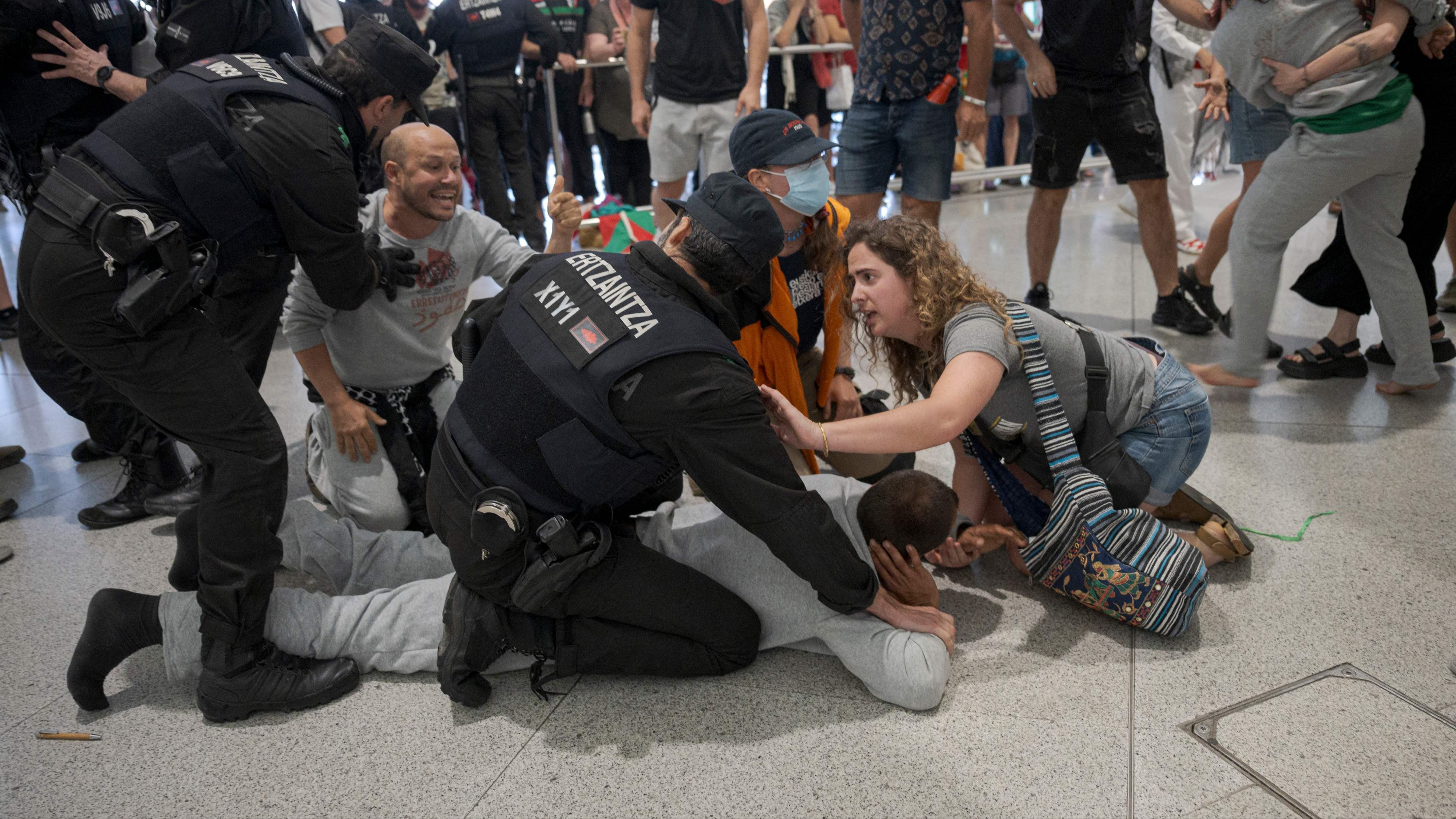
The diplomatic move follows a controversial police intervention by the Ertzaintza—the autonomous police force of the Basque Country—against demonstrators and activists. The incident, which took place during the arrival of a flotilla in the Bilbao area, has ignited a political firestorm in Spain, drawing criticism from both humanitarian organizers and local political factions.
At the heart of the dispute is the clash between the Basque government’s security protocols and the activities of activists attempting to draw international attention to the humanitarian situation in Gaza. As the diplomatic standoff intensifies, the incident has become a flashpoint for broader debates regarding Spain’s foreign policy and the role of regional authorities in managing international political demonstrations.
Diplomatic Escalation in Madrid
The Israeli Ministry of Foreign Affairs (MFA) took the rare step of summoning the Spanish Chargé d’affaires to deliver a formal protest. While the specific contents of the diplomatic memorandum are often kept within official channels, the move is widely interpreted as a reaction to the Spanish government’s stance on the conflict in Gaza and the perceived lack of restraint regarding pro-Palestinian demonstrations on Spanish soil.

The summons follows a period of increasingly strained relations between the two nations. Spain has recently faced scrutiny from Israeli officials for its diplomatic support of Palestinian statehood and its vocal criticism of military operations in the Gaza Strip. The recent activity in the Basque Country, characterized by high-profile protests and the arrival of activists, has provided a new catalyst for this geopolitical friction.
Diplomatic observers note that the summoning of a Chargé d’affaires—the highest-ranking diplomat in a country when an ambassador is not present—is a serious signal of displeasure. It suggests that the Israeli government views the current environment in Spain, and specifically the handling of these activists, as being inconsistent with international norms or as being indicative of a broader political alignment that undermines Israeli security interests.
Confrontation in the Basque Country: The Loiu Incident
The immediate trigger for this diplomatic crisis was a confrontation involving the Ertzaintza and members of a humanitarian flotilla. Reports indicate that the police intervention occurred as activists were gathered in the vicinity of Loiu, a municipality in the Basque Country near Bilbao.
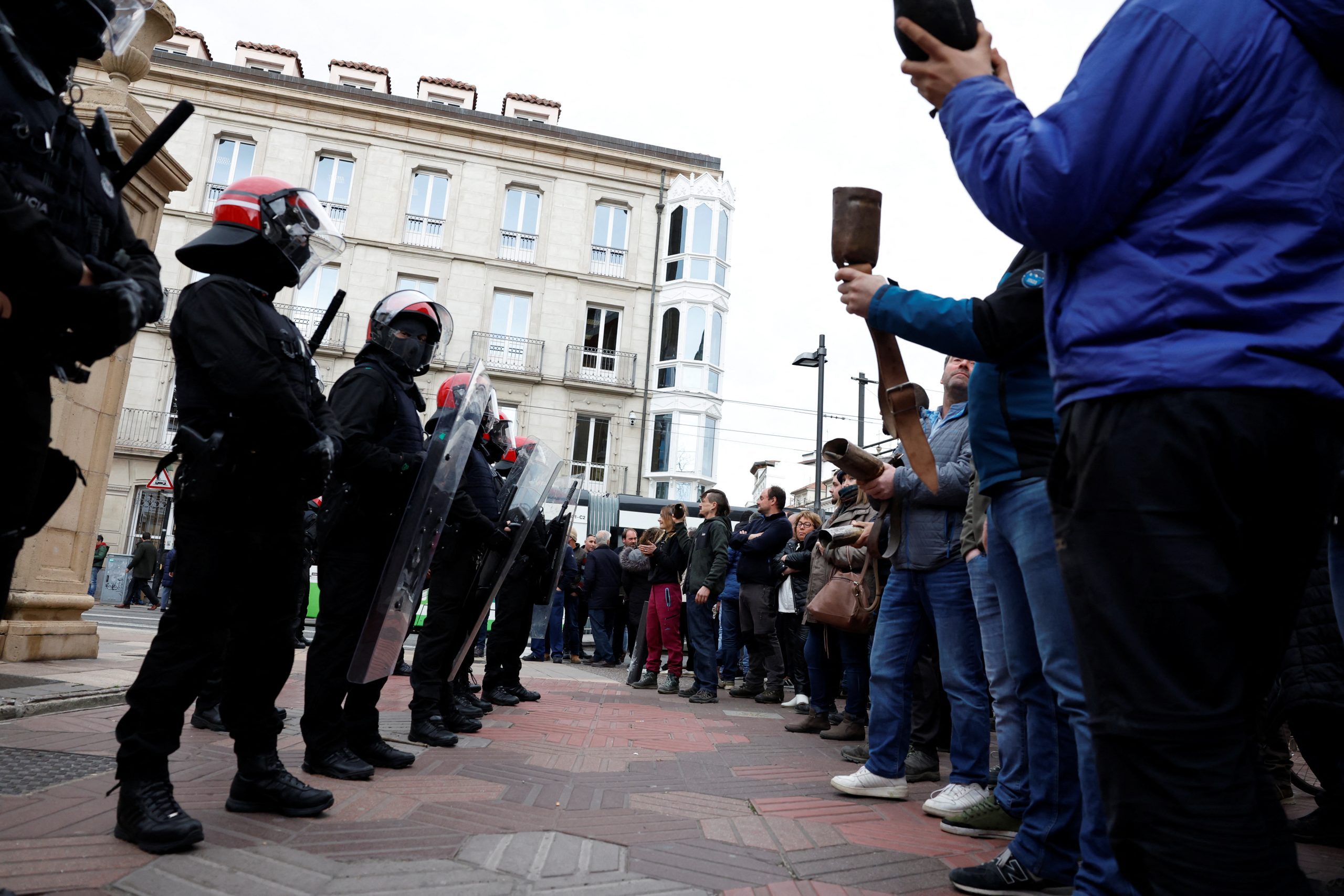
During the encounter, the Ertzaintza deployed what witnesses described as “charges” to disperse groups of demonstrators. The police action was intended to manage the crowd and maintain public order during the flotilla’s arrival, but the methods used have come under intense scrutiny. Activists involved in the movement have condemned the intervention, claiming that the police action was disproportionate and aimed at suppressing political expression.
Members of the flotilla have issued statements calling for an end to what they describe as the “normalization” of such police interventions. They argue that the aggressive tactics used in Loiu represent a pattern of behavior designed to intimidate those attempting to conduct humanitarian missions and political advocacy. The activists have demanded accountability for the officers involved and a review of the protocols governing the management of such high-stakes demonstrations.
The Basque Government’s Response
The Basque government has found itself in a difficult position, caught between the necessity of maintaining public order and the political fallout from the police’s conduct. Deniz Sujo, the Basque Government’s Counselor for Security, has addressed the incident, offering a nuanced and somewhat contradictory response.
Counselor Sujo expressed regret regarding the police charges used during the demonstration. However, he also pointed to what he described as “provocations” by the activists that necessitated a law enforcement response. This stance—acknowledging the severity of the police action while simultaneously justifying it through the lens of crowd behavior—has done little to quell the controversy.
The political fallout has been swift. In Bilbao, demonstrators have organized protests to denounce the Basque government’s handling of the situation. Some activists have gone further, accusing the regional administration of being “complicit” in supporting Zionist interests by allowing the Ertzaintza to suppress pro-Palestinian voices. These accusations highlight the deep ideological divisions within the Basque Country regarding the Israeli-Palestinian conflict.
Context: The Flotilla and the Gaza Conflict
To understand the intensity of the reaction, it is necessary to contextualize the mission of the flotilla. These maritime missions, often organized by the Freedom Flotilla Coalition, aim to challenge the naval blockade of the Gaza Strip and deliver humanitarian aid directly to the Palestinian population. The flotilla’s presence in Spanish waters is a highly symbolic act intended to mobilize European public opinion.
The mission is inherently political, as it seeks to directly confront the security measures implemented by Israel. For activists, the flotilla is a tool of non-violent resistance; for the Israeli government, such missions are often viewed as provocations that threaten maritime security and bypass established diplomatic and humanitarian channels.
The arrival of the flotilla in the Basque Country has transformed a local security matter into an international incident. The intersection of regional Basque autonomy, Spanish national foreign policy, and the ongoing conflict in the Middle East has created a complex environment where a single police intervention can trigger a multi-level diplomatic crisis.
Key Takeaways
- Diplomatic Friction: Israel has formally summoned the Spanish Chargé d’affaires to protest recent political and security developments.
- Police Intervention: The Ertzaintza engaged in dispersal charges against flotilla activists in the Loiu/Bilbao area.
- Political Backlash: The Basque government faces accusations of complicity from activists, while the Security Counselor has expressed regret but cited “provocations.”
- Broader Context: The incident is a symptom of the heightened tension between Spain’s domestic political landscape and its diplomatic relationship with Israel.
As the situation develops, all eyes will be on the Spanish Ministry of Foreign Affairs for an official response to the Israeli summons. Local authorities in the Basque Country are expected to conduct internal reviews of the Ertzaintza’s conduct during the Loiu incident to determine if standard operating procedures were followed.
For ongoing updates on this developing story and international diplomatic relations, please follow World Today Journal. We welcome your thoughts in the comments below—is the handling of such protests a matter of local security or international diplomacy?
Keep reading