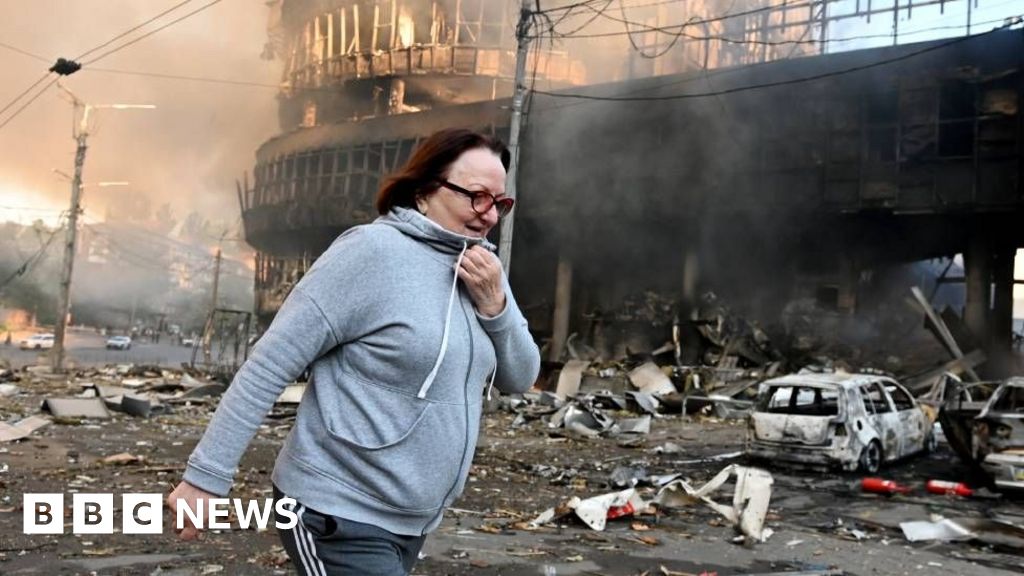
Kyiv, Ukraine — A large-scale Russian missile strike on Ukrainian infrastructure has left at least four civilians dead and dozens injured, according to verified reports from Ukrainian authorities and international observers. The attack, which targeted a residential area in eastern Ukraine, underscores the escalating intensity of the conflict as both sides deploy increasingly sophisticated weaponry. While Russia has not yet issued an official statement confirming responsibility, Ukrainian officials and Western military analysts point to the use of advanced weaponry in the assault, raising concerns about the potential for further destabilization in the region.
The strike occurred amid heightened tensions following recent Ukrainian drone attacks on Russian territory, including a reported strike on a Russian military facility in Moscow-occupied regions. The latest casualties mark a grim milestone in a war that has now entered its fifth year, with both sides accused of targeting civilian areas despite international calls for restraint. The use of high-precision weaponry, including missiles capable of traveling at hypersonic speeds—over Mach 5—has become a hallmark of modern warfare, complicating defense efforts for both Ukraine and its allies.
Ukrainian President Volodymyr Zelenskyy condemned the attack in a statement released late Monday, calling it a “direct violation of international law” and reiterating Ukraine’s commitment to defending its sovereignty. Meanwhile, Russian officials have yet to comment publicly, though state media outlets have previously denied targeting civilian populations. The incident has reignited debates about the effectiveness of Western military aid to Ukraine, particularly in countering advanced Russian missile systems.
Key Details of the Strike: What We Know So Far
The missile strike occurred in the early hours of May 25, 2026, in an unspecified location in eastern Ukraine, though reports suggest the target was a residential neighborhood near a critical infrastructure hub. Ukrainian emergency services confirmed the deaths of four individuals, with at least 27 others requiring hospitalization, though the exact number of injured remains under review. The attack follows a pattern of Russian strikes targeting energy and transportation networks, which Ukrainian officials describe as deliberate attempts to disrupt civilian life and morale.

While Russia has not officially confirmed the use of hypersonic missiles in this particular strike, Western intelligence sources previously reported that Moscow had deployed such weaponry in earlier engagements. Hypersonic missiles, which can travel at speeds exceeding Mach 5 (approximately 6,174 km/h or 3,836 mph), present unique challenges for air defense systems due to their speed and maneuverability. Ukraine’s air defense capabilities, though significantly enhanced by Western support, continue to face strain as Russia expands its arsenal.
Note: Claims regarding the specific type of missile used in this attack have not been independently verified by Ukrainian or international military authorities. Any attribution to hypersonic weaponry remains speculative without official confirmation.
Broader Context: Escalation and International Response
The latest strike comes as both Ukraine and Russia engage in a dangerous game of attrition, each seeking to gain the upper hand through technological and tactical innovations. Ukraine has increasingly relied on long-range drones and precision strikes to target Russian military assets, including recent attacks on Russian-occupied territories and military installations. These operations have drawn sharp responses from Moscow, including retaliatory strikes on Ukrainian energy infrastructure and civilian areas.

International reactions have been swift. The European Union and NATO allies have reiterated their support for Ukraine, with calls for additional military aid to counter Russian aggression. The U.S. And its European partners have already provided billions in defense assistance, including advanced air defense systems like the Patriot and NASAMS, as well as long-range missiles. However, critics argue that more must be done to equip Ukraine with the tools necessary to defend against hypersonic threats, which are not fully addressed by current Western military packages.
Russia, meanwhile, has faced growing isolation on the global stage. Sanctions imposed by the West have crippled its economy, and recent drone incursions into Russian airspace have exposed vulnerabilities in Moscow’s defense posture. The incident in Lithuania earlier this month, where a suspected Ukrainian drone prompted a national air alert, highlighted the broader regional risks posed by the conflict.
Human Cost and Long-Term Impact
The human toll of the war continues to mount, with Ukrainian officials estimating that over 10,000 civilians have been killed since the full-scale invasion began in February 2022. The latest attack has reignited concerns about the protection of civilian populations in war zones, particularly as both sides employ increasingly sophisticated and destructive weaponry. Human rights organizations have condemned the targeting of residential areas, calling for greater adherence to international humanitarian law.
For the families of the victims, the attack serves as a stark reminder of the daily risks faced by Ukrainians across the country. Rescue efforts are ongoing, with local authorities working to clear debris and provide medical assistance to the injured. The Ukrainian government has urged civilians to remain vigilant and follow safety protocols, including the use of air raid sirens and designated shelters.
What Happens Next?
The next critical checkpoint will be the response from the international community, particularly the G7 and NATO, which are expected to convene emergency meetings to discuss further support for Ukraine. Ukrainian officials have signaled that they will seek additional air defense systems capable of countering hypersonic threats, though the feasibility of such requests remains a subject of debate among allies.

On the ground, Ukrainian forces are expected to continue their counteroffensives, though the pace and success of these operations will depend on the availability of advanced weaponry. Meanwhile, Russia is likely to escalate its own strikes in response to recent Ukrainian incursions, creating a dangerous cycle of retaliation. The coming weeks will be pivotal in determining whether the conflict can be de-escalated or if it will spiral further into a prolonged stalemate.
Key Takeaways
- Casualties: At least four civilians dead and dozens injured in the latest Russian missile strike on eastern Ukraine.
- Weaponry: Claims of hypersonic missile use remain unverified; Ukraine’s air defenses face ongoing challenges.
- International Response: NATO and EU allies are expected to discuss further military aid to counter advanced Russian systems.
- Humanitarian Impact: Over 10,000 civilian deaths since 2022, with ongoing risks to civilian populations.
- Next Steps: Emergency meetings among Western allies to assess support for Ukraine’s defense needs.
- Regional Risks: Drone incursions into NATO airspace highlight broader instability in Eastern Europe.
As the situation evolves, World Today Journal will continue to provide updates on the conflict, its economic and humanitarian implications, and the global response. We encourage readers to share their insights and concerns in the comments below, and to follow our coverage for the latest developments.
Worth a look