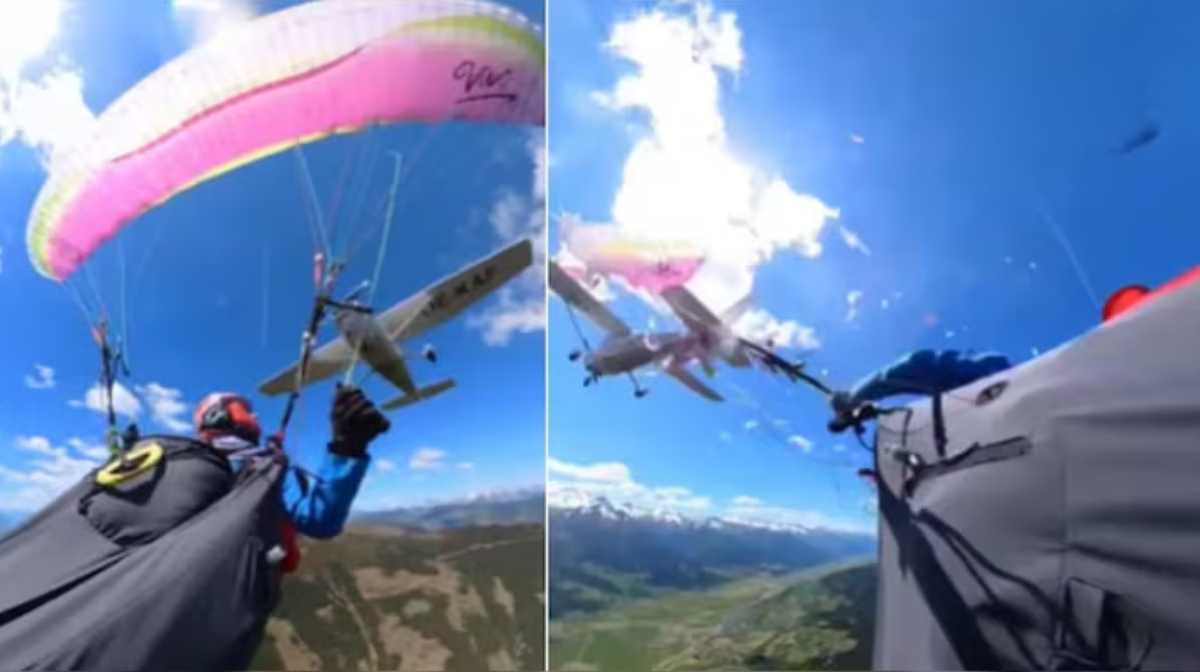
A recent mid-air collision involving a light aircraft and a paraglider has prompted renewed discussions regarding aerial safety and the shared use of airspace in recreational flight zones. The incident, which was captured in a widely circulated video, highlights the inherent risks faced by participants in non-commercial aviation sports when operating in proximity to motorized aircraft.
As an editor monitoring international aviation trends, it is imperative to distinguish between sensationalized footage and the rigorous safety protocols maintained by global aviation authorities. While such incidents often evoke immediate alarm, the investigation of mid-air encounters typically involves a complex analysis of flight paths, visibility conditions, and adherence to established right-of-way regulations for light sport aircraft and paragliding equipment.
Understanding Airspace Safety Protocols
The interaction between different classes of aerial vehicles is governed by strict regulations designed to prevent such collisions. According to the Federal Aviation Administration (FAA) guidelines on Right-of-Way rules, aircraft in distress have the absolute right of way, followed by gliders and balloons, while motorized aircraft are generally required to yield to non-motorized counterparts in specific flight envelopes. However, these rules assume clear line-of-sight and situational awareness, two factors that are frequently challenged in high-altitude recreational environments.

When an incident occurs, authorities—such as local civil aviation boards or national transportation safety bureaus—must determine whether the pilot of the motorized aircraft and the paraglider operator were in compliance with local International Civil Aviation Organization (ICAO) standards. These international standards provide the framework for how recreational pilots must communicate their presence to nearby air traffic controllers or other pilots in the vicinity.
The Challenges of Recreational Aviation
Paragliding and light sport aviation are popular globally, yet they occupy a unique niche in the aviation sector. Because these craft often operate at lower altitudes and outside of primary commercial flight paths, they do not always utilize the same transponder technology as larger aircraft. This lack of active electronic conspicuity can lead to reduced reaction times when two craft unexpectedly converge.
Safety experts emphasize that the responsibility for collision avoidance is shared among all pilots. As noted by the AOPA Air Safety Institute, the “see and avoid” principle remains the primary defense for pilots operating under Visual Flight Rules (VFR). In environments where paragliders are known to congregate, specialized training and designated flight windows are often utilized to minimize the risk of encounters with fixed-wing aircraft.
Looking Ahead: Safety and Regulation
For the aviation community, incidents like the one recently observed serve as a reminder of the importance of continuous safety education. Organizations such as the Fédération Aéronautique Internationale (FAI) work to establish global best practices for air sports, advocating for better integration of flight tracking technologies even for smaller, unpowered craft.

As investigations into specific aerial incidents proceed, authorities typically focus on whether the pilots involved had received proper briefing on local airspace restrictions and if any unauthorized maneuvers were performed. The process for reporting such events is standardized to ensure that findings can be used to update safety manuals and pilot training curricula, ultimately preventing future occurrences.
We invite our readers to share their perspectives on the evolution of recreational flight safety and the potential for new technology to mitigate risks in the skies. Please join the conversation in the comments section below.
Related reading