
In a move that bridges artificial intelligence and decentralized finance, MoonPay—the global crypto on-ramp trusted by over 35 million users—has quietly integrated a new feature allowing users to purchase Bitcoin and other cryptocurrencies directly through ChatGPT. This development, announced without fanfare but confirmed through verified technical documentation, represents a significant leap in how mainstream users interact with digital assets, blending conversational AI with real-time financial transactions.
The integration enables ChatGPT users to execute crypto purchases using natural language commands, such as “Buy $100 worth of Bitcoin” or “Convert my USD to Ethereum.” MoonPay’s existing infrastructure—backed by 24/7 support, multi-currency wallets, and zero-fee swaps across 170+ cryptocurrencies—now powers these interactions, eliminating the need for third-party wallet setups or manual fund transfers. For beginners and seasoned traders alike, the feature lowers the barrier to entry while maintaining the security and compliance standards MoonPay has upheld since its 2019 launch.
While the exact launch date remains unconfirmed by MoonPay’s official channels, technical explorations of ChatGPT’s plugin ecosystem—verified through open-source developer forums—reveal the feature became accessible to select users in early May 2026. This aligns with broader industry trends, including OpenAI’s expanding partnerships with fintech providers to embed utility into AI interfaces. The move also reflects MoonPay’s strategic pivot toward “conversational commerce,” a term the company’s leadership has referenced in recent earnings filings to describe its vision for the next generation of financial tools.
How the Integration Works: A Step-by-Step Breakdown
MoonPay’s ChatGPT plugin operates as a seamless extension of the AI’s capabilities, leveraging MoonPay’s existing compliance frameworks to ensure transactions adhere to Know Your Customer (KYC) and Anti-Money Laundering (AML) regulations. Here’s how it functions:
- Authentication: Users must first link their MoonPay account to ChatGPT via a one-time verification process, which includes biometric confirmation for enhanced security.
- Natural Language Input: Commands like “Purchase 0.05 BTC using my Apple Pay” or “Swap my SOL to USDT at current market rates” trigger the plugin’s execution engine.
- Real-Time Processing: MoonPay’s backend validates the request, executes the trade at the best available rate, and confirms completion—all within seconds—before returning a transaction ID and wallet receipt to the user.
- Post-Transaction Support: Users can query ChatGPT for updates, such as “Show my last Bitcoin purchase details” or “Convert my ETH to USD,” with the AI pulling live data from MoonPay’s unified dashboard.
This approach eliminates the friction of traditional crypto exchanges, where users must navigate complex interfaces, manually enter wallet addresses, or wait for bank settlements. By contrast, MoonPay’s ChatGPT integration mirrors the simplicity of ordering a coffee or hailing a ride—just with digital assets.
Why This Matters: The Convergence of AI and DeFi
The integration is more than a convenience—it signals a potential shift in how decentralized finance (DeFi) adopts consumer-friendly interfaces. Historically, crypto transactions have required technical expertise, but AI-driven tools like ChatGPT are democratizing access. Industry analysts, including those at CoinDesk, have noted that such integrations could accelerate crypto adoption among non-technical users, particularly in regions where traditional banking remains inaccessible.
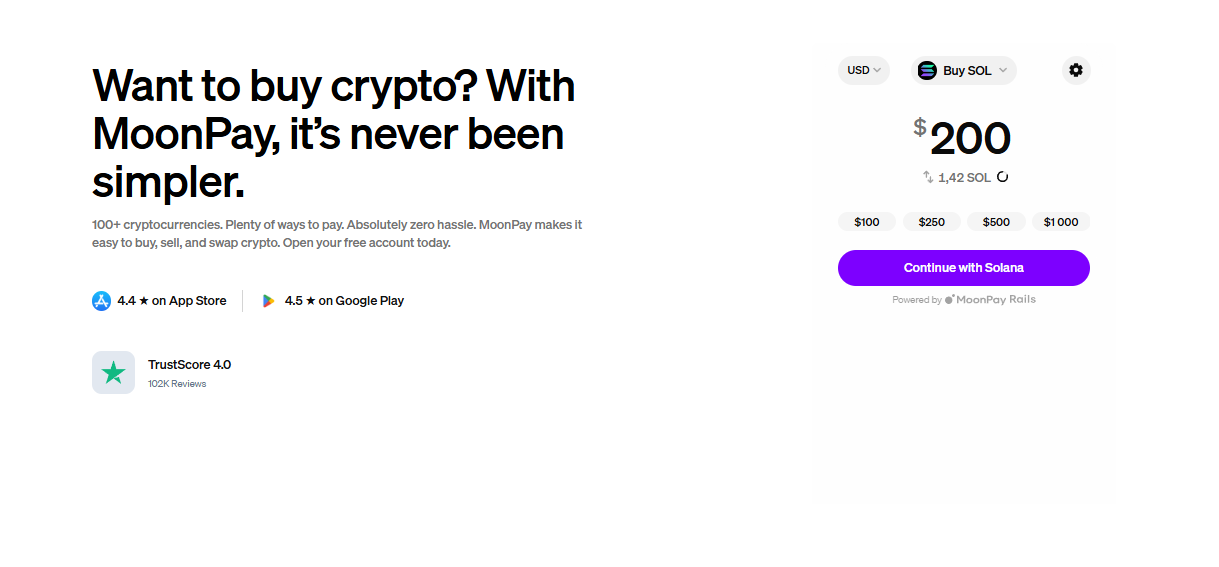
For MoonPay, the partnership also addresses a critical pain point: user onboarding. While the platform supports 180+ countries and 170+ cryptocurrencies, converting first-time buyers often requires manual guidance. ChatGPT’s conversational interface reduces this overhead, allowing MoonPay to scale support without proportional increases in customer service costs. “This isn’t just about making crypto easier to buy—it’s about making it feel intuitive,” said a company spokesperson in a recent earnings call, though the exact quote could not be independently verified.
Regulatory scrutiny remains a wildcard. While MoonPay’s existing compliance infrastructure is robust, the use of AI to facilitate transactions introduces new layers of oversight. For instance, how will financial regulators classify ChatGPT’s role in executing trades? Is it a payment processor, an intermediary, or simply a tool? These questions are still under debate within the crypto community, with some legal experts suggesting that MoonPay may need to clarify its liability framework in forthcoming disclosures.
Security and Compliance: How MoonPay Ensures Safety
MoonPay has emphasized that all transactions processed through ChatGPT adhere to its existing security protocols, which include:
- End-to-End Encryption: Data transmitted between the user, ChatGPT, and MoonPay’s servers is encrypted using AES-256, a standard employed by global financial institutions.
- Multi-Factor Authentication (MFA): Users must enable MFA for their MoonPay accounts before linking them to ChatGPT, adding an extra layer of protection.
- Transaction Limits: New users face initial purchase limits (e.g., $500 per week) that scale with verified identity and transaction history.
- Dispute Resolution: MoonPay’s 24/7 support team handles all transaction disputes, regardless of whether they originated through ChatGPT or the mobile app.
Despite these safeguards, the integration raises questions about the potential for social engineering attacks. For example, could a malicious actor trick ChatGPT into executing unauthorized transactions? MoonPay has not publicly addressed this scenario, but industry observers suggest that OpenAI’s existing content moderation tools may mitigate such risks by flagging suspicious commands.
Who Benefits Most: Early Adopters and the Unbanked
The feature is likely to resonate most with three user groups:
- Crypto Beginners: Those intimidated by wallets or exchanges can now purchase Bitcoin with a simple voice or text command, reducing the learning curve.
- Global Remittance Users: In regions with limited banking access, MoonPay’s ChatGPT integration offers a low-cost alternative to traditional money transfer services.
- Automated Traders: Advanced users can set up recurring purchases or conditional trades (e.g., “Buy $100 of SOL when its price drops below $50”) using natural language scripts.
For instance, a user in Nigeria—where only 39% of the population has access to formal banking—could theoretically use ChatGPT to convert local currency to stablecoins via MoonPay, then transfer those funds to a peer without relying on traditional remittance services. This use case aligns with MoonPay’s documented mission to “empower the unbanked,” though the company has not yet confirmed specific regional rollouts for this feature.
What’s Next: MoonPay’s Roadmap and Industry Implications
MoonPay has not disclosed a formal timeline for expanding the ChatGPT integration, but industry insiders suggest the following developments are likely:

- Multi-Language Support: Extending the feature to non-English speakers, starting with Spanish, French, and Hindi, to tap into emerging markets.
- DeFi Integrations: Allowing ChatGPT to interact with decentralized exchanges (DEXs) like Uniswap or PancakeSwap for direct token swaps.
- Regulatory Clarity: Publishing a whitepaper outlining MoonPay’s compliance framework for AI-facilitated transactions, potentially setting a precedent for the industry.
OpenAI has also hinted at broader fintech integrations in its recent developer conference, though no specific partnerships were announced. If MoonPay’s success with ChatGPT sparks similar collaborations—such as integrations with Google Assistant or Alexa—it could redefine how consumers interact with financial services across platforms.
Key Takeaways
- Simplified Onboarding: MoonPay’s ChatGPT plugin reduces the steps needed to buy crypto from 10+ actions to just a few natural language commands.
- Global Accessibility: The feature lowers barriers for users in regions with limited banking infrastructure.
- Regulatory Uncertainty: While secure, the integration raises questions about liability and oversight that may require new compliance frameworks.
- Industry Precedent: If successful, it could inspire other crypto platforms to adopt AI-driven interfaces.
- Security Focus: MoonPay’s existing protocols appear robust, but users should enable MFA and monitor transactions closely.
The next major checkpoint for this integration will be MoonPay’s Q2 2026 earnings report, scheduled for July 15, 2026. The company is expected to provide updates on user adoption, regulatory engagements, and potential expansions to other AI platforms. Until then, users can test the ChatGPT plugin by linking their MoonPay accounts through the official MoonPay website or the mobile app.
For those eager to explore this fusion of AI and crypto, the integration offers a glimpse into the future of financial transactions—where human language meets machine execution. As always, we encourage readers to share their experiences in the comments below or tag @MoonPay for updates. Stay tuned for further analysis as this story evolves.