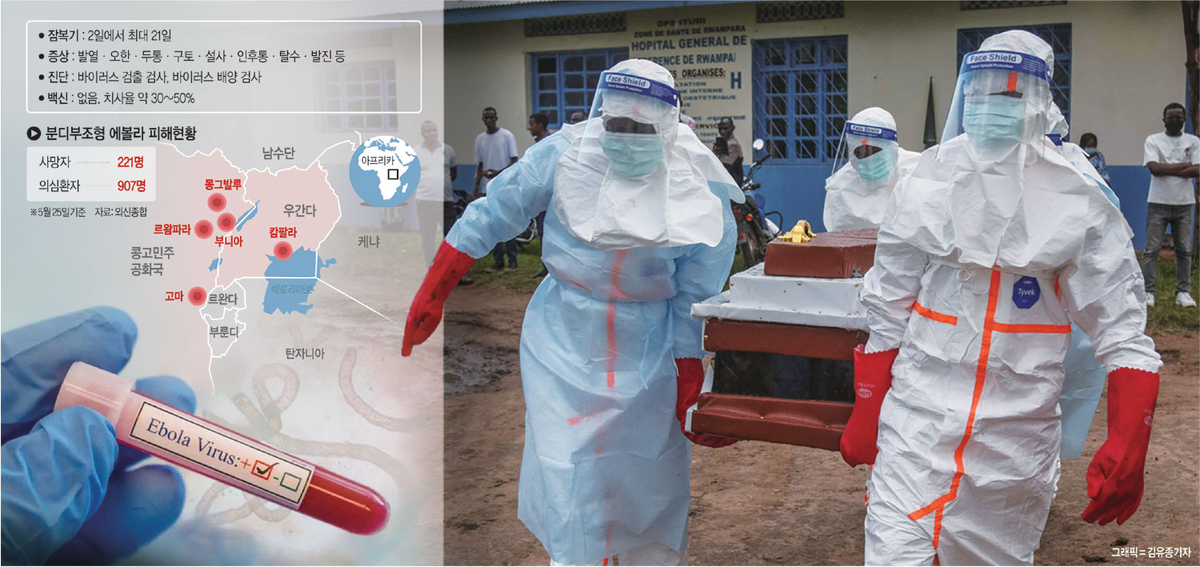
As the world braces for another potential health crisis, the Democratic Republic of the Congo (DRC) is once again at the epicenter of an Ebola virus outbreak—one that has reignited global fears of a pandemic. The latest surge, confirmed by the World Health Organization (WHO) and the DRC’s Ministry of Health, underscores how easily this deadly filovirus can spread when basic precautions falter. Even a single touch—such as handling contaminated bedding—can transmit the virus, a grim reminder of the 2014–2016 West African outbreak that claimed over 11,000 lives. With cases now rising in high-risk urban areas, health officials warn that complacency could turn localized clusters into uncontrollable chains of infection.
Ebola virus disease (EVD), caused by the Ebola virus—a member of the Filoviridae family—remains one of the most lethal pathogens known to humanity. Its transmission routes are deceptively simple yet devastating: direct contact with bodily fluids (blood, saliva, sweat), contaminated surfaces, or even the fabrics of infected individuals. The virus’s ability to survive on inanimate objects for hours has made it a silent threat in healthcare settings, where overwhelmed staff may unknowingly spread it through improper handling of patient materials. This mode of transmission, highlighted in past outbreaks, is now a focal point of containment efforts in the DRC, where distrust of medical systems and limited resources exacerbate the challenge.
While the WHO has not yet declared this outbreak a Public Health Emergency of International Concern (PHEIC), the situation demands urgent attention. As of May 26, 2026, the DRC’s health ministry reports a significant uptick in suspected cases across multiple provinces, though exact figures remain fluid due to reporting delays. The last major outbreak in the region, which began in 2024, saw over 670 suspected cases and a case fatality rate approaching 90% in some hotspots—a statistic that has sent shockwaves through global health agencies. Unlike previous years, this resurgence is occurring in a context where vaccine supplies are strained and international aid logistics face new hurdles.
How Ebola Spreads: The Hidden Risks of Everyday Contact
The Ebola virus’s resilience lies in its ability to persist on surfaces long after an infected person has recovered. Studies confirm that the virus can remain viable on fabrics—including bedding, clothing, and towels—for up to several days, depending on environmental conditions. This means that even after a patient is discharged from isolation, their belongings could pose a risk to family members or healthcare workers cleaning the space. During the 2014 outbreak in Guinea, Liberia, and Sierra Leone, such indirect transmission contributed to secondary waves in communities where burial practices or home care exposed others to contaminated materials.
“The virus doesn’t just jump from person to person—it hitches rides on objects,” explains Dr. Jean Kaseya, an infectious disease specialist with Médecins Sans Frontières (MSF) who worked in the DRC during the 2018–2020 Kivu outbreak. “In resource-limited settings, where families may wash the clothes of the sick or reuse bedding, the risk multiplies. Even a single infected individual can seed an outbreak if their environment isn’t properly disinfected.”
This reality was starkly illustrated during the 2014–2016 epidemic, when a Liberian health worker contracted Ebola after treating a patient whose contaminated bedsheets were later reused. The incident led to a rapid revision of infection control protocols, including mandatory double-bagging of all patient materials and the use of chlorine-based disinfectants for fabrics. Yet, in the DRC today, similar gaps persist. A recent Lancet study highlighted that only 42% of healthcare facilities in high-risk zones have access to the recommended personal protective equipment (PPE) for fabric decontamination.
Lessons from the Past: Why 11,000 Lives Were Lost
The 2014–2016 West African Ebola outbreak remains the deadliest in history, with 11,325 confirmed deaths reported by the WHO. While the virus’s high fatality rate (up to 90% in some strains) is well-documented, the outbreak’s scale was amplified by three critical factors:

- Delayed response: The first cases in Guinea were not identified until March 2014, months after the virus had already spread across borders. By the time international aid arrived, community transmission was irreversible.
- Cultural barriers: Traditional burial practices, which often involve close contact with the deceased, accelerated transmission. In some regions, up to 70% of infections were linked to funeral rites.
- Healthcare collapse: Overwhelmed clinics became hotspots for nosocomial (hospital-acquired) infections. In Sierra Leone alone, health workers made up 12% of all cases, partly due to reused gloves and gowns.
Today, the DRC faces a different but equally daunting challenge: urbanization. Unlike previous outbreaks in rural villages, this surge is occurring in cities like Mbandaka, where population density and informal settlements make containment nearly impossible without mass vaccination. The WHO’s experimental Ebola vaccine, Ervebo, has proven 97.5% effective in clinical trials, but stockpiles are finite, and logistical hurdles—such as reaching remote communities—remain.
What’s Being Done Now? The Race Against Time
In response to the rising case counts, the DRC government, with support from the WHO and partners like the International Rescue Committee (IRC), has launched a multi-pronged strategy:
- Enhanced surveillance: Rapid response teams are being deployed to high-risk areas to trace contacts within 24 hours of a confirmed case.
- Vaccination campaigns: Priority is being given to healthcare workers and frontline responders, with mobile clinics set up in affected neighborhoods.
- Community engagement: Local leaders are being trained to educate families on safe burial practices and the proper disposal of contaminated fabrics.
- Global coordination: The WHO has activated its Emergency Operations Centre to mobilize additional funding and medical supplies.
Yet, challenges persist. Distrust of government health programs—fueled by past mismanagement during the 2018 Kivu outbreak—has led to underreporting in some areas. “We’re seeing cases where families hide sick relatives until it’s too late,” says Dr. Kaseya. “This isn’t just about the virus. it’s about rebuilding trust.”
The Role of Fabric Contamination in Outbreaks
Research published in Emerging Infectious Diseases (2015) demonstrated that Ebola virus can remain infectious on porous materials like cotton for up to three days under laboratory conditions. In real-world settings, this window is longer, especially in humid climates. The implications are profound:
- Home care risks: Families washing clothes or bedding of infected loved ones without gloves or masks face direct exposure.
- Laundry services: In urban areas, informal laundry operations may unknowingly spread the virus through reused water or shared equipment.
- Healthcare waste: Improperly sterilized linen from hospitals can infect staff during reprocessing.
To mitigate these risks, the WHO now recommends:
- Immediate segregation of all patient-contaminated fabrics in double-layered, leak-proof bags.
- Disinfection using bleach solutions (1:99 dilution) or chlorine compounds for at least 30 minutes.
- Incineration of fabrics when possible, or burial in designated sanitary landfills.
- Training for communities on safe handling of deceased loved ones’ belongings.
What Can the World Expect Next?
The next critical checkpoint will be the WHO’s June 2, 2026, Emergency Committee meeting, where experts will assess whether to escalate the outbreak’s global risk level. In the meantime, the following developments are being monitored:

- Vaccine rollout: The DRC aims to vaccinate 50,000 priority individuals by June 15, but delays in supply chains could push this target back.
- Case mapping: Satellite imagery and mobile data are being used to identify high-risk clusters in real time.
- Travel advisories: The U.S. Centers for Disease Control (CDC) has issued a Level 4: Do Not Travel warning for affected provinces, advising non-essential travel be avoided.
- Research updates: Scientists are testing oral vaccines and antiviral drugs like mAb114, which showed promise in the 2018–2020 outbreak.
The current outbreak serves as a stark reminder that Ebola is not a relic of the past—it is a persistent threat that demands vigilance, investment, and international solidarity. While the tools to combat it have improved, the virus’s ability to exploit gaps in public health infrastructure means the fight is far from over.
Key Questions About Ebola Transmission and Prevention
With misinformation spreading alongside the virus, here are answers to common concerns:
- Can Ebola be spread through the air?
No. Ebola is not airborne, but it can spread through respiratory droplets during prolonged face-to-face contact (e.g., coughing, sneezing). However, this requires direct exposure to large quantities of virus, such as caring for an infected person without protection.
- How long should fabrics be quarantined before washing?
At a minimum, 24 hours in a sealed bag is recommended before disinfection. The WHO advises against hand-washing contaminated items unless wearing gloves and using soap and water immediately afterward.
- Are there any approved treatments for Ebola?
Yes. The FDA has approved two monoclonal antibody therapies: mAb114 and REGN-EB3. These have reduced mortality rates to under 30% in clinical settings.
- What should travelers to the DRC do?
The CDC recommends avoiding all non-essential travel to high-risk zones. For those already in the region, preventive measures include:
- Avoiding contact with sick or deceased individuals.
- Using insect repellent to prevent Culex mosquito bites (a potential vector for other diseases).
- Carrying hand sanitizer and avoiding raw foods.
- Why is this outbreak harder to control than past ones?
Urban settings, limited healthcare access, and distrust in authorities are key factors. Unlike rural outbreaks, cities offer no natural barriers to spread, and misinformation can quickly undermine public health messages.
As the world watches the situation unfold, one thing is clear: the battle against Ebola is not just a medical challenge—it’s a test of global cooperation. The lessons from 2014 must not be forgotten. With accurate information, swift action, and community trust, the current outbreak can be contained. But time is running out.
What do you think? Should international aid efforts be scaled up immediately, or are current measures sufficient? Share your thoughts in the comments below—or tag @WHO to join the conversation on how we can support affected communities.
Worth a look