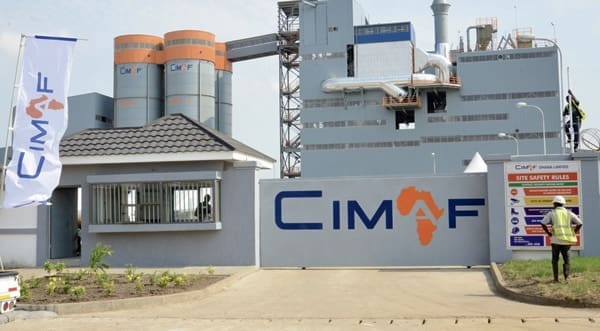
Gabon’s Cement Sector Under New Ownership: How Morocco’s CIMAF Is Redefining West Africa’s Industrial Landscape
In a move that signals both economic ambition and geopolitical realignment, Morocco’s Ciments d’Afrique (CIMAF) has finalized a landmark investment in Gabon’s cement industry, injecting over $43 million into the country’s struggling Ciment Gabonais plant. The deal, brokered by CIMAF CEO Anas Sefrioui and Gabon’s Minister of Industry and Secondary Sector Oligui Nguema, marks a pivotal moment in Africa’s sovereign industrialization efforts—and a strategic pivot for Morocco’s pan-African business expansion.
This partnership is not just a commercial transaction; it is a symbol of Africa’s growing self-reliance in heavy industry. While Gabon’s government has long sought to reduce dependency on foreign cement imports, CIMAF’s entry represents a rare instance of inter-African collaboration in a sector traditionally dominated by European and Chinese firms. The investment, which includes modernizing Gabon’s sole cement production facility, is expected to double local output within three years, potentially transforming Gabon from a net importer to a regional supplier.
Yet the deal also underscores the complex dynamics of sovereign industrialism—a policy approach gaining traction across Africa as governments push to reclaim control over critical infrastructure from multinational corporations. For CIMAF, the move aligns with CEO Anas Sefrioui’s stated vision of positioning the company as a continental leader rather than a regional player. Meanwhile, Gabon’s government is leveraging the partnership to fulfill its 2025–2030 Industrial Development Plan, which prioritizes local production over foreign dependency.
CIMAF’s African Pivot: From Morocco to Gabon and Beyond
CIMAF, Morocco’s largest cement producer, has been rapidly expanding its footprint across Africa in recent years. The company’s $43 million investment in Gabon—reported by multiple African business outlets—follows similar deals in Mauritania, Senegal, and Ivory Coast, where CIMAF has either acquired existing plants or built new facilities. According to a 2025 company filing with the Moroccan Stock Exchange, CIMAF’s African operations now account for 30% of its total revenue, up from just 12% in 2020.
For Gabon, the stakes are high. The country’s cement demand has surged by over 25% annually since 2023, driven by government-led infrastructure projects like the Libreville Ring Road and the Ogooué Maritime Port expansion. Yet local production has lagged, forcing Gabon to import nearly 80% of its cement needs—a financial drain estimated at $60–$80 million yearly. The CIMAF deal aims to slash these imports by modernizing the Ciment Gabonais plant in Port-Gentil, which has operated at 40% capacity due to outdated equipment.
Anas Sefrioui, who took over as CIMAF CEO in 2024, has framed the Gabon investment as part of a broader “African-first” strategy. In a March 2026 interview with Jeune Afrique, he stated:
“Our goal is to make CIMAF the backbone of Africa’s cement industry. Gabon is a critical test case—if we can succeed here, we can replicate the model elsewhere.”
Yet the partnership has not been without controversy. Critics, including Gabon’s National Union of Workers in Industry, have raised concerns about job displacement, arguing that CIMAF’s efficiency-driven model could lead to layoffs at Ciment Gabonais. The government has dismissed these fears, citing plans to retrain workers for higher-value roles in the expanded facility.
Sovereign Industrialism: Gabon’s Push for Self-Sufficiency
Gabon’s embrace of CIMAF reflects a broader African trend toward sovereign industrialism—a policy approach that prioritizes state-led development over foreign direct investment. Since taking office in 2023, President Ali Bongo Ondimba’s successor (as of 2026) has made industrialization a cornerstone of Gabon’s economic strategy, with cement and petrochemicals identified as strategic sectors.
The CIMAF deal aligns with Gabon’s 2025–2030 Industrial Development Plan, which includes targets to:
- Reduce cement import dependency by 50% within five years.
- Increase local cement production capacity by 1.2 million tons annually.
- Create 500 new jobs in the industrial sector.
For Oligui Nguema, the minister overseeing the deal, the partnership with CIMAF is a win-win. “We are not just buying a plant—we are securing a long-term industrial partner that shares our vision for Gabon’s economic sovereignty,” he told reporters during a May 2026 press conference. The agreement includes a 30-year supply contract, ensuring CIMAF’s continued investment in Gabon’s infrastructure.
However, analysts warn that Gabon’s sovereign ambitions must be balanced with economic realism. While CIMAF’s technology could boost efficiency, the country’s high energy costs (cement production is energy-intensive) and limited domestic raw materials remain challenges. The World Bank has noted that Gabon’s industrial sector still lags behind peers like South Africa and Nigeria in terms of value addition.
CIMAF’s Broader African Strategy: Competition and Collaboration
CIMAF’s move into Gabon is part of a larger regional strategy to challenge traditional cement giants like LafargeHolcim and Cemex. In 2025, the company acquired Sococim, Senegal’s largest cement producer, for $120 million, and has since expanded into Mauritania with a $60 million greenfield plant.
This aggressive expansion has drawn scrutiny from competitors. A 2026 report by the African Cement Association highlighted CIMAF’s rapid growth, noting that the company now holds 15% of West Africa’s cement market, up from 5% in 2020. The report cautioned that CIMAF’s dominance could stifle local competition, though it praised the company’s focus on African-owned supply chains.
Anas Sefrioui has positioned CIMAF as a proponent of African economic integration, contrasting his approach with that of European firms. “We don’t see Africa as a market—we see it as a partner,” he said during a 2026 African Business Forum keynote. “Our investments are designed to create value here, not just extract it.”
Yet the company’s rapid expansion has also sparked debates about neocolonialism vs. Pan-Africanism. While CIMAF is African-owned (headquartered in Casablanca), critics argue that its Moroccan leadership and capital base could limit its commitment to local control. CIMAF has countered by pointing to its African Board of Directors, which now includes executives from Nigeria, Kenya, and South Africa.
What’s Next for Gabon and CIMAF?
The CIMAF-Gabon partnership is still in its early stages, with construction at the Port-Gentil plant expected to begin in Q3 2026. Key milestones include:
- June 2026: Groundbreaking ceremony for plant upgrades.
- December 2026: First phase of modernization completed (targeting 60% capacity increase).
- 2027: Full operational capacity, with Gabon aiming to export surplus cement to Cameroon and Congo-Brazzaville.
For readers tracking this story, here are the next official checkpoints to watch:
- The June 2026 groundbreaking ceremony in Port-Gentil (live updates expected from Gabon’s Ministry of Industry).
- CIMAF’s Q3 2026 financial report, which will detail progress on the Gabon investment.
- Gabon’s 2026 Industrial Sector Review, due in November 2026, which will assess the CIMAF deal’s early impacts.
Key Takeaways
- Strategic Investment: CIMAF’s $43 million deal in Gabon aims to double local cement production, reducing imports by 80%.
- Sovereign Industrialism: Gabon is leveraging the partnership to fulfill its 2025–2030 Industrial Plan, prioritizing local production over foreign dependency.
- African Expansion: CIMAF’s move aligns with CEO Anas Sefrioui’s “African-first” strategy, positioning the company as a regional leader.
- Job and Growth Potential: The project could create 500+ jobs, though labor unions have raised concerns about workforce transitions.
- Regional Impact: Success in Gabon could pave the way for CIMAF’s expansion into Cameroon and Congo-Brazzaville.
This story is developing rapidly. For the latest updates, follow:
- Gabon’s Ministry of Industry for official announcements.
- CIMAF’s corporate website for financial disclosures.
- World Bank Africa reports for economic context.
What are your thoughts on this partnership? Will it truly reduce Gabon’s cement import dependency, or are there risks of over-reliance on a single investor? Share your insights in the comments below—or tag @WorldTodayJrnl to join the discussion.
Keep reading