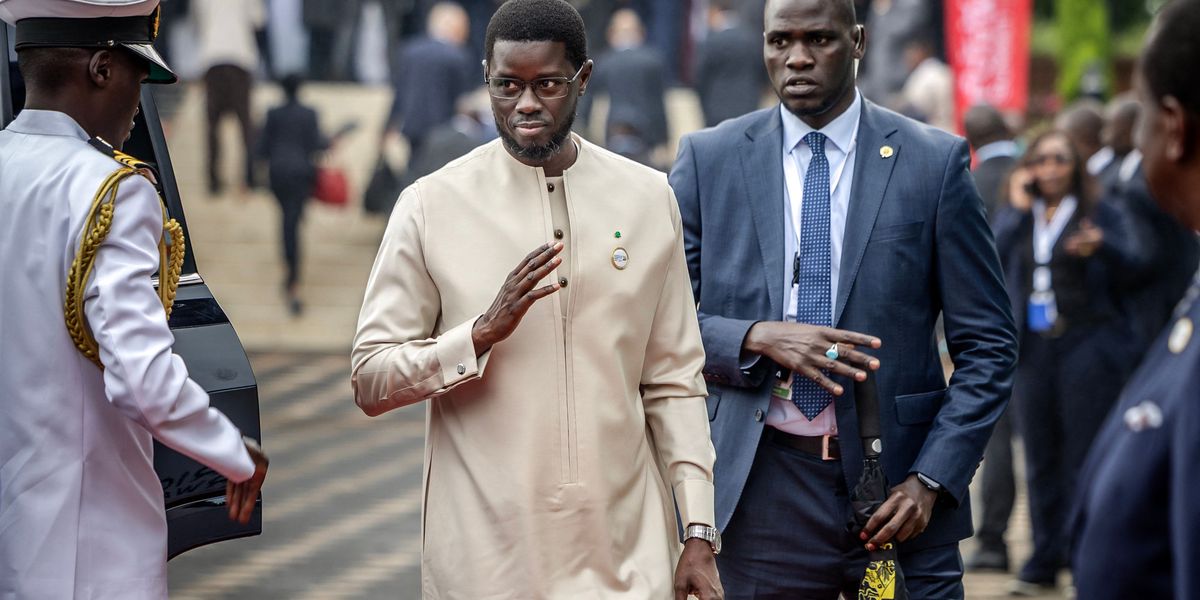
Senegal’s Political Earthquake: Banker Named PM After Sonko’s Shocking Dismissal
DAKAR, Senegal — Senegal’s political landscape was reshaped on Monday as President Bassirou Diomaye Faye abruptly dismissed reformist Prime Minister Ousmane Sonko and replaced him with economist Ahmadou Al Aminou Mohamed Lô, a move that has sent shockwaves through the West African nation and reignited debates about Senegal’s democratic trajectory and economic future.
The dramatic turn of events follows months of escalating tensions between the president and Sonko, who had become a polarizing but dominant figure in Senegalese politics since his election as prime minister in September 2022. Sonko’s dismissal—announced without immediate explanation—has sparked nationwide protests, parliamentary debates over his legal immunity, and questions about the future of Senegal’s economic reform agenda.
Analysts describe the situation as a “constitutional crisis” that could have lasting repercussions for Senegal’s stability, particularly as the country prepares for local elections later this year and faces economic challenges including inflation and debt concerns. The appointment of Mohamed Lô, a former central bank official with no prior political experience, marks a significant shift from Sonko’s populist approach to governance.
Key Developments:
- President Faye’s decree naming Mohamed Lô as new prime minister was published in the Journal Officiel on May 25, 2026
- Sonko’s parliamentary immunity is under debate, with opposition lawmakers calling for its immediate lifting
- Protests have erupted in Dakar and other cities, with reports of police deploying tear gas
- International observers are monitoring the situation for potential democratic backsliding
Who Is Ahmadou Al Aminou Mohamed Lô?
The newly appointed prime minister, Ahmadou Al Aminou Mohamed Lô, brings a career in economics rather than politics to the position. Before entering government service, Lô served as Director General of the West African Development Bank (BOAD) and previously held senior positions at Senegal’s Central Bank and Ministry of Finance.
Unlike Sonko, who built his political career on anti-corruption rhetoric and grassroots support, Lô is seen as a technocrat whose appointment may signal a return to more traditional economic management. However, his lack of political experience and ties to the ruling coalition have raised questions about his ability to navigate the current political storm.
In a statement released through the presidential palace, President Faye described Lô as “a man of integrity with a proven track record in economic governance,” though the statement did not address the circumstances surrounding Sonko’s dismissal.
The Sonko Phenomenon and Its Sudden End
Ousmane Sonko’s political career has been nothing short of meteoric. Rising from humble beginnings in the rural Fatick region, Sonko built a massive following through his anti-establishment rhetoric, charismatic public appearances, and promise to combat corruption—a message that resonated deeply with Senegal’s youth and urban poor.
His 2022 election as prime minister marked a historic moment for Senegalese politics, as he became the first opposition leader to hold the position since the country’s multiparty system was established in the 1990s. Sonko’s government quickly implemented controversial reforms, including:
- An overhaul of the civil service to combat corruption
- New regulations targeting informal market traders
- Public campaigns against “luxury consumption” among government officials
However, Sonko’s populist approach also alienated powerful interests, including traditional political elites, religious leaders, and business communities. The tensions between Sonko and President Faye reportedly escalated over economic policy disagreements, particularly regarding the pace of structural reforms and relations with international financial institutions.
Sonko’s dismissal comes just weeks after he survived an assassination attempt in March 2026, an event that temporarily united political factions behind him. The president’s office has not provided a public explanation for the dismissal, fueling speculation about underlying power struggles within the ruling coalition.
Constitutional Crisis: What Happens Next?
The legal and political fallout from Sonko’s dismissal is unfolding rapidly. Several critical questions remain unanswered:

1. Parliamentary Immunity: Can Sonko Be Arrested?
Sonko’s status as a deputy in Senegal’s National Assembly grants him parliamentary immunity, which can only be lifted by a two-thirds majority vote. Opposition lawmakers have already begun procedural motions to strip this immunity, setting up a potential constitutional showdown.
If immunity is lifted, Sonko could face charges including:
- Incitement to violence (following protests that turned violent in 2025)
- Abuse of office (allegations related to his civil service reforms)
- Defamation (from lawsuits filed by religious leaders and business figures)
Legal experts warn that any move to prosecute Sonko could trigger mass protests and further destabilize the country. The Senegalese constitution provides protections for legislators, but political crises have historically led to creative legal interpretations.
2. The Future of Economic Reforms
Sonko’s economic agenda was central to his political brand, particularly his focus on:
- Reducing reliance on foreign aid through domestic revenue mobilization
- Targeted subsidies for vulnerable populations
- Public-private partnerships in infrastructure
With Mohamed Lô’s appointment, observers expect a shift toward more conventional economic policies, potentially including:
- Closer coordination with the International Monetary Fund
- More gradual implementation of structural reforms
- Greater emphasis on attracting foreign investment
However, the new prime minister faces immediate challenges, including:
- Inflation that remains above 8% despite government measures
- A public debt that has risen to approximately 70% of GDP (World Bank, 2025)
- Uncertainty in the agricultural sector following recent droughts
3. Political Fallout and Public Reaction
Reactions to Sonko’s dismissal have been immediate and intense:
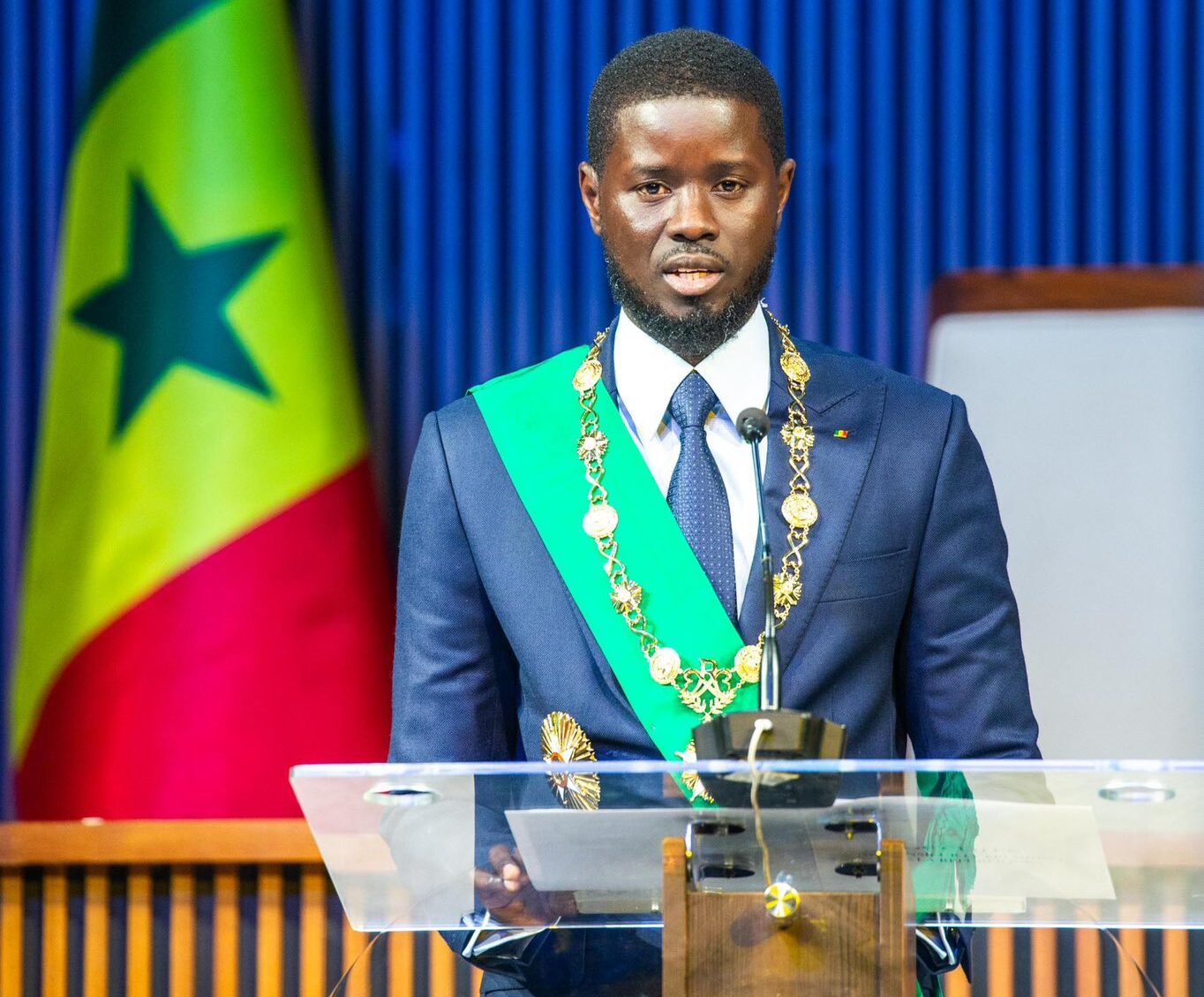
“The president has betrayed the people. We voted for change, and now we get more of the same.” — Mamadou Ndiaye, Sonko supporter and market vendor in Dakar
In Dakar’s Grand Market, a traditional stronghold of Sonko’s support base, vendors expressed shock, and anger. “We thought Sonko was our only hope against corruption,” said one trader who requested anonymity. “Now we’re back to square one.”
Meanwhile, in the capital’s upscale neighborhoods, business leaders have expressed cautious optimism about the new direction. “The market needed stability, and this move provides that,” said Amadou Diop, president of the Senegalese Chamber of Commerce, though he added that “the timing could not be worse given our economic challenges.”
Religious leaders, who had previously been critical of Sonko’s secularist rhetoric, have remained largely silent, though some imams have called for calm during Friday prayers. The country’s powerful Islamic organizations have historically played a mediating role in Senegalese politics.
International Reactions and Regional Implications
While Senegal’s government has not provided details about international consultations regarding the dismissal, diplomatic sources indicate that:
- The African Union has expressed “concern” about the situation but stopped short of condemnation
- France, Senegal’s former colonial power, has urged “dialogue” between political factions
- The Economic Community of West African States (ECOWAS) is monitoring developments closely
Regional analysts warn that Senegal’s crisis could have broader implications for West Africa, particularly as other countries in the region grapple with their own political transitions. “Senegal has always been seen as a stable democracy in the region,” said Dr. Fatoumata Diallo, a political scientist at Cheikh Anta Diop University in Dakar. “This crisis risks changing that perception at a critical time.”
Economically, the situation raises concerns about Senegal’s ability to maintain investor confidence, particularly as it prepares to host the 2026 Africa Cup of Nations football tournament—a major economic opportunity for the country.
What Comes Next: Key Dates and Developments
The next critical developments will likely include:
- May 27-28, 2026: Parliamentary debate on Sonko’s immunity status
- June 1, 2026: Expected formation of Mohamed Lô’s government (if approved by parliament)
- June 15, 2026: Deadline for local election preparations (though elections may be postponed)
- July 2026: Anticipated IMF mission to assess Senegal’s economic situation
President Faye is scheduled to address the nation on May 27, though details about the content remain unclear. Legal observers expect the coming weeks to be particularly volatile as political factions maneuver for advantage.
Why This Matters: Senegal at a Crossroads
Senegal’s political crisis comes at a pivotal moment for the country and the broader West African region. Several factors make this situation particularly significant:
- Democratic Backsliding: Senegal has long been considered Africa’s most stable democracy, but recent events have raised concerns about democratic erosion, particularly regarding media freedom and judicial independence
- Economic Pressures: With inflation and debt concerns, the country’s economic model is under stress, and political instability could exacerbate these challenges
- Regional Influence: As a founding member of ECOWAS and a key player in Francophone Africa, Senegal’s stability has regional implications
- Youth Politics: Sonko’s rise represented the growing political power of Senegal’s youth—a trend that will likely continue regardless of the current crisis
For Senegalese citizens, the immediate question is whether this political upheaval will lead to meaningful reform or simply replace one set of elites with another. “We’ve seen these cycles before,” said Aissata Fall, a political science professor at Gaston Berger University. “The real test will be whether this crisis forces structural changes or just shuffles the deck chairs.”
What You Can Do
Stay informed about Senegal’s developing situation through:
- Official National Assembly website (for parliamentary updates)
- Presidential communications
- World Bank Senegal updates (for economic analysis)
- African Union statements (for regional perspectives)
Share your thoughts: How do you think Senegal should navigate this political crisis? Join the discussion in the comments below.
Worth a look