
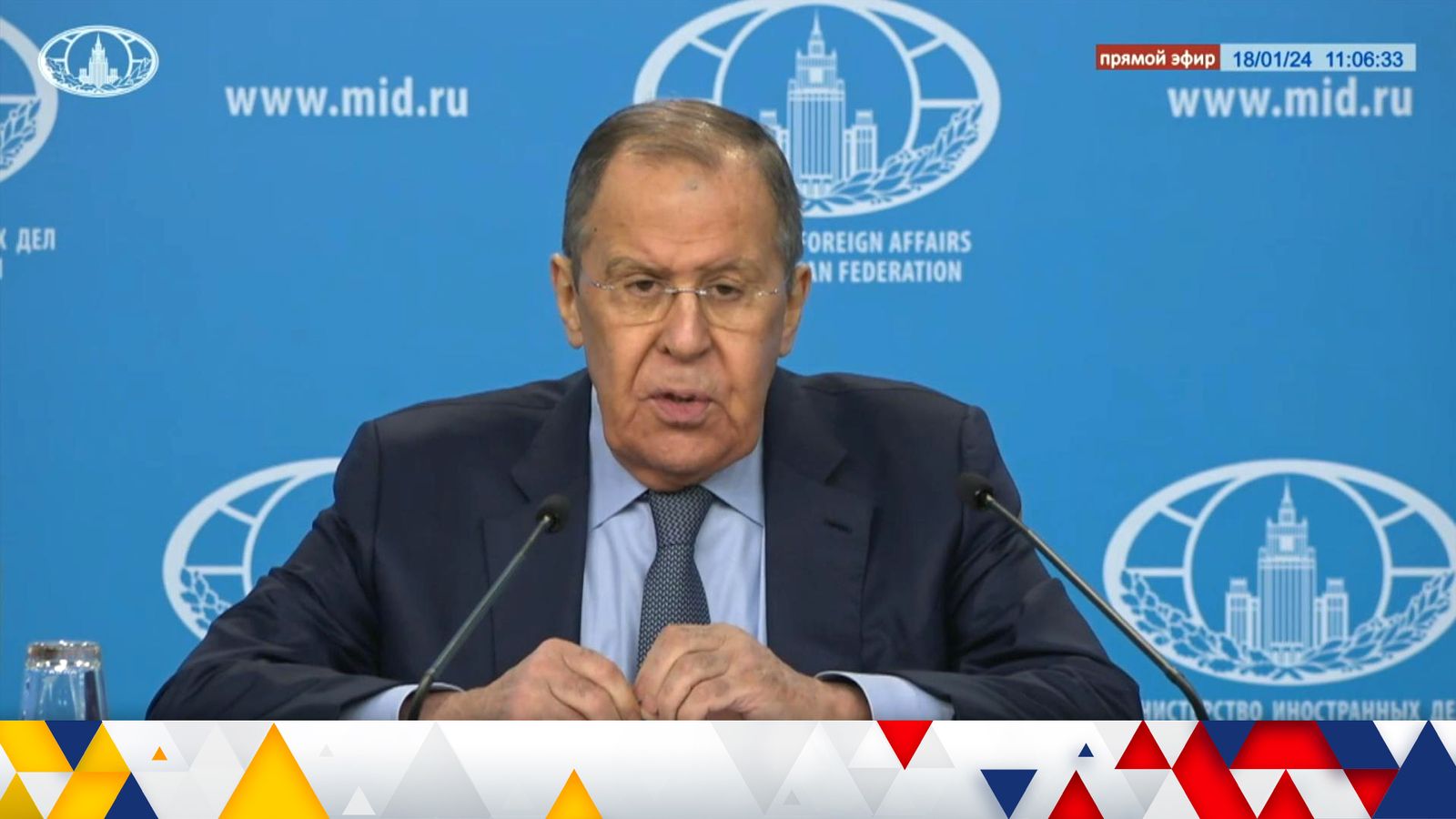
In a dramatic escalation of tensions between Moscow and Washington, Russian Foreign Minister Sergey Lavrov on Monday urged the United States to evacuate its embassy staff from Kyiv, citing “escalating security risks” in the Ukrainian capital. The call, delivered during a high-stakes diplomatic meeting, underscores the deepening crisis in Ukraine and raises questions about the future of diplomatic relations amid a backdrop of unrelenting conflict. While Lavrov’s remarks were not immediately echoed by U.S. Officials, the demand reflects a broader pattern of Russian warnings to foreign nationals and diplomats to leave Ukraine, a move that has drawn international scrutiny and concern.
The Russian foreign ministry’s directive comes as the situation on the ground in Ukraine remains volatile, with reports of increased military activity and heightened rhetoric from both sides. The U.S. State Department has not yet issued a formal response to Lavrov’s demand, but sources familiar with the matter indicate that American officials are closely monitoring the developments. The request to evacuate the embassy staff is particularly notable, as it suggests a potential deterioration in the security environment in Kyiv, where diplomatic missions have historically operated under tight security protocols.
This represents not the first time Russia has called for the withdrawal of foreign personnel from Ukraine. Earlier this year, Moscow issued similar warnings to diplomats from NATO member states, framing them as necessary precautions amid the ongoing war. However, Lavrov’s latest remarks—delivered during a press conference following a meeting with his Iranian counterpart—carry added weight due to their explicit targeting of the U.S. Embassy. The timing of the demand also coincides with heightened tensions in the broader region, including reports of increased military posturing in the Black Sea and concerns over potential spillover effects from conflicts in the Middle East.
Why Is Russia Urging the U.S. To Leave Kyiv?
Lavrov’s call for the evacuation of the U.S. Embassy staff appears to be part of a broader strategy to isolate Western influence in Ukraine and pressure the United States to reconsider its support for Kyiv. Russian officials have repeatedly accused the U.S. Of “provoking” the conflict and have warned that continued Western backing for Ukraine could lead to further escalation. While Moscow has not provided specific details about the security risks justifying the evacuation demand, analysts suggest that the move may be intended to:
- Signal a shift in the war’s dynamics: By targeting the U.S. Embassy, Russia may be attempting to demonstrate its ability to disrupt Western operations in Ukraine, even in the heart of Kyiv.
- Pressure the U.S. To negotiate: The demand could be a tactical maneuver to force the U.S. Into direct negotiations, potentially on terms more favorable to Russia.
- Undermine diplomatic legitimacy: Evacuating the embassy would weaken the U.S. And its allies’ ability to maintain a physical presence in Ukraine, potentially isolating Kyiv further on the global stage.
the U.S. Has not yet confirmed whether it will comply with Russia’s request. American officials have historically emphasized the importance of maintaining diplomatic channels in Ukraine, even amid conflict. The State Department has not issued a statement on the matter, but a spokesperson told reporters that the U.S. Is “monitoring the situation closely” and will “take all necessary steps to ensure the safety of our personnel.”
The Broader Context: Diplomatic Evacuations and Escalation Risks
Russia’s push to evacuate foreign diplomats is not unprecedented. In recent months, Moscow has issued similar warnings to officials from NATO countries, including Germany, France, and Poland. These calls have been framed as necessary due to “increased threats” to foreign nationals in Ukraine, though critics argue that the warnings are part of a broader effort to create a pretext for further military actions or to justify the expulsion of Western diplomats from Russia itself.

In March 2026, Russia expelled dozens of diplomats from NATO countries, accusing them of “espionage and destabilizing activities.” The move was seen as a direct response to Western support for Ukraine, including intelligence-sharing and military aid. While the U.S. And its allies have denied the allegations, the incident highlighted the fragile state of diplomatic relations between Russia and the West. Lavrov’s latest demand to evacuate the U.S. Embassy staff could be seen as an extension of this pattern, further tightening the screws on Western presence in Ukraine.
For its part, the U.S. Has maintained a robust diplomatic presence in Kyiv, despite the challenges posed by the war. The embassy has continued to operate, providing critical support to Ukrainian authorities and coordinating humanitarian aid efforts. However, the security situation in the capital has deteriorated in recent weeks, with reports of increased drone strikes and missile attacks targeting infrastructure near the city center. If the U.S. Were to evacuate its embassy staff, it would mark a significant shift in its approach to the conflict and could have far-reaching implications for Ukraine’s ability to receive Western support.
What Happens Next? Key Developments to Watch
The next few days will be critical in determining how this crisis unfolds. Key developments to watch include:
- The U.S. Response: Will the State Department issue a formal statement addressing Lavrov’s demand? Will the U.S. Begin evacuating non-essential personnel from Kyiv, or will it maintain its diplomatic presence?
- Russian actions: Will Moscow follow up on its demand with additional measures, such as cutting off diplomatic channels or imposing further sanctions on U.S. Officials?
- Ukrainian reactions: How will Kyiv respond to the Russian pressure? Will Ukrainian officials condemn the demand as a violation of international law, or will they seek to de-escalate tensions?
- International reactions: Will NATO and other Western allies issue statements of support for the U.S., or will they remain silent to avoid further provoking Russia?
In the meantime, foreign nationals and diplomats in Ukraine are advised to remain vigilant and follow the guidance of their respective governments. The U.S. State Department has not yet issued a travel advisory for Ukraine, but it has warned citizens of the risks of traveling to the country. For those already in Ukraine, the department recommends registering with the STEP program to receive safety updates and assistance in case of an emergency.
Expert Analysis: What Does This Mean for the War?
Analysts suggest that Lavrov’s demand to evacuate the U.S. Embassy staff is a calculated move designed to raise the stakes in the conflict. “This is not just about security—it’s about sending a message to the U.S. That Russia can disrupt its operations in Ukraine,” said Dr. Elena Rogova, a senior fellow at the Chatham House think tank. “By targeting the embassy, Russia is trying to force the U.S. Into a corner where it has to choose between maintaining its diplomatic presence or prioritizing the safety of its personnel.”
Others warn that the move could further isolate Russia on the global stage. “If the U.S. And its allies perceive this as an escalation, they may respond with additional sanctions or military aid to Ukraine,” said Mark Galeotti, a Russia expert at the American Enterprise Institute. “This could push the conflict into a new and more dangerous phase.”
For now, the situation remains fluid. The U.S. Has not indicated whether it will comply with Russia’s demand, and the Kremlin has not provided further details about the security risks justifying the evacuation. What is clear, however, is that the stakes in Ukraine are higher than ever, and the actions taken in the coming days could have lasting consequences for the war and the broader geopolitical landscape.
Key Takeaways
- Russia’s latest demand: Foreign Minister Sergey Lavrov has urged the U.S. To evacuate its embassy staff from Kyiv, citing “escalating security risks.”
- U.S. Response pending: The State Department has not yet issued a formal statement, but officials are monitoring the situation closely.
- Broader diplomatic tensions: This follows a pattern of Russian warnings to foreign diplomats, including NATO members, to leave Ukraine.
- Potential implications: If the U.S. Complies, it could weaken diplomatic ties and signal a shift in Western strategy in Ukraine.
- Security concerns: The demand comes amid reports of increased military activity and missile strikes near Kyiv.
- Next steps: Watch for U.S. Statements, Russian follow-up actions, and reactions from Ukraine and NATO allies.
The situation in Ukraine remains one of the most closely watched geopolitical flashpoints of 2026. As tensions rise, the actions of key players—particularly Russia and the U.S.—will shape the trajectory of the conflict and its broader regional implications. For now, the world watches and waits to see how this latest diplomatic standoff will unfold.
What are your thoughts on this development? Share your insights in the comments below, and don’t forget to follow World Today Journal for the latest updates on global affairs.