Pope Leo XIV Calls for AI ‘Disarmament’ in Landmark Encyclical, Citing Gandalf as Moral Guide
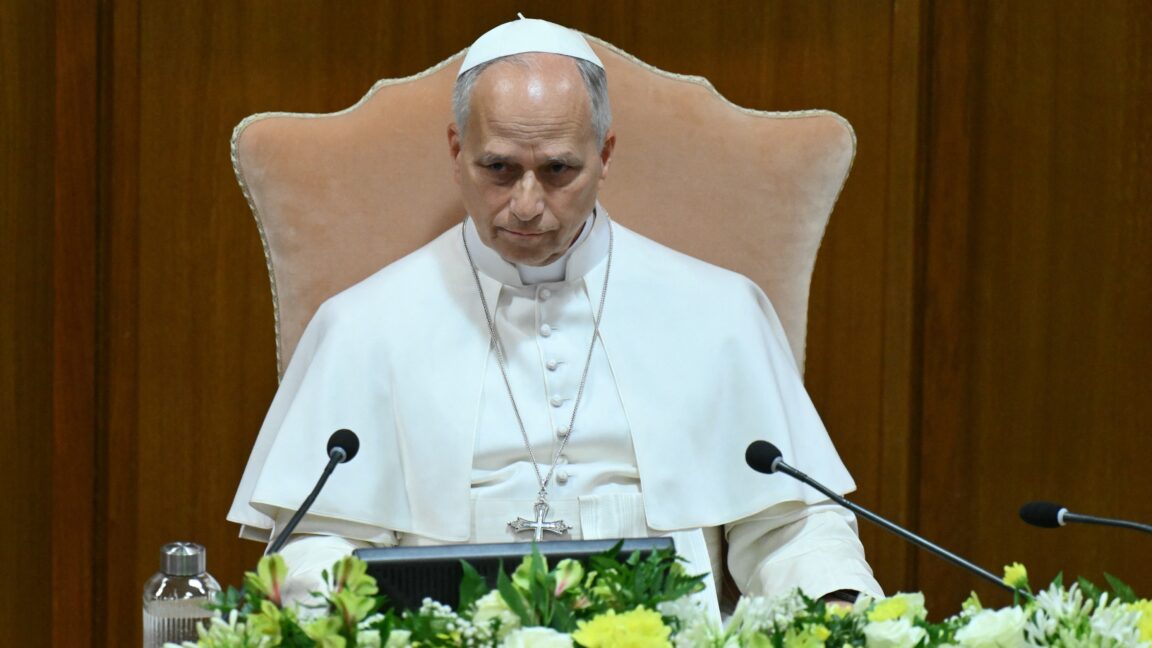
In a sweeping challenge to the tech industry, Pope Leo XIV has issued his first encyclical, Magnifica Humanitas (“Magnificent Humanity”), calling for artificial intelligence to be “disarmed” from its most dangerous applications. The 40,000-word document, released today in Rome, draws parallels between Tolkien’s Gandalf and the moral responsibility of humanity to steer AI toward the common good rather than domination.
Standing alongside the co-founder of Anthropic—a leading AI safety research organization—the pontiff framed the encyclical’s language of “disarmament” as deliberate. “This moment needs words capable of attracting attention, awakening consciences, and indicating paths forward for humanity,” Leo stated. The Vatican’s intervention comes as global debates over AI ethics intensify, with autonomous weapons, data colonialism, and algorithmic monopolies emerging as critical flashpoints.
The encyclical’s release marks a historic moment in the Catholic Church’s engagement with technology. While previous popes have addressed digital ethics, Leo XIV’s document represents the first comprehensive Vatican statement on AI since the advent of large-scale machine learning. Its publication follows months of internal Vatican consultations with theologians, ethicists, and tech leaders.
Why ‘Disarmament’? The Vatican’s Bold Framework for AI
The encyclical’s central argument hinges on three pillars: the need to disarm AI from autonomous weapons, reject neo-colonial data practices, and challenge monopolistic control over digital infrastructure. Leo XIV explicitly names these as existential threats to human dignity, framing them as modern iterations of historical injustices.
“AI today must be freed from logics that turn it into an instrument of domination, exclusion, and death,” the pontiff writes. The document critiques the unchecked development of lethal autonomous weapons systems, which it describes as “a moral abomination that violates the sanctity of human life.” While the Vatican stops short of calling for an outright ban, it demands international treaties mirroring those established for nuclear and chemical arms.
On data sovereignty, the encyclical warns against what it terms “digital neo-colonialism,” where Western tech giants extract and exploit personal data from developing nations without consent or compensation. Leo XIV invokes the principle of res communis—the idea that certain resources belong to all humanity—arguing that algorithms and training data should not be treated as private property but as shared cultural heritage.
Gandalf as a Moral Compass for AI
A surprising but recurring motif in the encyclical is the reference to J.R.R. Tolkien’s The Lord of the Rings. Leo XIV cites Gandalf’s refusal to wield the One Ring as a metaphor for humanity’s responsibility to resist technological temptations that prioritize power over ethics. “Just as Gandalf could not use the Ring to dominate Middle-earth, so too must we refuse to let AI become a tool of domination,” the text states.
This literary allusion reflects broader Vatican efforts to make complex ethical dilemmas accessible. In a press conference following the encyclical’s release, a Vatican spokesperson noted that Tolkien’s works—particularly their themes of stewardship and sacrifice—offer a compelling framework for discussing AI’s role in society.
Who’s Affected? Stakeholders in the Vatican’s AI Challenge
The encyclical’s impact will ripple across multiple sectors:

- Tech Industry: Companies developing AI systems—particularly those in defense, surveillance, and social media—face renewed scrutiny. The Vatican’s call for “ethical audits” of AI models could pressure firms to adopt transparency measures.
- Governments: Nations with military AI programs, including the U.S., China, and Russia, may face diplomatic pressure to align with the encyclical’s disarmament principles. The document explicitly urges nations to “prioritize human life over technological advancement.”
- Developing Nations: The critique of “digital neo-colonialism” is likely to resonate in Africa, Latin America, and Southeast Asia, where data extraction by Western firms is a growing concern.
- Academia: Universities and research institutions will be challenged to integrate the encyclical’s ethical framework into AI curricula and grant-funded projects.
What Happens Next? The Road Ahead for AI Regulation
While the encyclical carries no legal force, its moral authority could accelerate ongoing policy efforts. The European Union’s AI Act, currently under negotiation, may incorporate Vatican principles into its risk-assessment frameworks. In the U.S., the encyclical’s release coincides with Senate hearings on AI accountability, raising questions about whether faith-based ethics will influence legislative outcomes.
The Vatican has scheduled a global symposium in October 2026 to discuss the encyclical’s implementation, inviting tech CEOs, ethicists, and policymakers to Rome. “This is not just a Catholic issue—it’s a human issue,” said Cardinal Pietro Parolin, the Vatican’s Secretary of State. “We hope to build a broad coalition for responsible AI.”
Key Takeaways: The Encyclical’s Core Demands
- Ban on Autonomous Weapons: Demand for international treaties prohibiting AI-driven lethal systems, modeled after nuclear non-proliferation agreements.
- Data Sovereignty: Rejection of “extractive” data practices, with calls for equitable sharing of AI benefits across nations.
- Algorithmic Transparency: Mandate for auditable AI systems, particularly in high-stakes applications like hiring, lending, and criminal justice.
- Ethical AI Governance: Proposal for a global oversight body, independent of corporate or state influence, to set ethical standards.
- Cultural Preservation: Warning against AI’s erasure of human languages and traditions, framing digital culture as a shared heritage.
What You Can Do: Resources and Next Steps
For individuals and organizations seeking to align with the encyclical’s principles:

- Read the Full Text: Magnifica Humanitas (official Vatican release)
- Engage with the Vatican: Submit comments or proposals via the Pontifical Council for Culture
- Track AI Policy: Follow updates on the EU AI Act (European Commission) and U.S. Senate hearings (Congress.gov)
- Support Ethical AI: Explore initiatives like the Partnership on AI for corporate accountability
The Bigger Picture: Faith, Tech, and the Future of Humanity
Pope Leo XIV’s encyclical arrives at a pivotal moment in the AI debate. While tech leaders often frame innovation as apolitical, the Vatican’s intervention forces a reckoning with the ethical dimensions of machine intelligence. The comparison to Gandalf underscores a fundamental question: Who controls the “Ring” of AI—and what happens when it falls into the wrong hands?
The document’s release also signals a broader trend of religious institutions engaging with technology. From Buddhist digital ethics to Islamic AI guidelines, faith-based perspectives are increasingly shaping global tech policy. As Leo XIV writes, “The future of AI is not a technical question alone—it is a question of the human soul.”
Next Steps: What to Watch in the Coming Months
The Vatican’s October 2026 symposium will be the first major checkpoint for the encyclical’s impact. Key developments to monitor include:
- Reactions from major tech companies (e.g., Microsoft, Google, Meta) on implementing “ethical audits”
- Progress on the EU AI Act’s final negotiations, with potential Vatican lobbying
- U.S. Legislative proposals on AI accountability, including faith-based ethical frameworks
- Global South responses to the “digital neo-colonialism” critique, particularly from African and Latin American governments
As the AI arms race accelerates, the Vatican’s call for “disarmament” may prove to be one of the most influential voices in shaping the technology’s trajectory—or its potential to unravel human dignity.
Keep reading