Rewarding Curiosity Over Converting Resistors: The Smart Way to Integrate AI in the Workplace
May 26, 2026
The future of work isn’t about forcing employees to adopt AI tools—it’s about creating an environment where curiosity is rewarded, skills are portable, and learning feels like an asset, not an obligation. That’s the counterintuitive strategy one of Europe’s most influential media executives is championing as artificial intelligence reshapes industries.
In a series of lessons leading up to the World News Media Congress, Ladina Heimgartner, President of WAN-IFRA and CEO of Ringier Media Switzerland, argues that mandatory AI training programs often backfire. Instead, she advocates treating upskilling as a personal asset—one that employees can showcase on LinkedIn, include in their professional references, and carry with them even if they leave the company. The approach reflects a broader shift: from corporate compliance to individual empowerment in the age of AI.
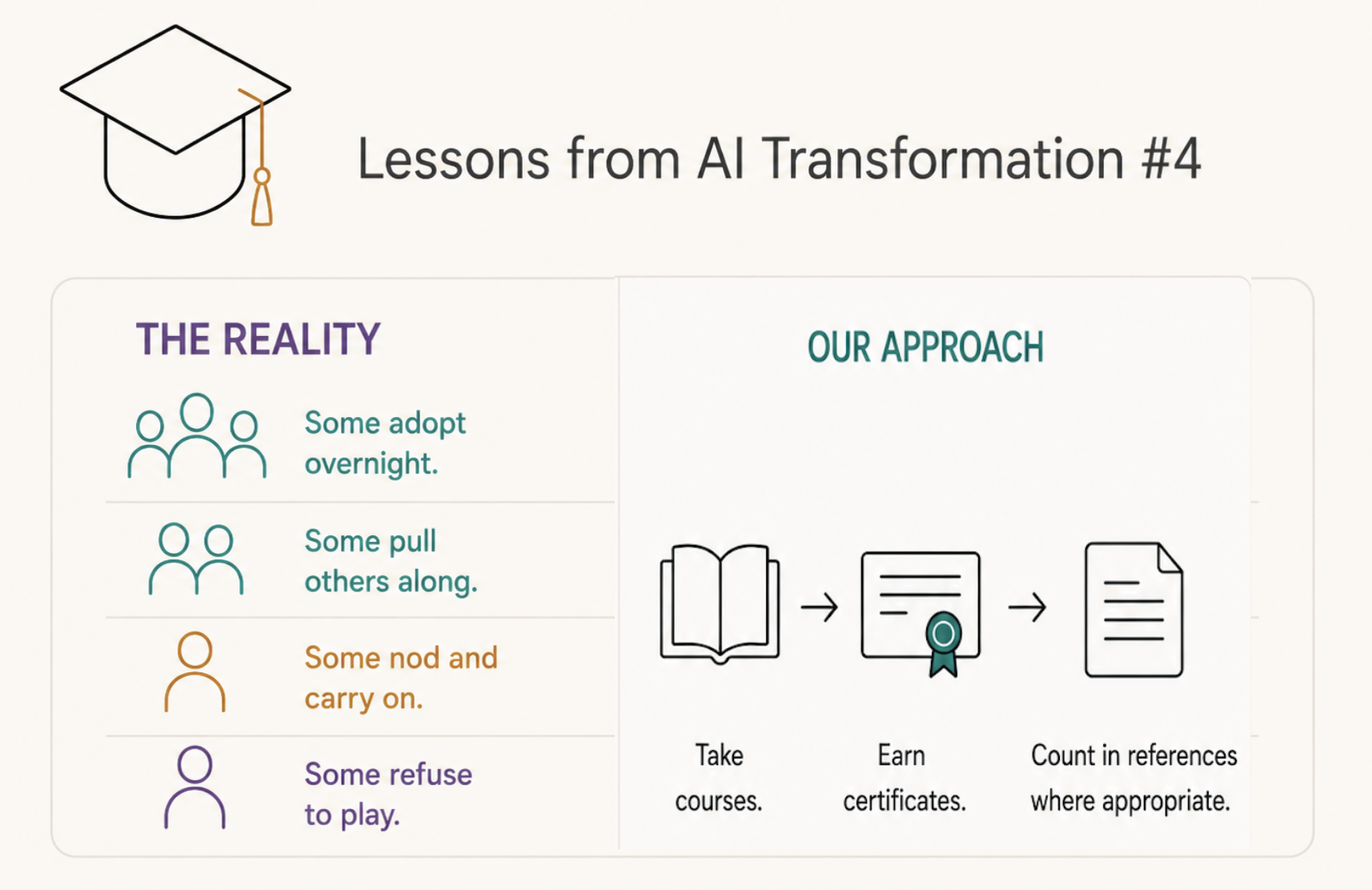
At Ringier Media Switzerland, Heimgartner’s team has taken a radical stance on AI integration. Rather than mandating tool adoption, they offer voluntary courses—many in person—and award certificates for completed modules. These credentials can be shared publicly, turning learning into a career differentiator. The philosophy? “We’re equipping people for a world shaped by AI, whether they stay with us or move on.”
The strategy stems from a simple observation: not everyone adopts AI tools at the same pace—or at all. Heimgartner categorizes employees into three groups:
- Early adopters: Those who integrate AI into their workflows overnight and often influence colleagues.
- The curious: Employees who nod through meetings but revert to traditional methods when it matters—until a hands-on demo sparks their interest.
- The resistors: A small group with irreplaceable human skills who can afford to opt out, though most cannot in the long run.
Mandatory training, Heimgartner notes, risks turning AI adoption into a burden rather than an opportunity. Instead, her team focuses on multipliers—the employees who naturally drive change—and supports them without burnout. The next challenge? Scaling this approach across organizations where voluntary upskilling becomes the norm, not the exception.
Why the “Personal Asset” Approach Works
Traditional corporate training often suffers from low engagement because it’s framed as a requirement. Employees complete modules to check a box, not because they’re genuinely interested. Heimgartner’s model flips this script by making learning visible and valuable outside the company. Certificates on LinkedIn and references aren’t just perks—they’re proof that employees are investing in their own future.
This aligns with broader trends in future-of-work research, which emphasizes autonomy and skill portability as key to retention. When employees see learning as an asset they own—not a task assigned by their employer—they’re more likely to engage deeply.
Who Benefits—and Who Might Resist?
Employees gain a competitive edge, especially in fields where AI literacy is becoming a baseline requirement. Employers reduce resistance by making upskilling feel voluntary, while still ensuring critical skills are developed. The biggest winners? Multipliers—the employees who bridge gaps between AI-savvy teams and those still adapting.

Skeptics might argue that this approach leaves some employees behind. However, Heimgartner’s data suggests that even resistors often change their minds when given a tangible demonstration of AI’s value—such as using tools like Google’s NotebookLM to streamline repetitive tasks. The key is demonstration over mandate.
How to Apply This in Your Organization
If you’re leading a team or HR strategy, consider these steps:

- Identify your multipliers: Who are the employees who naturally influence others? Support them first.
- Make learning visible: Certificates, badges, or LinkedIn shoutouts turn training into a career asset.
- Avoid mandatory AI adoption: Focus on demonstrations and incentives rather than top-down directives.
- Design for portability: Ensure skills learned in your organization can be applied elsewhere.
What Happens Next?
Heimgartner’s next lesson will explore how to sustain multipliers without burning them out. In the meantime, organizations can start by piloting voluntary AI upskilling programs and measuring engagement—not compliance.
For those interested in how publishers are adapting to AI-driven changes, WAN-IFRA is conducting a global survey on AI search and bot traffic impacts. Responses are welcome in English, German, French, and Spanish.
How has your organization approached AI adoption? Share your experiences in the comments—or tag us on Twitter to join the conversation.