Trump at the Tipping Point: How His Latest Moves Could Reshape American Politics Forever
By Dr. Olivia Bennett | Chief Editor, Business | May 26, 2026
There is a tremor in the political force. One that has been building for years—but which now feels different. President Donald Trump, who has spent his political career testing the limits of American democracy, appears to have crossed a line even his most ardent supporters may struggle to justify. His recent actions—from diverting $1.776 billion in taxpayer funds to creating what critics call a “slush fund for the loyal,” to publicly discussing a White House ballroom with anti-missile defenses, to granting himself sweeping legal immunity—have sent shockwaves through Washington. The question now isn’t whether these moves are legal, but whether they are sustainable.
Trump’s approval ratings have hit their lowest point in years, hovering around 38.5% according to recent polls, yet his willingness to push boundaries has never been greater. Legal scholars warn his latest settlement agreement—which bars the U.S. Government from prosecuting him or his allies for “lawfare” or “weaponization of the justice system”—could set a precedent that undermines the rule of law. Meanwhile, his aggressive stock trading while in office has raised fresh concerns about insider trading, while his obsession with a fortified White House ballroom has fueled speculation about his intentions for a second term.
What happens next could determine whether America’s constitutional republic survives—or whether it succumbs to the kind of unchecked executive power once reserved for monarchs. Here’s not hyperbole. The stakes could not be higher.
The White House has not responded to specific questions about the ballroom’s defensive features or the legal implications of the settlement agreement. The Department of Justice declined to comment on pending litigation. Congressional Republicans, once loyal to Trump, are beginning to show signs of unease, with figures like Louisiana Senator Bill Cassidy recently losing his primary after voting to convict Trump in his second impeachment trial.
Three Moves That Could Break the System
The past month has seen Trump take actions that, taken together, represent the most aggressive assertion of presidential power in modern history. Each move, examined separately, would be controversial. Combined, they form a pattern that threatens to unravel the delicate balance of checks and balances that has defined American governance since the Founding.
1. The $1.776 Billion ‘Anti-Weaponization’ Fund: A Slush Fund for the Loyal?
In a move that has stunned legal experts, Trump has directed the settlement of his long-running lawsuit against the IRS—stemming from the leak of his family’s tax returns—to create a fund intended to compensate individuals he claims were victims of “DOJ weaponization.” The fund, which carries the symbolic number $1.776 billion (a nod to the year 1776), is being used to pay out claims from allies who allege they were unfairly targeted by prosecutors.
Legal scholars argue this is unprecedented. Typically, settlements involve payments to resolve specific claims, not the creation of a discretionary fund controlled by the plaintiff. Critics point out that the “victims” in question were always free to file their own lawsuits—but chose not to. Instead, they relied on Trump to act as both judge and jury, effectively creating a parallel justice system answerable only to him.

The fund’s structure has raised additional red flags. While the agreement bars the U.S. Government from pursuing certain claims against Trump, it also includes language that could be interpreted as a de facto pardon for future actions. Legal analysts warn this could set a dangerous precedent, allowing future presidents to immunize themselves from accountability.
For now, the fund remains under scrutiny. The Department of Justice has not commented on whether it will challenge the settlement’s legality. Meanwhile, Treasury officials have not confirmed whether the funds have been officially transferred.
2. The Self-Pardoning Clause: A License to Steal
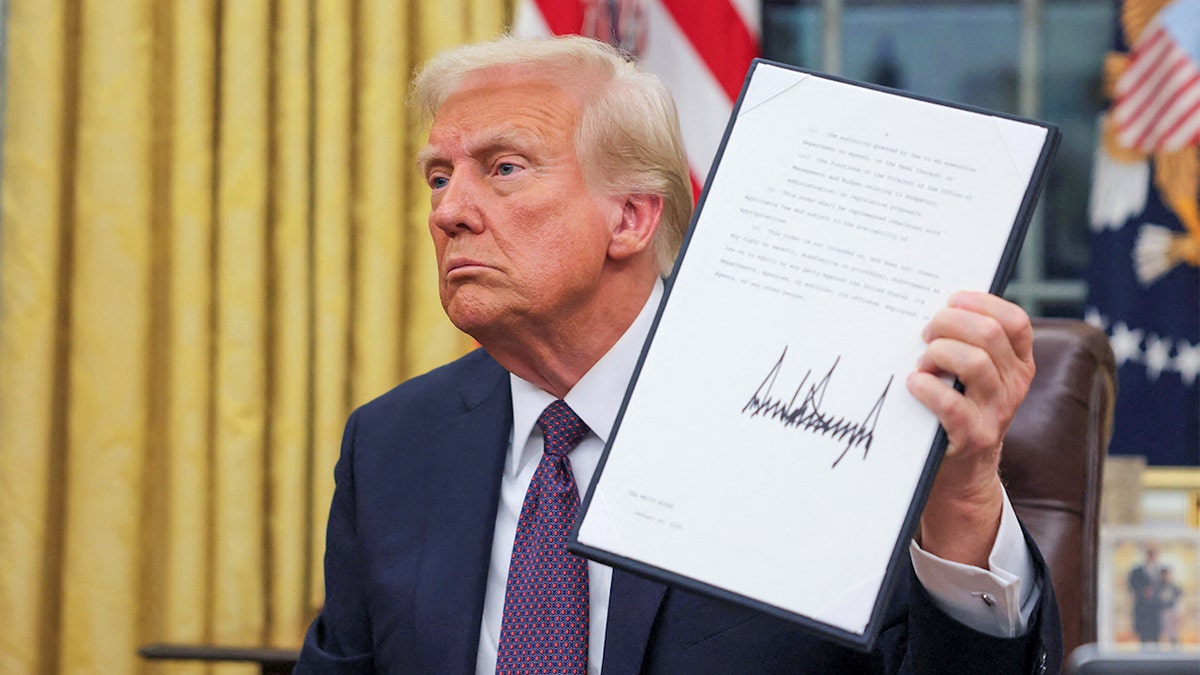
Buried within the settlement agreement is a clause that has sent chills through the legal community. It reads, in part:
“The United States is forever barred from prosecuting or pursuing any and all claims… Whether presently known or unknown… That have been or could have been asserted by Defendants against any of the Plaintiffs… Which arise out of (1) any matters that were raised or could have been raised in the Case or the Pending Agency Claims; (2) Lawfare and/or Weaponization; or (3) any matters currently pending or that could be pending.”
Legal experts describe this as “the most aggressive self-pardoning provision ever seen in American politics”, according to The New York Times. The clause is so sweeping that it could potentially block investigations into:
- Any criminal or civil claims related to the IRS tax leak case
- Allegations of “weaponization of the justice system” (a term Trump has repeatedly used to describe prosecutions against him)
- Future actions that might be deemed “lawfare” by Trump or his allies
What makes this particularly alarming is that Trump was the plaintiff in the original lawsuit—meaning he initiated the legal action against the government. Yet the settlement reads like a defendant’s release, granting him immunity from future prosecutions. Constitutional scholars argue this could violate the Emoluments Clause, which prohibits the president from accepting benefits from foreign or domestic entities without congressional approval.
The agreement has already sparked calls for impeachment. House Democrats are reportedly drafting articles of impeachment, while legal analysts warn that if allowed to stand, the clause could “effectively end presidential accountability”, according to The Washington Post.
3. The White House Ballroom: Fortress or Folly?
Trump’s fixation on a $1 billion White House ballroom has taken a bizarre turn. In recent remarks, he has described the space—not just as a venue for state dinners, but as a fortified command center complete with anti-missile defenses and sniper-proof windows. While the White House has not confirmed the exact specifications, social media speculation has run wild, with some analysts suggesting the ballroom could serve as a bunker in case of political unrest.
Trump’s rhetoric has only fueled concerns. In a recent interview, he described the ballroom as “the most secure space in the world,” adding that it would include “features you’ve never seen before.” While he did not specify what those features entail, his comments have led to widespread speculation that the ballroom is being designed with defensive military applications in mind.
Critics argue that spending hundreds of millions on a ballroom—while middle-class Americans struggle with inflation and rising costs—is not just tone-deaf, but potentially illegal. The Federal Acquisition Regulations require that government spending be justified by public need. A ballroom with military-grade defenses would likely fail that test.
The White House has not provided a cost-benefit analysis for the project. Meanwhile, the Government Accountability Office is reportedly reviewing the expenditure for potential waste, fraud, or abuse.
Trading While President: The Ultimate Conflict of Interest
Trump’s recent disclosures about his aggressive stock trading have reignited concerns about insider trading. While presidents are not legally prohibited from trading stocks, the practice raises ethical questions—especially when those trades appear to align with presidential actions.
For example:
- In February 2026, Trump’s organization purchased between $1 million and $5 million in shares of Nvidia, an AI chipmaker. A week later, Nvidia announced an expanded partnership with Meta Platforms—a deal that could benefit from Trump’s pro-business policies.
- In March 2026, Trump bought up to $530,000 in shares of Palantir Technologies. In April, he tweeted:
“Palantir Technologies (PLTR) has proven to have great war-fighting capabilities and equipment. Just ask our enemies!!!”
Legal experts argue that while these actions may not violate insider trading laws, they “create the appearance of using presidential power for personal gain”, according to Brookings Institution analysts. The Stock Act, passed in 2012, requires federal officials to disclose financial holdings—but does not prohibit trading.
The Securities and Exchange Commission has not opened an investigation, though congressional Democrats are reportedly pressing for a review. Meanwhile, Trump’s allies argue that his trading is no different from that of other wealthy Americans.
Republicans at a Crossroads: Can the GOP Survive Trump’s Recklessness?
Trump’s latest moves have created a rift within the Republican Party. While his base remains fiercely loyal, establishment figures are beginning to question whether his actions are sustainable—both legally and politically.
Key developments:
- Louisiana Senator Bill Cassidy lost his primary after voting to convict Trump in his second impeachment trial. Cassidy, a moderate Republican, was replaced by a more hardline candidate backed by Trump’s allies.
- Kentucky Representative Thomas Massie faced a similar fate after investigating ties between Trump and Jeffrey Epstein. Massie, a libertarian-leaning Republican, was primaried by a Trump-aligned candidate.
- Polls show only 38.5% of Americans approve of Trump’s performance, with disapproval rising among independents and suburban voters.
Legal scholars warn that Trump’s actions could “accelerate the collapse of the two-party system”, according to Bloomberg News. If the GOP continues to embrace his unchecked power, they risk alienating the very voters who could decide future elections.
Meanwhile, Democrats are divided. Some argue that Trump’s actions provide an opportunity to “finally hold him accountable”, while others warn that impeachment could backfire, rallying his base even further.
A Warning from History: When Power Goes Unchecked
Trump’s actions evoke echoes of Marie Antoinette’s infamous “let them eat cake”—a moment when a leader’s detachment from the struggles of ordinary citizens became a symbol of the monarchy’s decline. While Trump’s ballroom is hardly a palace, the parallels are striking.
Historical examples show that when leaders believe themselves above the law, the consequences are often catastrophic. From Watergate to Nixon’s resignation, American history demonstrates that unchecked executive power does not end well for those who wield it.
Today, Trump appears to be testing how far he can push the system. His recent moves—from the slush fund to the self-pardoning clause to the fortified ballroom—suggest he believes he is invincible. But history shows that no leader is truly above accountability.
Key Takeaways: What Happens Next?
- The $1.776 billion fund raises legal questions about whether Trump can use taxpayer money to compensate his allies while blocking future prosecutions.
- The self-pardoning clause could set a dangerous precedent, allowing future presidents to immunize themselves from accountability.
- The White House ballroom may violate federal spending laws and could be seen as a symbol of Trump’s detachment from economic struggles.
- Stock trading disclosures have reignited ethical concerns, though no legal action has been taken yet.
- Republican infighting suggests that Trump’s base may not be as united as he assumes.
- Public approval is at a historic low, with polls showing 38.5% support—a level that could make future elections unpredictable.
The Road Ahead: Impeachment, Investigations, or a Constitutional Crisis?
The next critical steps will likely unfold over the next 30 days:
- June 2026: The House Judiciary Committee is expected to vote on articles of impeachment related to the settlement agreement.
- July 2026: The Government Accountability Office is set to release its review of the White House ballroom expenditures.
- August 2026: The SEC may announce whether it will investigate Trump’s stock trading disclosures.
- Ongoing: State attorneys general are reportedly reviewing whether the settlement agreement violates the Emoluments Clause.
What remains unclear is whether Trump’s actions will lead to a constitutional crisis or simply another chapter in his long history of testing the limits of power. One thing is certain: the next few months will determine whether America’s democratic institutions can withstand the stress.
What do you think? Are Trump’s latest moves a sign of strength—or recklessness? Could they finally push America past the tipping point? Share your thoughts in the comments below, and don’t forget to share this analysis with others who care about the future of American democracy.
Next update: June 1, 2026—House Judiciary Committee votes on impeachment articles
Related reading
- Bioforce Makes Largest Biomethane Investment in Baltics to Expand Operations in Latvia
- The Importance of Participation, Education, and Motivation in Succession Planning
- Vivo S2 Enters the Mid-Range Market with Powerful Specs and Massive Battery (world-today-news.com)
- U.S. stock futures rise after record Wall St close; SpaceX, AMD dip post earnings (archyde.com)