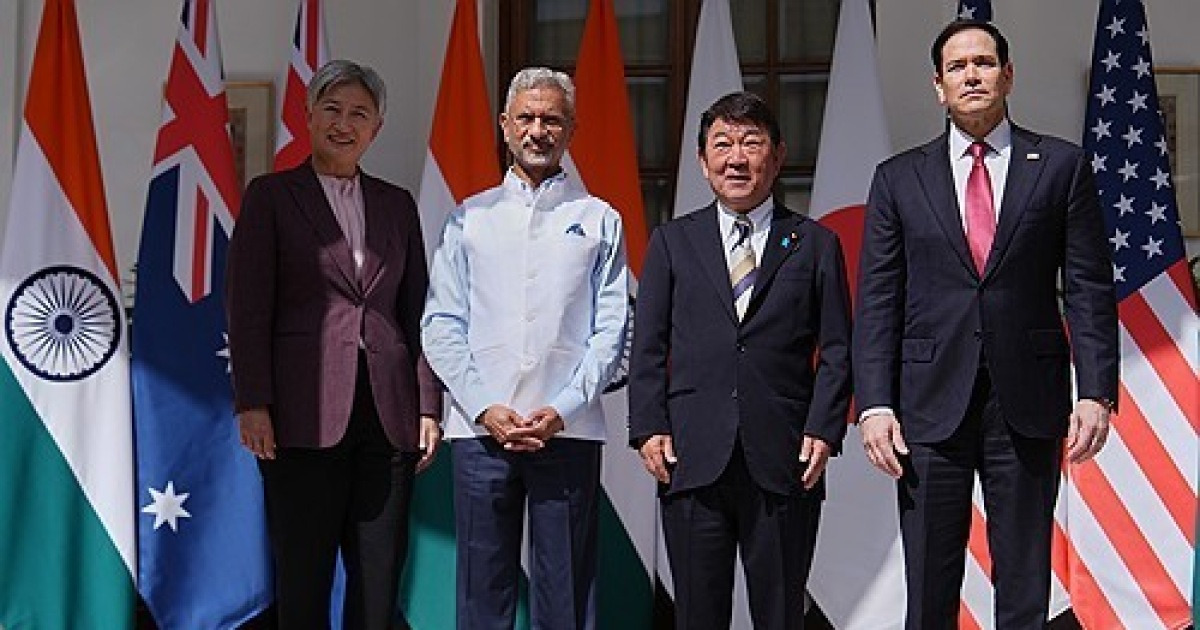
The foreign ministers of the Quad—an informal strategic partnership comprising the United States, Japan, Australia, and India—recently concluded a high-level meeting in Tokyo, where they reaffirmed their collective commitment to the complete denuclearization of the Korean Peninsula. This diplomatic gathering served as a significant platform for the four nations to coordinate their stances on pressing regional security concerns, emphasizing the importance of upholding international law and stability across the Indo-Pacific.
For observers of global markets and international security, the Quad foreign ministers’ meeting joint statement underscores a unified approach to the ongoing geopolitical challenges presented by North Korea. The ministers issued a clear call for Pyongyang to abide by all relevant United Nations Security Council resolutions, which mandate the cessation of activities related to its nuclear and ballistic missile programs. This diplomatic alignment is critical, as regional stability remains a cornerstone for economic growth and supply chain security in the Indo-Pacific region.
Strategic Alignment on Regional Security
The joint statement released following the Tokyo talks highlights a broad consensus among the Quad partners regarding the current security environment. Beyond the focus on the Korean Peninsula, the ministers expressed serious concern regarding the situation in the East and South China Seas. By emphasizing the need for a rules-based maritime order, the Quad members are signaling a commitment to maintaining open and secure sea lanes, which are vital for global trade and energy security.

The ministers also addressed the broader implications of security cooperation, specifically noting the evolving partnerships that threaten regional peace. By highlighting the risks associated with increasing military cooperation in the region, the Quad members aim to discourage actions that could undermine the status quo. This diplomatic pressure is viewed by many analysts as a necessary step to prevent further escalation in areas where competing maritime claims have created persistent friction.
The Economic Imperative of Stability
From a business and economic perspective, the Quad’s diplomatic efforts are deeply tied to the preservation of a stable environment for commerce. The Indo-Pacific accounts for a significant portion of global GDP, and any disruption to maritime transit or regional security poses a direct risk to international supply chains. Investors and corporate stakeholders often look to such multilateral statements as indicators of the political climate in the region.
The commitment to upholding international law—including the United Nations Convention on the Law of the Sea (UNCLOS)—serves as a benchmark for how these nations intend to manage disputes. By advocating for peaceful resolutions and opposing unilateral actions that change the status quo, the Quad partners are attempting to reduce the “risk premium” associated with operating in the region. For global businesses, this focus on predictability and rule-based engagement is essential for long-term strategic planning.
Addressing Global Challenges
The Tokyo meeting was not limited to security concerns alone. The Quad ministers reiterated their dedication to addressing a variety of global challenges, including health security, climate change, and critical and emerging technologies. This multidimensional approach reflects the group’s broader ambition to provide “public goods” to the region, positioning the Quad as a constructive force rather than merely a security-focused bloc.

- Denuclearization: A firm stance on the complete denuclearization of the Korean Peninsula in accordance with UNSCRs.
- Maritime Security: Continued advocacy for a free and open Indo-Pacific, with specific concerns raised regarding the East and South China Seas.
- Economic Resilience: A focus on maintaining secure trade routes and regional stability to support global market health.
- Collaborative Governance: Strengthening partnerships to address regional health and technological standards.
As the international community monitors these developments, the Quad’s ability to remain aligned will be a key factor in managing regional tensions. The ministers have scheduled future engagements to ensure that these strategic objectives are met with consistent diplomatic action. Maintaining the momentum from the Tokyo meeting will be crucial for the partners as they navigate a complex landscape of geopolitical competition and economic integration.
We invite our readers to share their perspectives on how these diplomatic shifts might impact global trade and regional stability. Your insights are a vital part of our ongoing coverage of international business policy and global market trends.
Worth a look