
In the evolving landscape of international cybersecurity and state-sponsored digital activities, the security of critical infrastructure remains a paramount concern for global powers. Recent reports have brought renewed attention to the persistent threat of cyber intrusions targeting high-value municipal and institutional networks. While sensationalized claims often circulate regarding the immediate paralysis of major metropolitan areas, a more nuanced reality persists: the ongoing battle between sophisticated state-aligned actors and the defensive measures maintained by Western nations.
For those monitoring these developments, it is essential to distinguish between localized technical disruptions and systemic failures. As we look at the broader context of geopolitical tensions, the role of digital infrastructure in national security has become a central focus for both intelligence agencies and private sector security firms. Reports from the Cybersecurity and Infrastructure Security Agency (CISA) frequently highlight that while foreign adversaries, including those linked to Iranian state interests, actively scan for vulnerabilities, the actual impact on critical urban systems like those in Los Angeles is often characterized by attempts at reconnaissance rather than total operational collapse.
Understanding the Nature of Cyber-State Relations
The digital theater of conflict is markedly different from traditional kinetic warfare. In recent years, entities such as the U.S. Department of Justice have documented various indictments against individuals and groups acting on behalf of foreign governments. These operations typically focus on persistent monitoring, data theft, and the exploitation of known software vulnerabilities rather than the immediate disabling of municipal utilities. The narrative of a city being “made helpless” often misrepresents the sophisticated, slow-burn nature of these campaigns.
When analyzing these threats, it is critical to rely on official advisories. The Federal Bureau of Investigation (FBI) maintains that public-private partnerships are the first line of defense against such intrusions. These agencies work continuously with utility providers and municipal IT departments to patch systems against emerging exploits. The reality, as verified by technical analysis, is that while attempts to penetrate U.S. Networks are constant, the infrastructure itself is designed with significant redundancies to prevent the type of widespread failure suggested by unverified reports.
The Role of Geopolitical Tensions
Heightened rhetoric regarding cyber capabilities often correlates with broader diplomatic friction. As noted in international reporting, the tension between Tehran and Washington remains a defining feature of current global affairs. For observers, understanding the “why” behind these cyber-activities is as important as understanding the “how.” These operations are frequently categorized by experts as “gray zone” activities—actions designed to exert pressure, gather intelligence, or signal resolve without crossing the threshold into a declared armed conflict.

The U.S. Department of State continues to engage in international forums to establish norms for responsible state behavior in cyberspace. Despite these efforts, the proliferation of advanced persistent threats (APTs) remains a reality that requires constant vigilance. For the average citizen in major hubs like Los Angeles, So that while the threat is real, the resilience of the systems supporting daily life—such as water, power, and emergency services—is significantly bolstered by ongoing federal and local security investments.
Key Takeaways for Global Observers
To better understand how these threats are managed, it is helpful to consider the following points based on current institutional data:
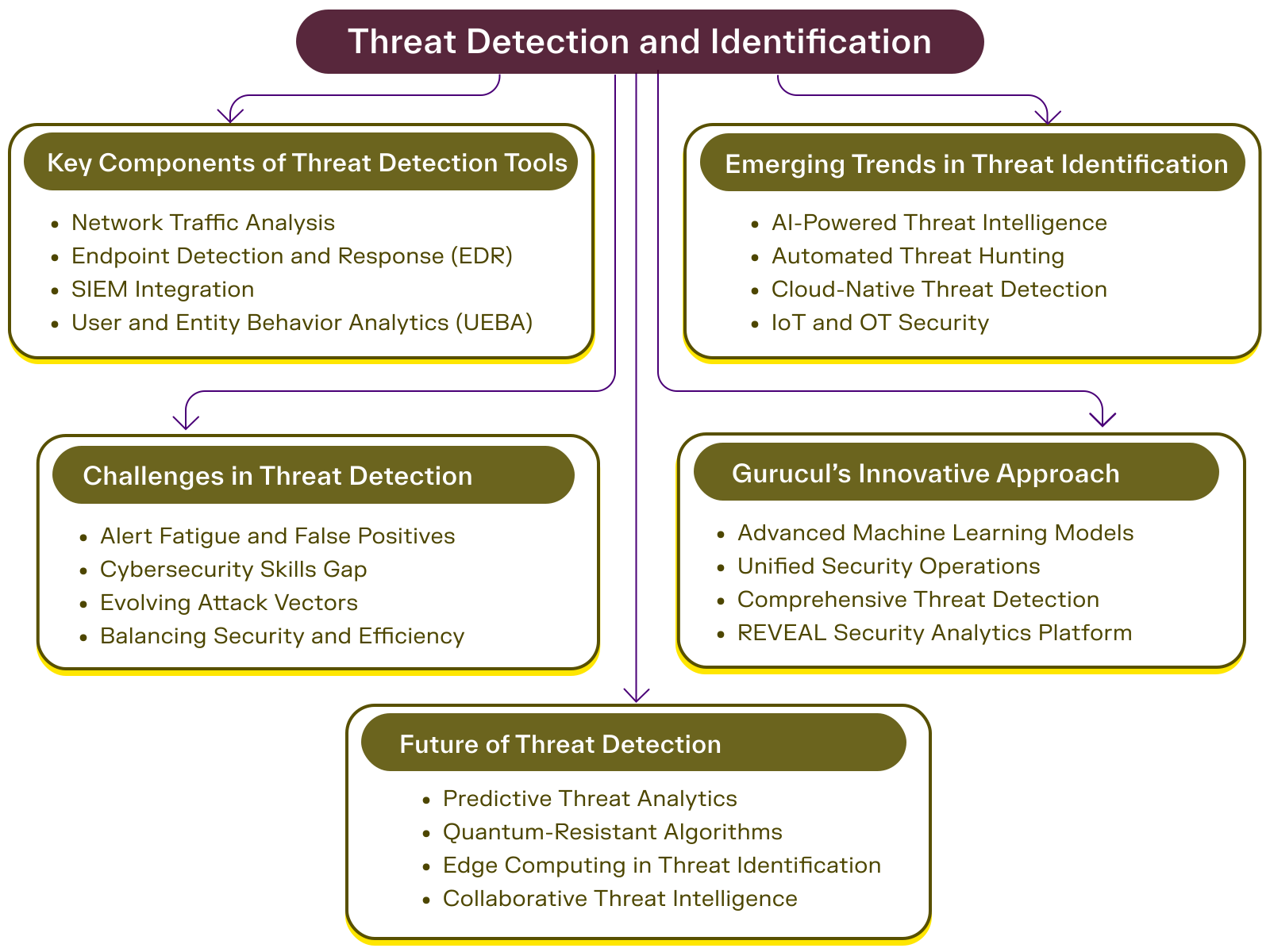
- Threat Identification: Most state-sponsored activity involves long-term espionage and network mapping rather than immediate sabotage.
- Defensive Strategy: The U.S. Government relies on a “whole-of-nation” approach, involving constant information sharing between the private sector and federal agencies.
- Resilience: Critical infrastructure is increasingly governed by stringent cybersecurity mandates that prioritize uptime and rapid recovery.
As we continue to monitor the situation, the next major checkpoint will be the release of the upcoming Annual Threat Assessment from the Office of the Director of National Intelligence, which will provide a clearer picture of the evolving cyber-landscape. We encourage our readers to stay informed through official government channels and to engage in the comments section below regarding how your own local infrastructure is preparing for these modern digital challenges. Your perspectives and questions are vital to the ongoing dialogue on global security.
Related reading