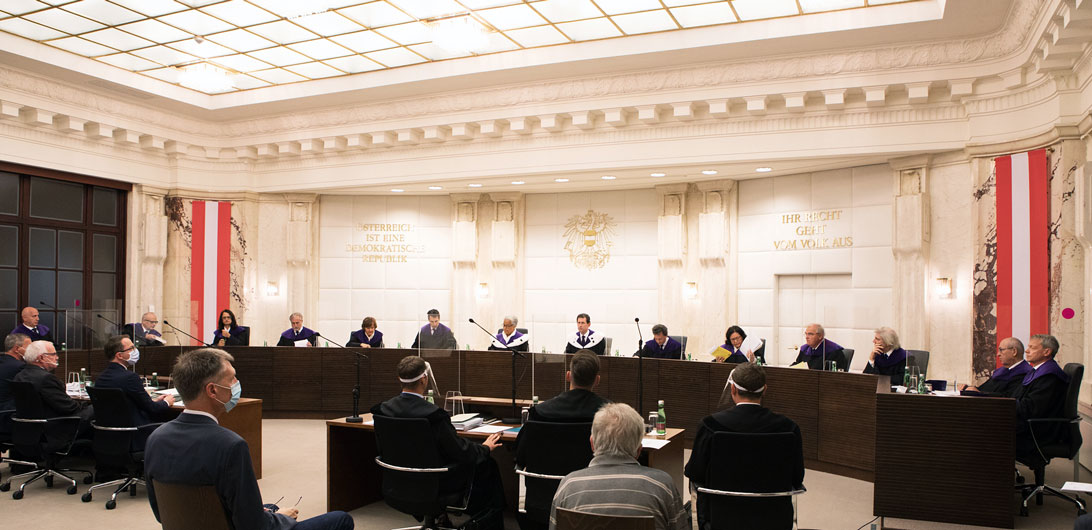
The Austrian Constitutional Court (Verfassungsgerichtshof, or VfGH) is currently at the center of a significant legal debate regarding the privacy rights of citizens and the digital investigative powers of state authorities. As technology continues to evolve, the intersection of cybersecurity and constitutional law has become a primary focus for the judiciary in Vienna, particularly concerning the monitoring of encrypted messenger services.
At the heart of the matter is the legal framework surrounding the surveillance of digital communications. The Austrian Constitutional Court has scheduled public proceedings to address the constitutionality of measures that allow state agencies to access encrypted data. This development follows a legal challenge brought forward by members of the National Council, who have raised concerns regarding the potential for overreach in the digital age.
Understanding the Legal Challenge to Messenger Surveillance
The core of the dispute involves the “Staatsschutz- und Nachrichtendienst-Gesetz” (SNG), or the State Protection and Intelligence Service Act. Under this legislative framework, authorities are empowered to conduct surveillance on electronic communications when there is a substantiated suspicion of activities that could threaten the constitutional order. This includes the use of technical methods to place software directly into the computer systems of individuals under investigation.
A group of 67 members of the National Council—specifically from the FPÖ and the Green Party—filed a formal application challenging the constitutionality of these surveillance powers. The petitioners argue that the current legal provisions, which allow for the monitoring of services like WhatsApp and Signal, infringe upon fundamental privacy rights. According to the Legal Information System of the Republic of Austria, constitutional review processes are essential for ensuring that state surveillance tools remain within the boundaries of the European Convention on Human Rights and the Austrian Federal Constitution.
One of the primary concerns raised by the applicants is the technical dependency involved in these operations. Because domestic authorities may not possess the internal capacity to develop highly specialized surveillance software, they must procure it from third-party vendors. The petitioners argue that this reliance creates risks, including the potential for sensitive data to be exposed to foreign entities or providers, thereby undermining the security and sovereignty of the information gathered.
The Role of the Constitutional Court
The Austrian Constitutional Court acts as the final arbiter in disputes regarding the compatibility of laws with the constitution. In this case, the court is tasked with weighing the state’s interest in preventing verfassungsgefährdende Angriffe (attacks that endanger the constitution) against the right to privacy and the confidentiality of private communications. The court’s assessment of dossier G 13-14/2026 is expected to set a critical precedent for how Austrian law treats encrypted data in criminal and intelligence proceedings.

Public hearings in such matters are designed to provide transparency and allow the court to hear arguments from all relevant stakeholders. By examining the proportionality of the SNG, the judges will determine whether the current tools available to the intelligence services are consistent with the constitutional protections afforded to all citizens, or if the legislation requires modification to prevent potential abuse.
Key Considerations in the Judicial Review
- Proportionality: Whether the intrusion into private digital systems is balanced against the severity of the threats being investigated.
- Technical Integrity: The risks associated with the procurement of third-party software and the potential for data leakage to foreign actors.
- Legal Certainty: Ensuring that the criteria for invoking surveillance powers are clearly defined and not subject to arbitrary interpretation.
Broader Implications for Digital Privacy
This case is reflective of a wider trend across Europe, where governments and courts are grappling with the rapid advancement of end-to-end encryption. As users increasingly migrate to secure messaging platforms, law enforcement agencies argue that they are facing a “going dark” phenomenon, where criminal activity becomes shielded from traditional investigative techniques.
However, privacy advocates maintain that the integrity of encryption is vital for the digital economy and individual freedom. The ruling from the Austrian Constitutional Court will likely be monitored closely by legal experts and human rights organizations across the European Union. The decision could influence not only how Austrian intelligence operates but also how other member states interpret the balance between national security and the digital privacy of their populations.
For those tracking the progress of this case, the court maintains a public record of its proceedings. As of the latest updates, the judiciary continues to process a high volume of constitutional complaints, emphasizing the court’s ongoing role in maintaining the rule of law in a technologically complex society.
The next steps in this process involve the continuation of the court’s deliberations. We will provide further updates as the Constitutional Court moves toward its final decision on the constitutionality of these surveillance measures. Readers interested in the specific legal filings and upcoming hearing schedules can monitor the official portal of the Verfassungsgerichtshof for the latest notices. We encourage our readers to share their thoughts on the balance between state security and individual privacy in the comments section below.
Related reading