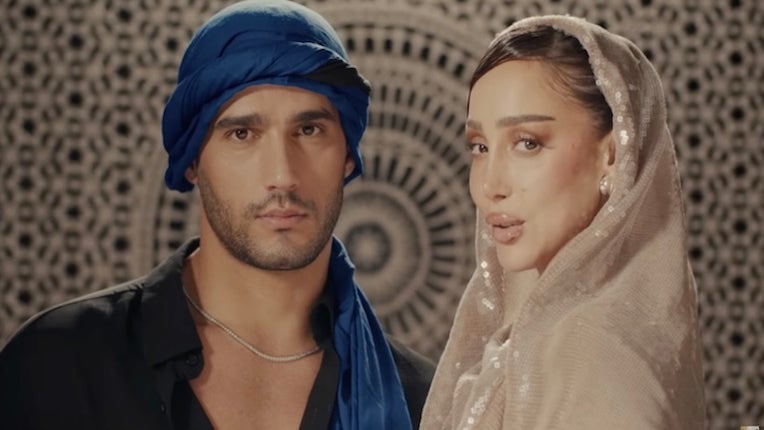
In the evolving landscape of North African pop music, few figures command the same level of public fascination as Moroccan singer and television personality Bassma Boussel. After a hiatus that saw the artist shift her focus away from the recording studio, she has made a definitive return to the music scene with her latest project, Renaissance. This new single marks a significant stylistic departure for the artist, as she embraces the French language—a move that signals both a personal evolution and an ambition to broaden her international reach.
For those who have followed Boussel’s career since her breakout appearance on the pan-Arab talent competition Star Academy in 2010, this comeback is more than just a musical release. It represents a pivot point in her public identity, transitioning from a celebrated performer in the Arab world to an artist exploring a more eclectic, multilingual soundscape. The release of Renaissance serves as a testament to her enduring presence in the entertainment industry, despite the various personal and professional shifts she has navigated over the past decade.
The decision to record in French is particularly notable. While Boussel has historically built her reputation through Arabic-language performances, the choice to release a single in French reflects a growing trend among contemporary artists from the Maghreb region to engage with the Francophone market. By bridging her North African roots with the stylistic sensibilities of French pop, she is carving out a new space for herself that bridges cultures and musical traditions. As reported by various regional entertainment outlets, the song has already garnered significant attention across social media platforms, sparking discussions about her future creative direction.
A Journey Defined by Evolution
Bassma Boussel’s path to this current “Renaissance” has been anything but conventional. Following her participation in the sixth season of Star Academy, where she reached the finals, she quickly became a household name. However, her career trajectory was marked by significant personal decisions, including a period where she stepped back from the limelight to focus on her family life and private business ventures. During this time, she successfully established herself as a fashion designer, a transition that demonstrated her creative versatility beyond the stage.
The name of the new single, Renaissance, is clearly intentional. In the arts, a renaissance signifies a rebirth or a revival, and for Boussel, this track acts as a bridge between the artist the public knew years ago and the woman she is today. This project is not merely an attempt to recapture past glory but a deliberate effort to redefine her voice. The production values and the lyrical maturity of the single suggest a more introspective approach to her craft, focusing on themes of resilience, self-discovery, and the courage required to reinvent oneself under the public eye.
According to updates shared on her official social media channels, the singer has been working closely with a new production team to ensure that this transition into French-language music feels authentic to her artistic vision. For fans of the artist, this represents a long-awaited opportunity to hear her return to the discipline of music, a field where she first demonstrated her prowess as a vocal talent over a decade ago.
The Cultural Impact of North African Artists in Europe
The release of Renaissance arrives at a time when the influence of North African artists on the European, and specifically French, music charts is at an all-time high. Artists from Morocco, Algeria, and Tunisia are increasingly utilizing the French language as a medium for artistic expression, blending it with traditional rhythms and modern pop sensibilities. This movement has been bolstered by the rise of streaming platforms, which have allowed artists to bypass traditional gatekeepers and reach global audiences directly.
By choosing to sing in French, Boussel is positioning herself within this broader cultural dialogue. It is a strategic move that acknowledges the deep-rooted historical and linguistic connections between Morocco and France. For a global audience, this makes her music more accessible, while for her domestic fans, it showcases her ability to master different languages and musical textures. The success of such a crossover depends heavily on the sincerity of the delivery, and early reception suggests that Boussel’s audience is receptive to this new, more cosmopolitan version of her artistic persona.
It remains to be seen whether Renaissance will lead to a full-length album or a series of singles. In the current music industry, the “single-first” strategy is often preferred, as it allows artists to maintain momentum through constant engagement rather than waiting for a complete album cycle. For an artist who has been absent from the recording booth for a significant duration, this approach is both practical and effective in re-establishing her footing in the competitive pop market.
What Comes Next?
As of this writing, the artist has not announced a specific schedule for subsequent releases or live performances. However, her return to the studio has set a high bar for her future projects. The industry will be watching closely to see if she follows this single with a tour or further collaborations that might solidify her place in the European market.
For those interested in following her journey, official updates are typically disseminated through her verified Instagram account, where she maintains a direct line of communication with her millions of followers. As she continues to navigate this new chapter, her fans remain the primary drivers of her success, providing the necessary engagement that keeps her at the forefront of the regional entertainment conversation.
What are your thoughts on Bassma Boussel’s shift toward French-language music? Share your perspective in the comments section below, and stay tuned to our sports and entertainment desk for further updates on her upcoming releases and public appearances.