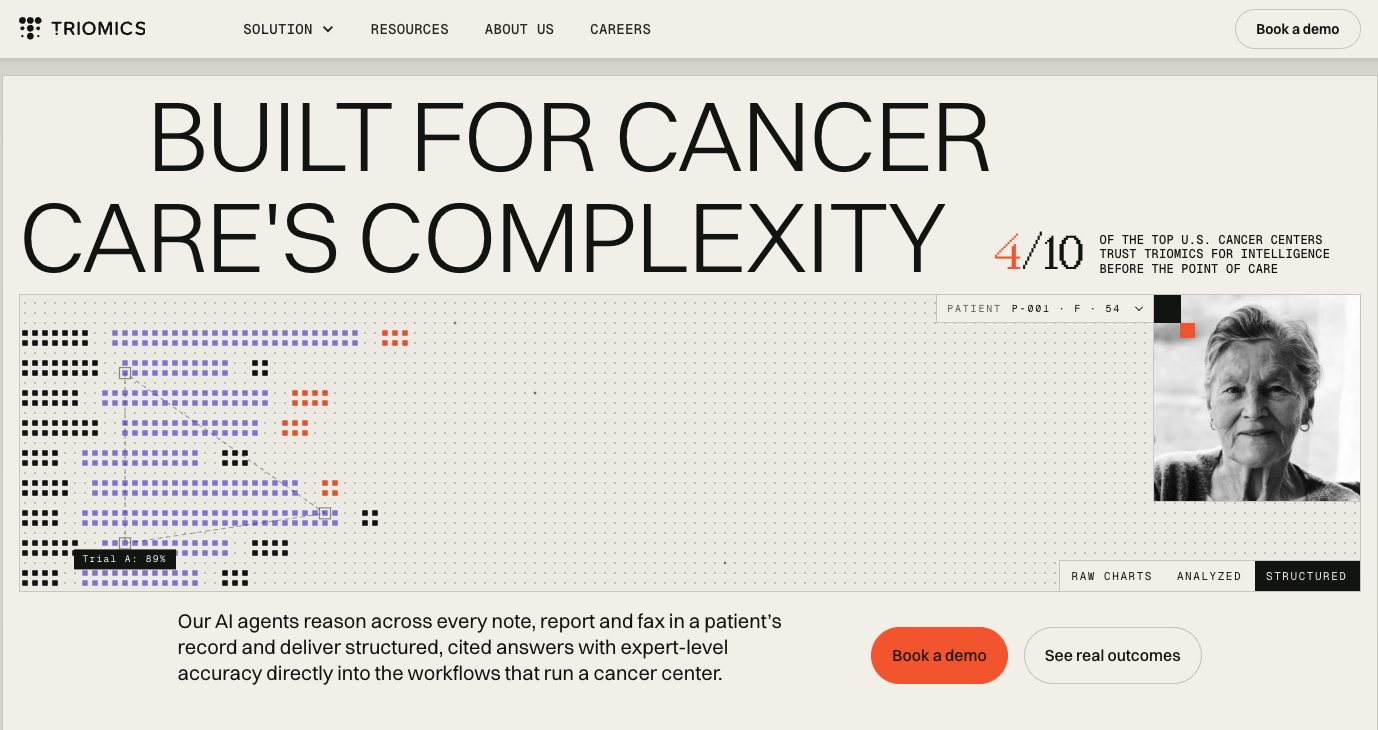
In a significant development for digital health, oncology AI innovator Triomics has successfully secured $22 million in a Series B financing round. This latest capital infusion, led by Battery Ventures, brings the company’s total venture funding to more than $36 million, according to official company disclosures. As the healthcare industry continues to grapple with the massive influx of unstructured patient data, this funding is earmarked to scale the company’s specialized AI agents designed to automate the labor-intensive process of oncology chart abstraction.
For clinicians and researchers, the promise of automating oncology AI chart abstraction lies in its potential to solve the “data paradox” currently hindering cancer care. While modern electronic health records (EHRs) contain vast amounts of clinical information—including pathology reports, genetic biomarkers, and longitudinal treatment histories—this data often remains trapped in unstructured formats. By leveraging domain-specific AI, Triomics aims to transform these digital filing cabinets into active, intelligent systems that can streamline clinical trial matching and mandatory registry reporting.
The investment round included strategic participation from existing backers such as Lightspeed, Nexus Venture Partners, and Y Combinator. The company secured backing from healthcare-focused entities like Oncology Ventures and Precision Health Informatics, a subsidiary of Texas Oncology. This support from established clinical networks underscores the growing demand for technical solutions that can alleviate the operational burden on medical staff while improving patient outcomes in complex disease environments.
Addressing the Oncology Data Bottleneck
Modern oncology care is increasingly defined by the complexity of its data. A single patient’s journey can involve hundreds of clinic notes, complex diagnostic imaging, and evolving molecular profiling. When these data points are not synthesized efficiently, the result is often “operational friction,” which can lead to delayed care and missed opportunities for clinical trial enrollment. Traditionally, this work has fallen on the shoulders of research coordinators and medical assistants who must manually audit dense files to fulfill institutional and regulatory requirements.

The core of the Triomics platform is its ability to process multi-modal data—including pathology, radiology, and longitudinal records—without the common pitfalls associated with general-purpose large language models (LLMs). According to clinical research published in Nature Digital Medicine, the implementation of such AI-driven workflows has been shown to reduce manual chart review times by 67% and improve clinical trial matching by 40%. These figures represent a substantial shift in how academic and community cancer centers manage their research pipelines, as evidenced by the peer-reviewed validation data currently available in the public domain.
By bypassing the “black box” nature of some consumer-grade AI, Triomics focuses on explainability. Every recommendation generated by the system is designed to be source-backed and mathematically traceable. This is a critical requirement for clinicians who must verify the accuracy of AI-driven insights before integrating them into patient care or regulatory filings. The ability to “show its work” is what distinguishes this specialized reasoning engine from the lightweight summarization tools that have struggled to gain traction in high-stakes medical environments.
Strategic Adoption Across Elite Networks
The company’s technology has already seen rapid adoption across several leading institutions. Notable adopters include Memorial Sloan Kettering Cancer Center (MSK), MD Anderson, Yale Cancer Center, and Mount Sinai, as well as large-scale community networks like Texas Oncology. This widespread uptake suggests that the industry is moving toward a model where autonomous agents serve as a foundational layer for oncology infrastructure.
The integration of these agents is not limited to clinical trials. There is a significant, ongoing push to automate the cancer registry pipeline—a process that has historically been unhurried, subjective, and labor-intensive. Lee Schwamm, MD, Chief Digital Health Officer at Yale New Haven Health System, has previously highlighted the challenges associated with maintaining registry data quality within federal timelines. By offloading the repetitive aspects of data extraction to AI, institutions hope to allow human registrars to focus on high-level verification and clinical oversight.
What This Means for the Future of Cancer Research
As Triomics prepares to expand its AI engineering teams, the focus remains on scaling its architecture across global provider and life sciences networks. The integration of this technology into existing EHR workflows without the need for costly, redundant modifications is a key selling point for hospital administrators. Brandon Gleklen, a Principal at Battery Ventures, recently noted that the company has successfully built the “precise infrastructure” needed to bridge the gap between clinical data collection and actionable intelligence.
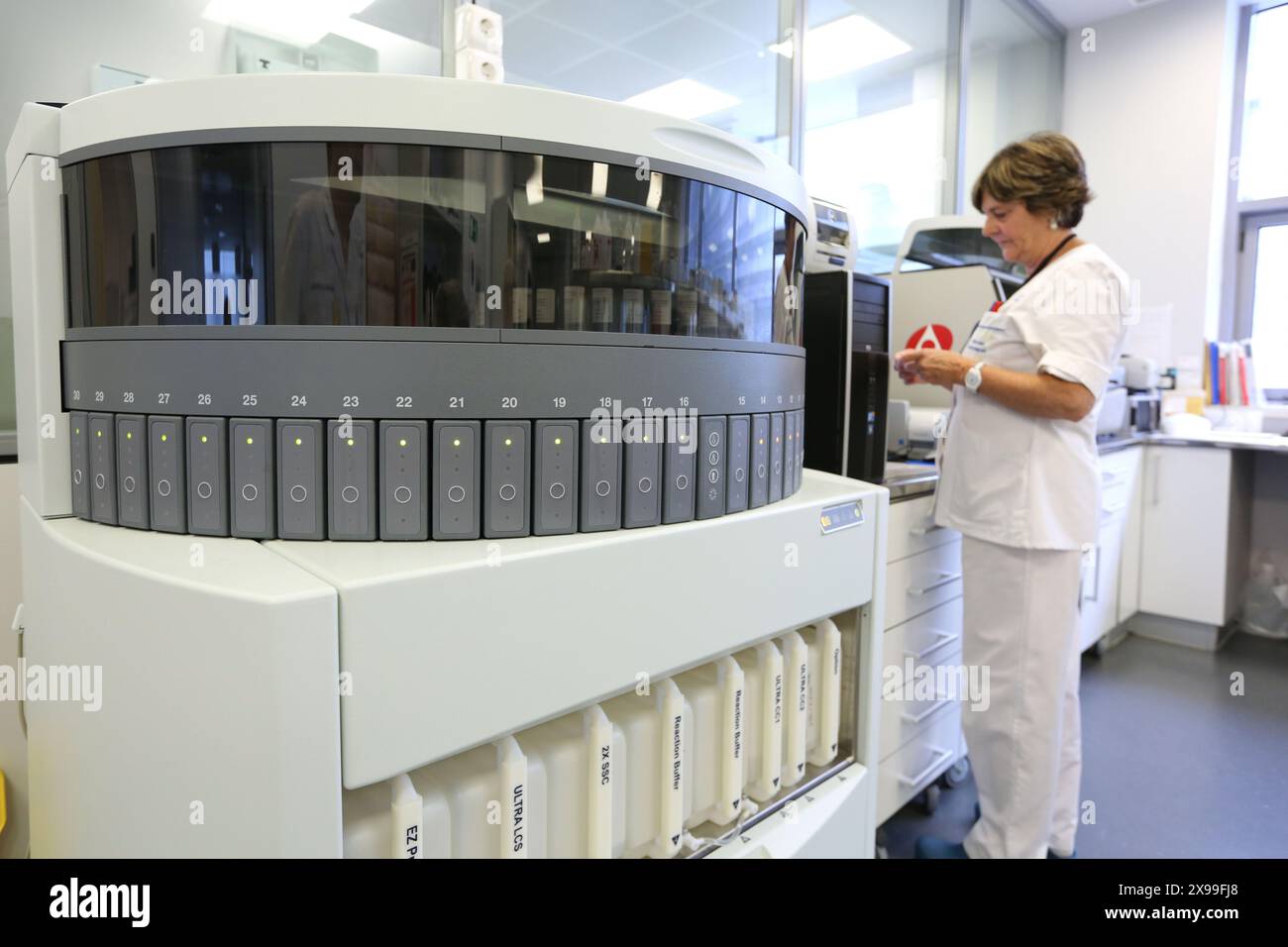
The implications for the broader healthcare landscape are significant. If AI can consistently and reliably handle the burden of chart abstraction, it could lead to higher rates of clinical trial participation, more accurate reporting for public health registries, and a reduction in the administrative burnout that currently plagues the oncology workforce. As the industry moves forward, the success of these deployments will likely serve as a benchmark for how AI can be safely and effectively integrated into other specialized fields of medicine.
Key Takeaways
- Funding Milestone: Triomics has raised $22 million in Series B funding, bringing its total capitalization to over $36 million.
- Operational Efficiency: Data from Nature Digital Medicine indicates a 67% reduction in manual chart review time for users of the platform.
- Clinical Impact: The technology facilitates a 40% increase in clinical trial matches and a 30% increase in total enrollment.
- Institutional Adoption: Elite networks including Yale Cancer Center and MD Anderson are currently utilizing the platform’s multi-workflow infrastructure.
- Technological Approach: The platform prioritizes “source-backed” reasoning to ensure algorithmic recommendations are verifiable and explainable for clinicians.
While the initial results are promising, the long-term efficacy of AI-driven oncology infrastructure will depend on continued validation and the ability of these systems to adapt to evolving clinical guidelines, such as those set by the National Comprehensive Cancer Network (NCCN). As of the latest industry updates, the company is focused on the next phase of its expansion, which includes scaling its autonomous architecture to support a broader range of provider networks. We will continue to monitor the progress of these deployments as they move from pilot programs to standardized components of modern cancer care. We encourage our readers to share their thoughts or experiences with AI-driven clinical tools in the comments section below.