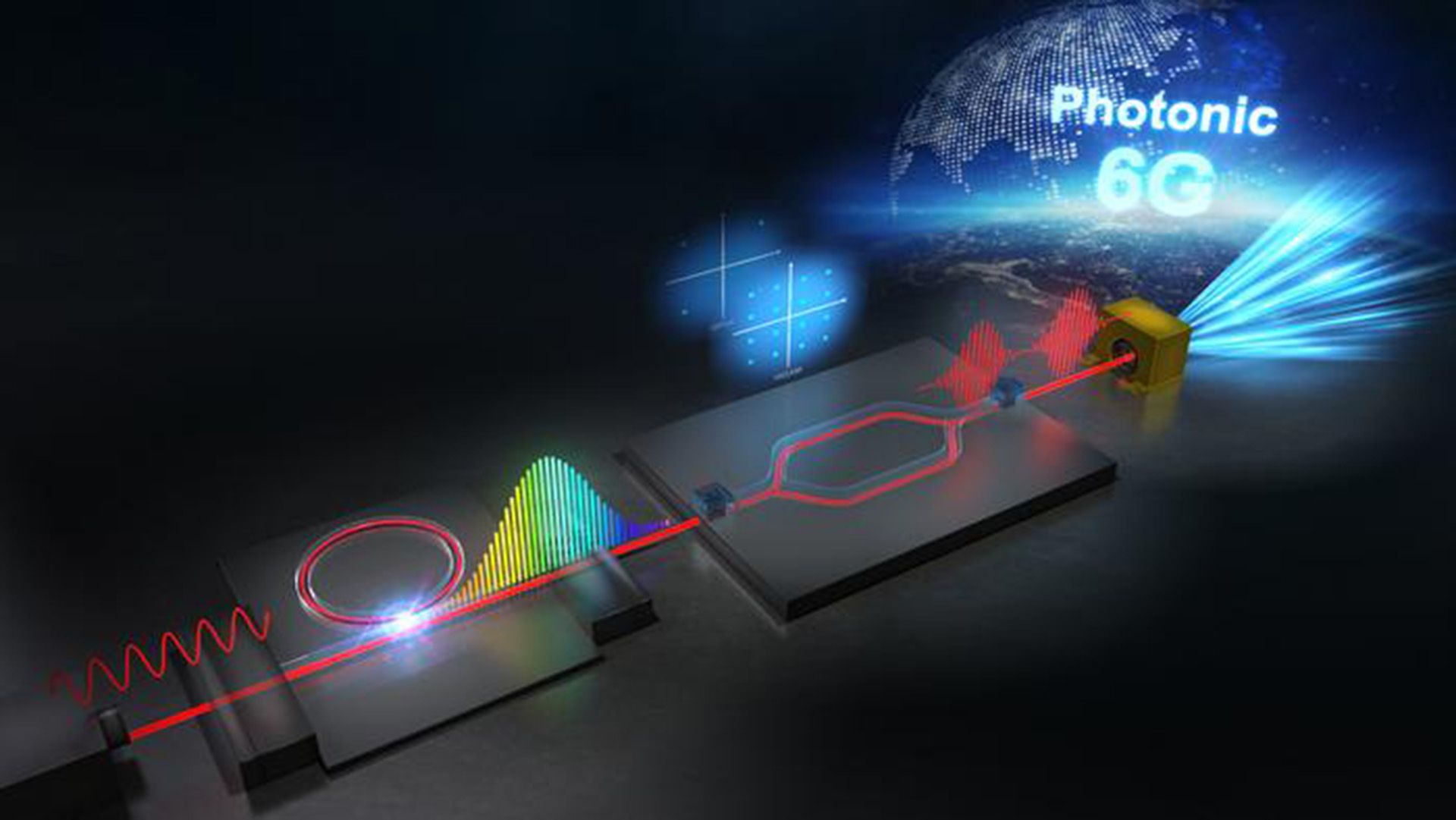
In the rapidly evolving landscape of global telecommunications, Japan has achieved a significant technological milestone that could redefine the future of connectivity. Researchers at the NTT Corporation have successfully demonstrated a miniaturized, microcomb-driven terahertz wireless communication system capable of achieving transmission speeds exceeding 100 gigabits per second (Gbps). This development marks a pivotal step toward the realization of 6G networks, which aim to provide data transfer rates orders of magnitude faster than current 5G infrastructure.
As we look toward the next generation of mobile technology, the focus has shifted toward the terahertz (THz) frequency band—a portion of the electromagnetic spectrum that remains largely untapped for commercial wireless use. By utilizing a microcomb—a device that generates a precise, multi-wavelength frequency spectrum—the research team has managed to shrink the hardware footprint significantly. According to technical documentation provided by NTT Corporation, this integrated device is approximately 90 times smaller than conventional chipsets required for similar high-frequency operations, addressing one of the primary obstacles to deploying THz technology in consumer devices: physical size.
The Technical Breakthrough: Why Terahertz Matters
The push for 6G is driven by the necessity to accommodate an exponential increase in data traffic, ranging from high-definition immersive media to real-time industrial automation. Current 5G networks operate primarily in the sub-6 GHz and millimeter-wave (mmWave) bands. While effective, these bands are becoming increasingly crowded. Terahertz waves, which sit between the microwave and infrared portions of the spectrum, offer a massive amount of bandwidth—the “highway” upon which data travels.
However, high-frequency signals have historically faced two major challenges: propagation distance and hardware complexity. The system developed by the NTT team, in collaboration with researchers from institutions including the Tokyo Institute of Technology, utilizes a photonic crystal fiber-based microcomb source. This architecture allows for stable, high-speed data modulation at frequencies that were previously difficult to manage in such a compact form factor. The research, as detailed in recent findings published in Nature Photonics, confirms that this integration is essential for creating the miniaturized transceivers needed for future handheld or portable electronics.
Bridging the Gap to 6G Standardization
It’s important to contextualize this achievement within the broader international timeline for 6G development. While laboratory breakthroughs are essential, the transition to a commercial 6G standard is a long-term, multi-stakeholder process. The International Telecommunication Union (ITU) has established a framework for the development of 6G, with IMT-2030 specifications serving as the foundational guideline for global research and development. These guidelines emphasize not only speed but also energy efficiency, security, and the integration of artificial intelligence at the network edge.
For the average user, what does this mean? In the short term, very little will change. We are currently in the research and prototyping phase. The primary beneficiaries of these early 100 Gbps breakthroughs will be specialized industrial sectors—such as remote surgery, digital twins in manufacturing, and high-density data centers—where the ability to move vast amounts of information instantaneously is a critical requirement. The move toward 6G is expected to reach commercial maturity by the end of the decade, with initial deployments projected to begin around 2030.
Addressing Technical and Regulatory Challenges
Despite the excitement surrounding 100 Gbps speeds, several hurdles remain before these systems can be integrated into everyday life. Terahertz signals are highly sensitive to physical obstructions, such as walls or even heavy rain, which can lead to signal attenuation. To mitigate this, engineers are exploring “intelligent surfaces” and advanced beamforming techniques that can redirect signals around obstacles. International regulatory bodies must still allocate spectrum for 6G use, a process that involves complex negotiations between national governments and global telecommunications unions to ensure cross-border compatibility.
The miniaturization achieved by the Japanese researchers is a crucial piece of the puzzle, as it suggests that the eventual 6G hardware will not be prohibitively large or power-hungry. As we track the progress of these high-frequency systems, the focus will likely shift to how these micro-chips perform under real-world conditions, including heat management and long-term durability. For those interested in the policy and technical roadmap, the 6G Smart Networks and Services Industry Association provides regular updates on the collaborative efforts between European and international partners to harmonize these emerging standards.
Key Takeaways
- Record Performance: Researchers have successfully transmitted data at speeds exceeding 100 Gbps using a microcomb-driven terahertz wireless system.
- Miniaturization: The new hardware architecture is reportedly 90 times smaller than existing solutions, a vital step for mobile integration.
- Future Timeline: Commercial 6G deployment is anticipated to follow the ITU’s IMT-2030 framework, with widespread availability expected around 2030.
- Broad Impact: While current testing is laboratory-based, the technology aims to support future high-bandwidth needs in medicine, manufacturing, and AI-driven infrastructure.
As we monitor the evolution of wireless communication, the next major checkpoint will involve the ongoing discussions within the 3rd Generation Partnership Project (3GPP), which is responsible for defining the technical specifications that will eventually govern 6G commercialization. We will continue to provide updates as new testing results are reported and international standards are finalized. If you found this analysis helpful, please share this article or join the conversation in the comments section below regarding the future of connectivity.

Worth a look