
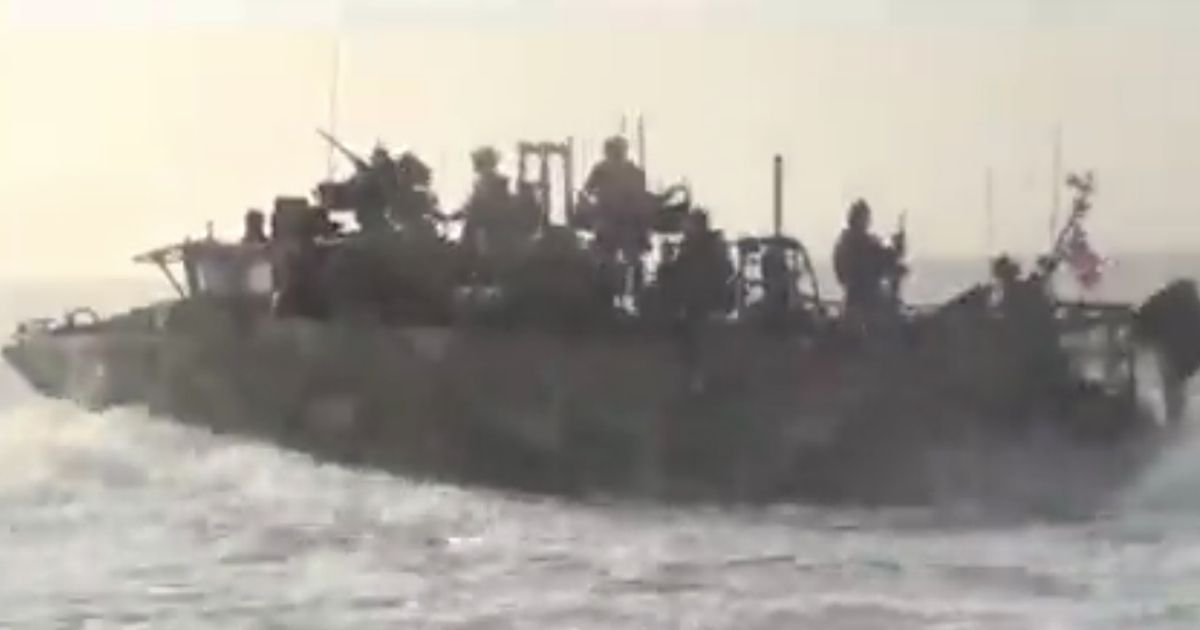
The United States military has confirmed that it fired on a merchant vessel attempting to breach a blockade of Iranian ports, marking the latest confrontation in a volatile maritime corridor. U.S. Central Command reported on Saturday that forces launched a missile into the engine room of the Gambia-flagged cargo ship, identified as the Lian Star, after the vessel reportedly ignored more than 20 warnings issued by U.S. Forces overnight.
This incident underscores the ongoing tensions in the Gulf of Oman, a critical global artery for energy and commodity shipments. The blockade, which has significantly impacted the flow of oil, natural gas, and essential agricultural supplies like fertilizer, was initiated by the United States on April 17, 2026. According to U.S. Military officials, this action was a direct response to Iran’s move to close the Strait of Hormuz following an outbreak of hostilities that began with U.S. And Israeli strikes on February 28, 2026. The U.S. Central Command stated that the Lian Star remained adrift in the Gulf of Oman following the strike, and U.S. Forces had not boarded the vessel as of Saturday.
Maritime Blockade and Regional Instability
The interception of the Lian Star represents a significant escalation in enforcement efforts within the region. Military data indicates that the U.S. Has now stopped six ships attempting to breach the blockade, with one vessel allowed to proceed and 116 others redirected since the policy was implemented in mid-April. The regional situation remains characterized by a fragile ceasefire, which has been in place since April 7, 2026, following the initial conflict period.
Global markets continue to monitor the situation closely, as the Strait of Hormuz remains a central point of geopolitical friction. The disruption of transit through this waterway has led to increased strain on global food producers and energy consumers. While diplomatic efforts are reportedly underway to determine if the current ceasefire can be extended by 60 days, these discussions are inextricably linked to broader negotiations regarding Iran’s disputed nuclear program.
Nuclear Tensions and Diplomatic Hurdles
The backdrop to these maritime maneuvers is a long-standing impasse over Iran’s nuclear capabilities. Despite international concerns, Iran has consistently denied seeking nuclear weaponry. However, reports from the Times of Israel note that Iran has amassed uranium enriched to levels that lack a civilian application. This stockpile is widely believed to be housed in underground facilities, many of which have been hardened following military strikes that occurred during the 12-day conflict between Israel and Iran in June 2025.
The intersection of the blockade, the ongoing ceasefire, and the nuclear issue creates a complex environment for international mediators. As of late May 2026, the international community awaits further clarity on whether the proposed extension of the ceasefire will be accepted by all involved parties, a move that would provide a window for formal talks on nuclear proliferation.
Current Status and Future Outlook
For the shipping industry and global logistics firms, the Strait of Hormuz remains a high-risk zone. The U.S. Military’s use of force against the Lian Star serves as a clear signal of the enforcement measures currently in effect. Navigational advisories remain in place for commercial traffic in the Gulf of Oman, and authorities continue to urge vessels to adhere to established maritime protocols to avoid interception.
At this stage, the primary focus for stakeholders is the upcoming potential extension of the regional ceasefire. Any agreement reached in the coming days could fundamentally alter the operational conditions within the Gulf of Oman and the Strait of Hormuz. Observers are also monitoring for further official statements from U.S. Central Command regarding the disposition of the Lian Star and any changes to the current blockade enforcement strategy.
We will continue to provide updates as more information becomes available regarding the diplomatic efforts to extend the ceasefire and any subsequent developments in the Gulf of Oman. Please join the conversation below to share your perspective on these unfolding events, and be sure to subscribe to our newsletter for the latest international analysis.
Related reading