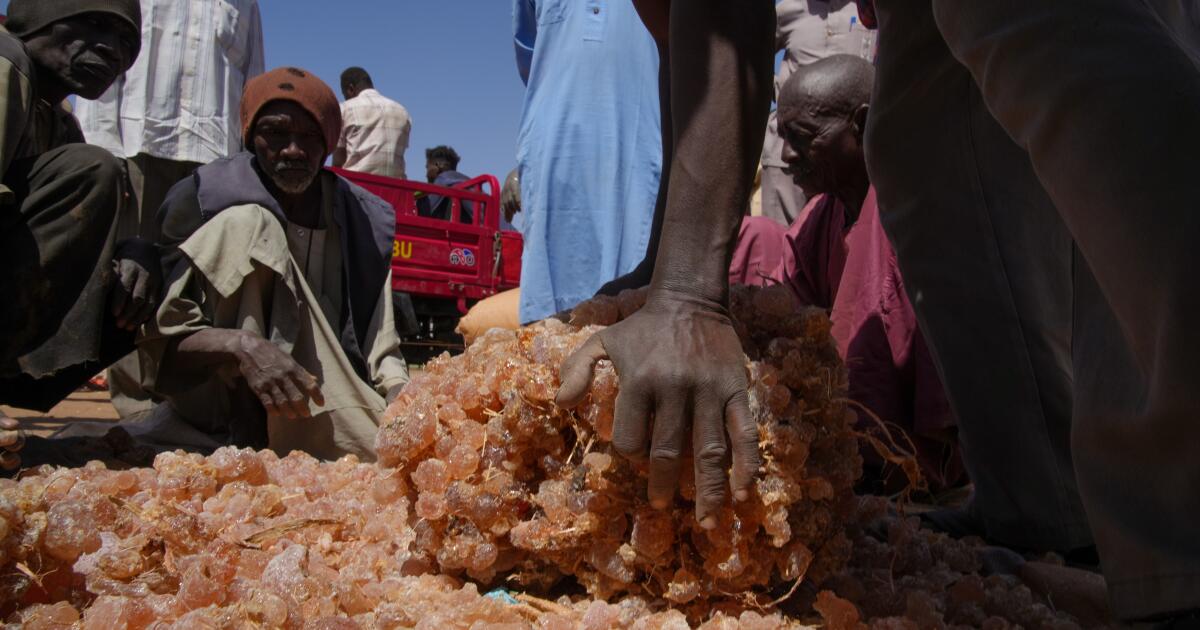
If you have reached for a soft drink, applied a coat of mascara, or taken a prescription pill today, you have likely interacted with a product that contains gum arabic. This complex polysaccharide, harvested from the sap of the acacia tree, acts as a crucial emulsifier and stabilizer in everything from pharmaceutical coatings to confectionery. Yet, while it is a staple of global supply chains, its provenance is increasingly tied to the devastating conflict in Sudan, a nation that historically provides nearly 70% of the world’s supply of this essential resin, according to data from the United Nations Conference on Trade and Development (UNCTAD).
As the business editor at World Today Journal, I have spent nearly two decades analyzing the intersection of global markets and human security. The ongoing civil war in Sudan, which erupted in April 2023 between the Sudanese Armed Forces (SAF) and the Rapid Support Forces (RSF), has created a profound ethical dilemma for multinational corporations. For consumers, the secret ingredient tying your candy, makeup, and medicines to Sudan’s war is more than just a supply chain footnote. it is a lens through which we must examine the human cost of global manufacturing.
The acacia trees—specifically Acacia senegal and Acacia seyal—thrive in the arid, volatile Sahel region. The harvesting process is labor-intensive and unglamorous, relying on millions of local farmers who tap the trees to collect the hardened sap. However, as the conflict has escalated, the infrastructure required to transport this commodity from the “Gum Belt” to international markets has been severely compromised. The Office of the United Nations High Commissioner for Human Rights (OHCHR) has documented widespread displacement and economic collapse in areas where these trees are most prevalent, raising urgent questions about how global brands can verify the ethical sourcing of their materials.
The Global Supply Chain of Gum Arabic
Gum arabic, known in the food industry as E414, is prized for its ability to prevent sugar crystallization in candies and to bind oils and flavors in carbonated beverages. Because it is a natural product, it is challenging to synthesize, leaving the global market heavily reliant on Sudanese exports. When the conflict intensified, international buyers were forced to grapple with the reality that their supply chain was not merely disrupted, but potentially complicit in the financing of warring factions through taxation and extortion at checkpoints.
For many firms, the challenge is one of traceability. The supply chain for gum arabic is notoriously opaque, often involving a long chain of intermediaries—from smallholder farmers in rural Sudan to local aggregators, regional exporters, and finally, international distributors. According to the International Monetary Fund (IMF), the economic contraction in Sudan has hit 18% in 2023 alone, further destabilizing the regions where these vital resources are harvested. For global corporations, the “due diligence” required to ensure their ingredients are not funding paramilitary groups has become an immense, and often incomplete, task.
Humanitarian Impacts and the “Gum Belt”
The human cost of this conflict is staggering. With millions displaced and critical infrastructure destroyed, the harvesting of gum arabic has become a survival mechanism for some, while for others, it is a source of exploitation. The World Food Programme (WFP) has warned that the food security crisis in Sudan is reaching catastrophic levels, with the conflict disrupting the particularly planting and harvesting cycles that define the agrarian economy of the region.
When we look at the labels on our daily products—whether it is a lipstick or a soda—we rarely consider the geopolitical reality of the raw materials involved. However, the situation in Sudan serves as a stark reminder of the global interconnectedness of our consumer habits. As ethical sourcing becomes a priority for ESG (Environmental, Social, and Governance) investors, companies are facing increasing pressure to provide transparency regarding their raw material origins. Yet, in conflict zones, such transparency is often met with the “fog of war,” where information is restricted and independent verification is nearly impossible.
Key Factors in the Sudan Conflict Economy
- Export Dependency: Sudan’s economy is heavily reliant on gum arabic, making it a primary target for control by armed groups seeking foreign currency.
- Supply Chain Opacity: The multi-layered structure of the gum arabic trade makes it difficult for international brands to guarantee their supply is conflict-free.
- Humanitarian Crisis: The conflict has led to a significant decline in agricultural productivity, impacting the livelihoods of millions of rural Sudanese farmers.
The Path Forward: Transparency and Accountability
What happens next depends on the ability of international regulatory bodies and the private sector to establish more rigorous oversight mechanisms. While some companies have announced their intention to diversify their supply chains, the unique properties of gum arabic mean that a full transition away from Sudanese sources is unlikely in the short term. The focus, must shift toward humanitarian impact assessments and ensuring that the trade of such commodities does not directly empower those responsible for the violence.

As we monitor the situation, the next critical checkpoint will be the upcoming reporting cycles for major food and pharmaceutical conglomerates, where stakeholders will be looking for concrete commitments to supply chain transparency. Readers who wish to stay informed on the humanitarian situation can monitor updates via the United Nations Office for the Coordination of Humanitarian Affairs (OCHA), which provides ongoing reports regarding the humanitarian landscape in Sudan.
The reality is that our global economy is built on a foundation of complex, often invisible relationships. Understanding the origins of the components in our daily lives—like gum arabic—is not just a matter of corporate responsibility; it is an exercise in global citizenship. As this situation continues to evolve, I encourage our readers to engage in the conversation below. How much transparency do you expect from the brands you trust? Are you willing to pay a premium for certified conflict-free goods? Your perspectives are vital as we navigate these challenging economic waters.
Keep reading