The Mad King of Clipperton Island: How a Castaway Colony Descended Into Chaos
June 12, 2024
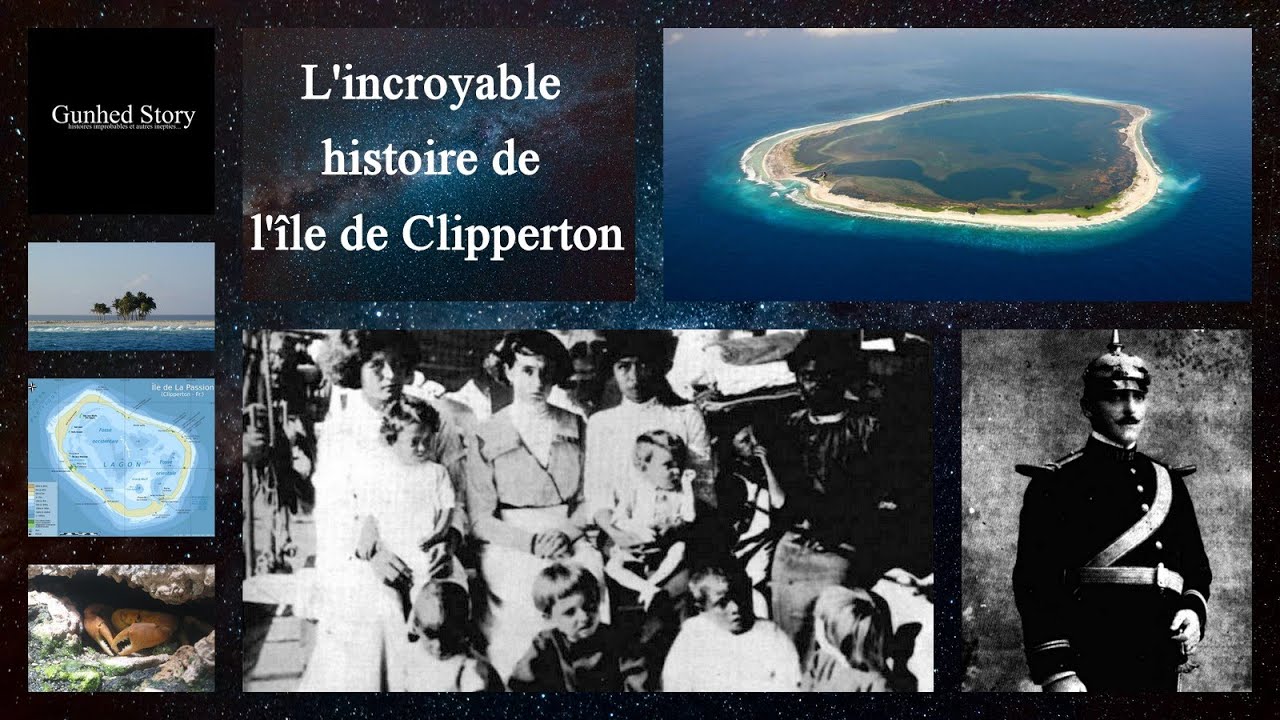
More than 1,100 kilometers off the coast of Mexico, where the Pacific Ocean stretches endlessly toward the horizon, lies one of history’s most forgotten and terrifying outposts: Clipperton Island. A jagged ring of coral and volcanic rock surrounding a stagnant lagoon, this uninhabited speck of land has no freshwater, no natural harbor, and no permanent residents. Yet for over a century, it became the stage for a nightmarish chapter of human survival—and the rise of a tyrant whose reign ended in bloodshed.
At the heart of this tragedy is Victoriano Álvarez, a lighthouse keeper who, in 1917, declared himself the “King of Clipperton” after years of isolation, starvation, and despair. His rule was one of brutal control, where fear became the only law. Survivors later described a man unraveling under the weight of madness, beating, abusing, and reportedly killing those under his command. The colony’s final act of defiance—a woman’s desperate strike with a hammer—ended his reign and saved the last survivors from extinction.
This is not a tale of pirates or treasure. It is the story of a Mexican colony abandoned by its government, left to starve as revolution raged on the mainland, and the psychological unraveling of a man who became both savior and monster in equal measure. Clipperton’s legacy endures not as a territorial dispute—though France and Mexico once fought bitterly over its guano deposits—but as a chilling case study in the extremes of human behavior when civilization’s safety nets vanish.
A Forgotten Outpost in the Pacific
Clipperton Island—officially Île de Clipperton under French sovereignty—is one of the most remote places on Earth. Discovered in 1711 by British privateer John Clipperton, the island was later claimed by both Mexico and France in the late 19th century, primarily for its rich deposits of guano, a valuable fertilizer. The dispute dragged on for decades until an international arbitration tribunal in 1931 awarded the island to France, a decision still recognized today (United Nations Decolonization Committee).

Yet the island’s true infamy lies not in its geopolitical history but in the 1906 Mexican colony established there. Mexico, seeking to exploit the guano, sent a modest group of settlers—including soldiers, a lighthouse keeper, and their families—to maintain a presence. The colony relied entirely on supply ships from the Mexican mainland, a lifeline that would soon be severed.
When the Mexican Revolution erupted in 1910, the supply ships never came. The revolution’s chaos made resupply missions impossible, and the colony was left to fend for itself. By 1915, most of the men had either died or attempted desperate voyages to seek help—only to vanish without trace. The island’s harsh conditions, combined with starvation and disease, had turned a once-functional outpost into a death sentence.
The Rise of the Mad King
By 1917, only a handful of survivors remained: women and children, led by Victoriano Álvarez, the colony’s lighthouse keeper. With no authority left to challenge him, Álvarez—already a volatile figure—began to assert absolute control. Survivors later recounted a man descending into paranoia and cruelty, enforcing his rule through fear.

According to accounts from the few who escaped, Álvarez declared himself the island’s sovereign ruler, demanding absolute obedience. He reportedly beat and abused the remaining women, hoarding what little food and water existed. His reign of terror lasted months, with survivors enduring unimaginable hardship. The breaking point came when Tirza Rendón, one of the women, confronted Álvarez in a final act of defiance. Armed with a hammer, she struck him down, ending his rule.
Just weeks later, a U.S. Navy ship arrived on a routine patrol and rescued the remaining survivors. The ship’s log (National Archives) records the harrowing conditions: skeletal survivors, signs of violence, and the eerie silence of an abandoned colony. The island was left empty once more, its dark chapter buried in history.
Why Clipperton’s Story Matters Today
Clipperton Island’s tragedy is a stark reminder of how quickly civilization can unravel when isolated from society. The case has been studied in psychology and survival literature as an extreme example of group dynamics under extreme stress, where leadership, morality, and human nature are tested to their limits.
For historians, the story also highlights the Mexican Revolution’s broader impact. While the conflict reshaped Mexico’s political landscape, its effects extended even to its most remote outposts. The abandonment of Clipperton’s colony was not an act of malice but a consequence of war—yet the human cost was devastating.
Today, Clipperton remains uninhabited, its ruins slowly reclaimed by nature. French authorities maintain a minimal presence, primarily for scientific research, but the island’s dark history lingers. In 2020, a French expedition documented the colony’s remnants, including the abandoned lighthouse and Álvarez’s former quarters (French Ministry of Europe and Foreign Affairs), offering a grim glimpse into the past.
Key Takeaways: The Clipperton Island Tragedy
- Isolation and abandonment: The colony’s fate was sealed when the Mexican Revolution cut off supply lines, leaving 80+ people stranded with no hope of rescue.
- Psychological breakdown: Victoriano Álvarez’s descent into tyranny reflects how power and desperation can corrupt even ordinary individuals.
- Survivor resilience: The women and children who endured Álvarez’s rule demonstrated extraordinary courage in their final act of defiance.
- Geopolitical legacy: Clipperton’s territorial dispute remains unresolved, though France retains sovereignty under international law.
- Scientific value: Today, the island is a protected nature reserve, studied for its unique ecosystems and historical artifacts.
Where to Learn More
For readers fascinated by Clipperton’s story, here are verified resources:

Final Thoughts: A Cautionary Tale
Clipperton Island’s story is a haunting reminder of how quickly order can collapse when humanity is stripped of its support systems. The island’s remote location made it a prison for its inhabitants, but it was their isolation from justice—and the absence of any higher authority—that allowed Álvarez’s tyranny to flourish.
As we reflect on this tragedy, it’s worth asking: How far would we go to survive? And what does it say about power when no one is left to challenge it?
What are your thoughts on Clipperton’s dark history? Share your reactions in the comments below—or tag a friend who loves forgotten historical tales.
Related reading