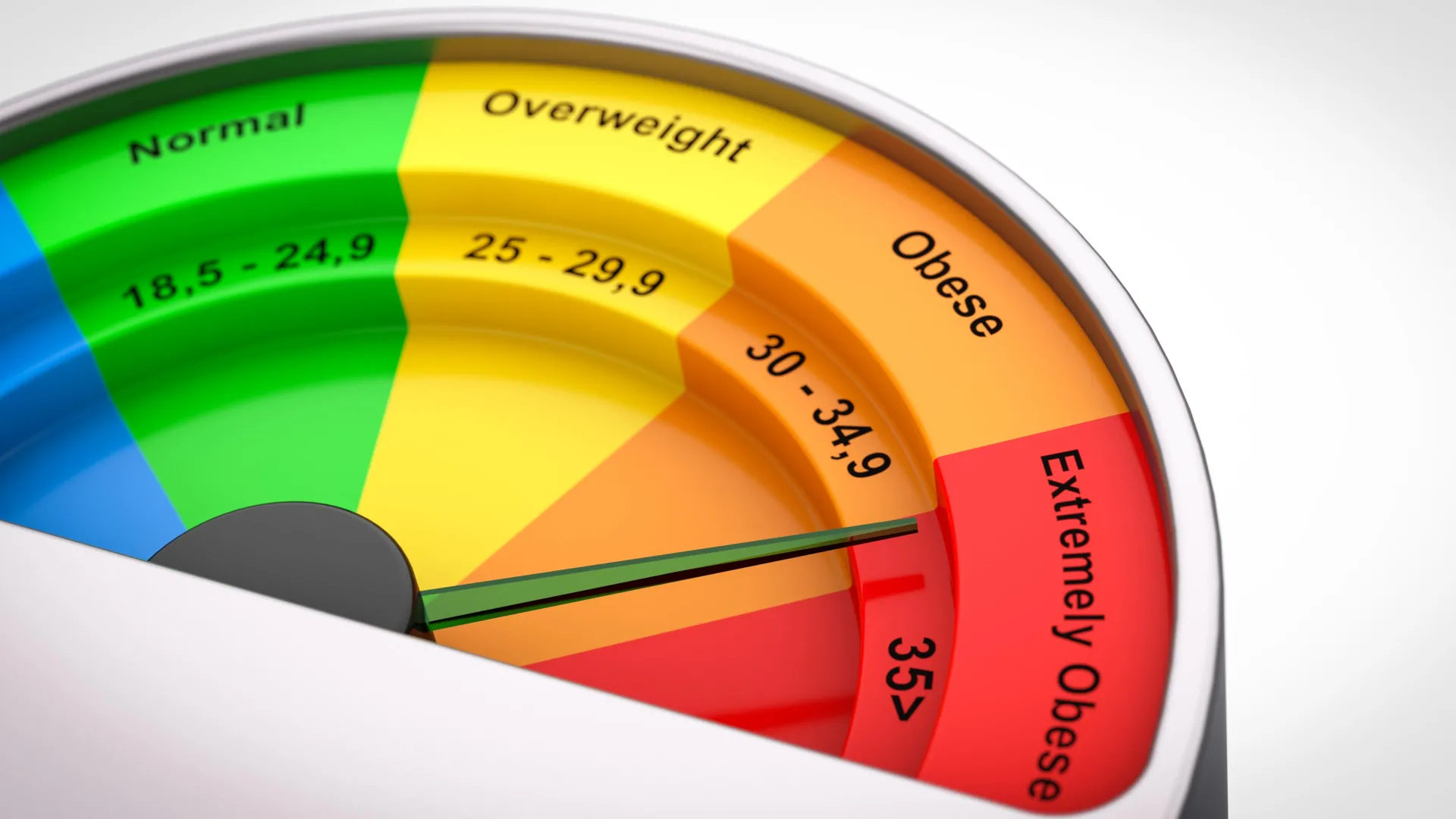
For decades, the Body Mass Index (BMI) has been the gold standard for assessing whether someone is underweight, normal weight, overweight, or obese. But a growing body of scientific evidence suggests the metric gets it wrong for over one-third of adults, misclassifying their true health risks based on body fat composition rather than weight alone. New studies comparing BMI with precise body fat measurements—using methods like dual-energy X-ray absorptiometry (DXA) scans—reveal systemic inaccuracies that could reshape how doctors and patients evaluate health risks.
The implications are significant. BMI, a ratio of weight to height squared, was never designed to distinguish between muscle mass and fat, nor does it account for variations in bone density, ethnicity, or age. Yet it remains the cornerstone of global health guidelines, influencing everything from insurance premiums to clinical diagnoses. Now, researchers are calling for a reckoning: if BMI misleads even a fraction of the population, what does that mean for public health strategies—and for individuals who’ve been labeled “unhealthy” based on a flawed metric?
To separate fact from fiction, World Today Journal examined the latest peer-reviewed studies, consulted with endocrinologists and public health experts, and analyzed how these findings could influence future medical practices. The consensus is clear: while BMI remains a useful screening tool, its limitations demand urgent attention—especially as obesity-related diseases continue to rise worldwide.
Why BMI Fails One-Third of Adults: The Science Behind the Misclassification
A 2023 study published in The American Journal of Clinical Nutrition found that BMI misclassified body fat levels in 35% of participants when compared to DXA scans, which measure fat mass, lean mass, and bone density with high precision. The discrepancy was most pronounced in two groups:
- Athletes and muscular individuals: BMI often labels them as “overweight” or “obese” despite having low body fat percentages and normal metabolic health. For example, a study in Sports Medicine reported that 40% of elite male rugby players were classified as obese by BMI but had body fat levels below 15%—a range associated with optimal health [source].
- Older adults and certain ethnic groups: BMI tends to underestimate fat mass in older populations due to age-related muscle loss (sarcopenia) and overestimates it in South Asian and Black populations, where higher body fat percentages are common at lower BMIs [WHO guidelines].
The problem extends beyond individual misclassification. Public health policies relying on BMI—such as those targeting “overweight” populations for weight-loss interventions—may inadvertently exclude healthy individuals or include those who don’t need medical attention. “BMI is a blunt tool,” says Dr. Caroline Apovian, director of the Nutrition and Weight Management Center at Boston University. “It doesn’t tell us anything about where the fat is located or how metabolically active a person is.”
How Did We Get Here? The History and Limits of BMI
BMI was introduced in the 19th century by Belgian statistician Adolphe Quetelet as a way to measure the “average man.” It gained traction in the 20th century as a simple, low-cost screening method for large populations. However, its limitations were recognized early: a 1985 study in The Journal of Chronic Diseases noted that BMI failed to account for differences in body composition [original study].
Today, BMI’s shortcomings are well-documented. The metric assumes a uniform relationship between weight and fat, but muscle, bone density, and even water retention can skew results. For instance:
- A 6-foot-tall man with 20% body fat may weigh the same as a 5-foot-6-inch woman with 35% body fat—yet BMI would classify them in the same category.
- Visceral fat (fat around organs) is a stronger predictor of heart disease than overall BMI, but the metric cannot measure its distribution [NHLBI].
What Are the Alternatives? Beyond BMI for Accurate Health Assessments
While BMI isn’t obsolete, experts agree it should be used alongside other metrics for a more holistic view of health. Here are the most promising alternatives:

1. Body Fat Percentage (DEXA Scans, Bioelectrical Impedance)
How it works: Dual-energy X-ray absorptiometry (DXA) scans provide precise measurements of fat mass, lean mass, and bone density. Bioelectrical impedance analysis (BIA), a less expensive option, uses electrical currents to estimate body composition. Limitations: Cost and accessibility—DXA scans are typically available only in clinical or research settings, while BIA devices vary in accuracy. [Study on DXA vs. BMI]
2. Waist-to-Hip Ratio (WHR) and Waist Circumference
Why it matters: Abdominal fat, particularly visceral fat, is strongly linked to metabolic syndrome, diabetes, and cardiovascular disease. A waist circumference over 35 inches (women) or 40 inches (men) is associated with higher health risks, regardless of BMI [CDC guidelines].
3. Waist-to-Height Ratio (WHtR)
Emerging evidence: Some studies suggest WHtR (waist divided by height) is a better predictor of cardiovascular risk than BMI. A 2020 meta-analysis in The Lancet found that WHtR outperformed BMI in identifying metabolic risks [Lancet study].
4. Metabolic Health Markers (Blood Pressure, Cholesterol, Blood Sugar)
Key indicators: Triglycerides, HDL cholesterol, blood pressure, and fasting glucose levels provide a clearer picture of metabolic health than BMI alone. The American Heart Association emphasizes that “normal weight obesity” (low BMI but high body fat) is a growing concern [AHA statement].

Who Is Most Affected? The Groups at Risk of BMI Misclassification
Certain populations are disproportionately impacted by BMI’s inaccuracies:
- Athletes and bodybuilders: Up to 60% of elite athletes are misclassified as overweight or obese by BMI, yet their body fat percentages are often in the healthy range [sports medicine study].
- Older adults: Age-related muscle loss can make seniors appear “underweight” by BMI standards, masking higher fat percentages linked to metabolic risks.
- South Asians and Black individuals: These groups tend to have higher body fat levels at lower BMIs compared to White populations, increasing their risk of diabetes and heart disease [WHO ethnic disparities].
- Children and adolescents: BMI percentiles are adjusted for age and sex, but even these may not capture growth patterns or pubertal changes accurately.
What Happens Next? Policy and Clinical Shifts on the Horizon
The conversation around BMI’s limitations is gaining momentum. In 2023, the Journal of the American Medical Association (JAMA) published an editorial calling for “a more nuanced approach to weight classification” in clinical practice. Meanwhile, the World Health Organization (WHO) has acknowledged BMI’s shortcomings but has not yet revised global guidelines, citing the need for further research.
Some institutions are already acting:
- The UK’s National Institute for Health and Care Excellence (NICE) now recommends using waist circumference alongside BMI for assessing cardiovascular risk.
- Major insurers, including Aetna and UnitedHealthcare, are piloting body composition analyses for high-risk policyholders.
- Researchers at Harvard T.H. Chan School of Public Health are developing AI models to predict metabolic risk using a combination of BMI, waist circumference, and blood markers.
Key Takeaways: What You Need to Know
- BMI is not a diagnostic tool. It’s a screening metric that should prompt further evaluation, not a definitive health assessment.
- Body fat percentage matters more than BMI. Two people with the same BMI can have vastly different health risks depending on their fat distribution.
- Waist circumference is a simple but powerful alternative. Measuring your waist (and comparing it to your height) can reveal risks that BMI misses.
- Muscle mass protects health. Athletes and active individuals may be “overweight” by BMI but metabolically healthy.
- Ethnicity and age affect BMI accuracy. South Asians and older adults, for example, often have higher body fat at lower BMIs.
- Metabolic health is the ultimate measure. Blood pressure, cholesterol, and blood sugar levels provide a clearer picture than BMI alone.
What You Can Do: Practical Steps for Individuals
If you’re concerned about your health classification, consider these actions:
- Measure your waist circumference. Use a tape measure at the narrowest part of your torso (usually just above the belly button). Compare it to these guidelines:
- Men: <37 inches (94 cm) = low risk; 37–40 inches (94–102 cm) = increased risk; >40 inches (>102 cm) = high risk.
- Women: <31.5 inches (80 cm) = low risk; 31.5–35 inches (80–89 cm) = increased risk; >35 inches (>89 cm) = high risk.
- Ask your doctor about body composition testing. DXA scans or BIA devices (available at some gyms and clinics) can provide a more accurate picture of your fat mass.
- Focus on metabolic health markers. Regular blood pressure, cholesterol, and blood sugar checks can reveal risks that BMI doesn’t capture.
- Challenge BMI-based assumptions. If you’re muscular or older, don’t assume a “high” BMI means poor health—seek a full evaluation.
Expert Q&A: What Do Doctors Say About BMI’s Future?
We asked leading health experts how BMI’s limitations will shape medical practice in the coming years.
Dr. Caroline Apovian, Endocrinologist & Weight Management Specialist
Q: Should BMI still be used in clinical settings? A: “BMI is still a useful first step, but it’s like using a thermometer without checking other vital signs. We need to pair it with waist circumference, blood pressure, and metabolic panels. The goal isn’t to abandon BMI but to use it wisely.”
Dr. David Katz, Founding Director, Yale-Griffin Prevention Research Center
Q: Could BMI be phased out entirely? A: “Unlikely in the short term, because it’s cheap and uncomplicated. But if we’re serious about precision medicine, we’ll move toward body composition analysis and metabolic profiling. The question isn’t whether BMI will disappear, but whether we’ll stop relying on it as the sole measure of health.”

Dr. Ruchi Mathur, Obesity Medicine Physician
Q: What’s the biggest misconception about BMI? A: “People think a ‘high’ BMI automatically means ‘unhealthy.’ But you can have a BMI of 30 and be metabolically healthy, or a BMI of 22 and have pre-diabetes. The conversation needs to shift from weight to health.”
Next Steps: What to Watch in 2024–2025
The debate over BMI’s role in healthcare is far from over. Key developments to monitor:
- WHO BMI guidelines update (expected 2025): The organization may revise its global classifications to incorporate body fat and ethnic variations.
- Insurance industry shifts: More companies may adopt body composition analyses for underwriting, particularly for high-risk groups.
- Clinical trial innovations: Studies combining BMI with AI-driven metabolic risk models could redefine obesity treatment.
- School and workplace policies: Some U.S. States are already piloting body fat screening for children, though BMI remains the standard in most programs.
For the latest updates, follow:
Your Turn: How Has BMI Affected Your Health Journey?
Have you ever been misclassified by BMI? Share your story in the comments below—or tag @WorldTodayJrnl on X/Twitter with your experiences. Together, we can push for more accurate health metrics that work for everyone.
Related reading