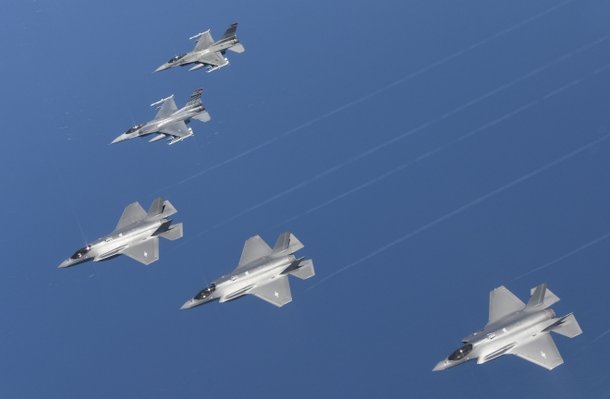
As we navigate an increasingly complex global security landscape, the F-35 Lightning II remains one of the most sought-after—and controversial—defense assets in modern aviation history. Developed by Lockheed Martin, this fifth-generation stealth fighter is often seen as the gold standard for air superiority, yet its acquisition process is far from a simple transaction. From the halls of the Pentagon to the defense ministries of partner nations, the decision to export this technology involves layers of geopolitical scrutiny, technological security requirements, and long-term strategic alignment.
Recent discourse regarding which nations are permitted to purchase the F-35 and why others face rejection has sparked intense debate. While countries like South Korea have successfully integrated the F-35A into their air forces, other nations find themselves excluded from the program. Understanding the common threads among those who face barriers to entry requires looking beyond the hardware itself and examining the stringent framework of the U.S. Foreign Military Sales (FMS) program and the broader implications of the Arms Export Control Act of 1976.
At its core, the F-35 is not merely an aircraft; it is a networked system of systems. The platform relies on a sophisticated logistics and data-sharing architecture—often referred to as the Autonomic Logistics Information System (ALIS) and its successor, the Operational Data Integrated Network (ODIN)—which requires a high degree of digital integration between the user and the manufacturer. This technical dependency is precisely why the United States maintains such rigorous oversight regarding which nations are granted access to the platform.
Geopolitical Alignment and Technology Security
The primary hurdle for any nation seeking to procure the F-35 is the stringent requirement for technological security. The aircraft utilizes advanced stealth coatings, sensitive sensor fusion capabilities, and proprietary software that the U.S. Government considers critical to its own national security. According to the U.S. Department of State, defense trade is a key tool of foreign policy, and transfers are evaluated based on how they impact regional stability and the protection of sensitive technology from adversaries.
When a country is denied the F-35, it is rarely due to a single factor. Instead, it is usually a combination of concerns regarding the nation’s proximity to adversarial intelligence-gathering assets, the robustness of its own cybersecurity infrastructure, and the long-term reliability of its political relationship with Washington. For instance, the exclusion of Turkey from the F-35 program, following its procurement of the Russian S-400 missile defense system, serves as a clear case study in how the integration of non-NATO compatible systems can jeopardize participation in the program, as detailed by the U.S. Department of Defense.
the concern over “remote control” or digital sovereignty—often discussed in international media—is a point that defense analysts frequently clarify. While the F-35 requires a constant flow of data to maintain its peak operational readiness, the U.S. Has consistently maintained that it does not possess a “kill switch” that would allow it to unilaterally disable an ally’s fleet. However, the requirement for periodic data synchronization means that nations must be willing to accept a certain level of transparency with the U.S. Defense establishment, a condition that some sovereign nations find tricky to reconcile with their own domestic security policies.
The Case of Taiwan and Regional Strategic Balance
The persistent discussion surrounding the potential sale of F-35s to Taiwan highlights the delicate balancing act the United States performs in the Indo-Pacific. While Taiwan remains a critical partner for the U.S. In the region, the sale of such advanced stealth technology involves navigating the “One China” policy and the potential for rapid escalation in regional tensions. The U.S. Department of State maintains that its policy toward Taiwan is guided by the Taiwan Relations Act, which commits the U.S. To provide Taiwan with arms of a defensive character.
The debate over whether Taiwan should receive the F-35 often centers on whether the aircraft’s offensive capabilities might alter the regional status quo. Unlike South Korea or Japan, which operate within established security alliances that include deep intelligence sharing, Taiwan’s position is unique. Analysts often point out that the cost and complexity of the F-35 might also be less suitable for Taiwan’s specific defensive needs compared to other platforms, such as upgraded F-16 Block 70/72 jets, which the U.S. Has approved for sale to Taipei, as noted in reports from the Defense Security Cooperation Agency.
Common Threads in Procurement Challenges
When reviewing the nations that have faced difficulty or rejection in acquiring the F-35, several commonalities emerge:
- Interoperability Concerns: The F-35 is designed to operate within a NATO-standardized or U.S.-aligned data network. Nations that operate heavy inventories of Russian or Chinese hardware often face insurmountable hurdles in integrating the F-35 without risking severe intelligence leaks.
- Human Rights and Political Stability: U.S. Law, specifically the Leahy Laws, prohibits the provision of military assistance to foreign security forces implicated in gross violations of human rights. This oversight applies to all major defense exports, including the F-35.
- Long-term Economic Commitment: The F-35 is a lifetime commitment. Beyond the initial purchase price, the sustainment costs are significant. Nations that cannot demonstrate the economic capacity to maintain a fleet of fifth-generation fighters often find their requests stalled or denied.
These factors ensure that the F-35 remains a tool of deep strategic partnership rather than a commodity for open market sale. As the global security environment shifts, the criteria for acquisition may evolve, but the fundamental requirement for trust and technical compatibility remains non-negotiable.
Looking Ahead: The Future of Stealth Exports
The landscape of air superiority is changing with the advent of sixth-generation aircraft programs, such as the Next Generation Air Dominance (NGAD) in the U.S. And the Global Combat Air Programme (GCAP) involving the UK, Italy, and Japan. These future programs will likely adopt even stricter standards for technology sharing and collaborative development. For nations currently seeking to modernize their air forces, the lessons learned from the F-35 program—emphasizing the importance of political alignment and defense industrial integration—will prove essential.
As we continue to monitor these developments, it is vital for the public to distinguish between verified defense policy and speculative analysis. Future updates regarding F-35 export approvals will be published through the Defense Security Cooperation Agency (DSCA), which serves as the official source for all U.S. Arms sales notifications to Congress. We will continue to track these developments as they relate to global security and the evolving nature of international military partnerships.
What are your thoughts on the criteria for advanced military technology transfers? Join the conversation in the comments section below or share this analysis with your network as we continue to explore the complexities of global geopolitics.
Worth a look